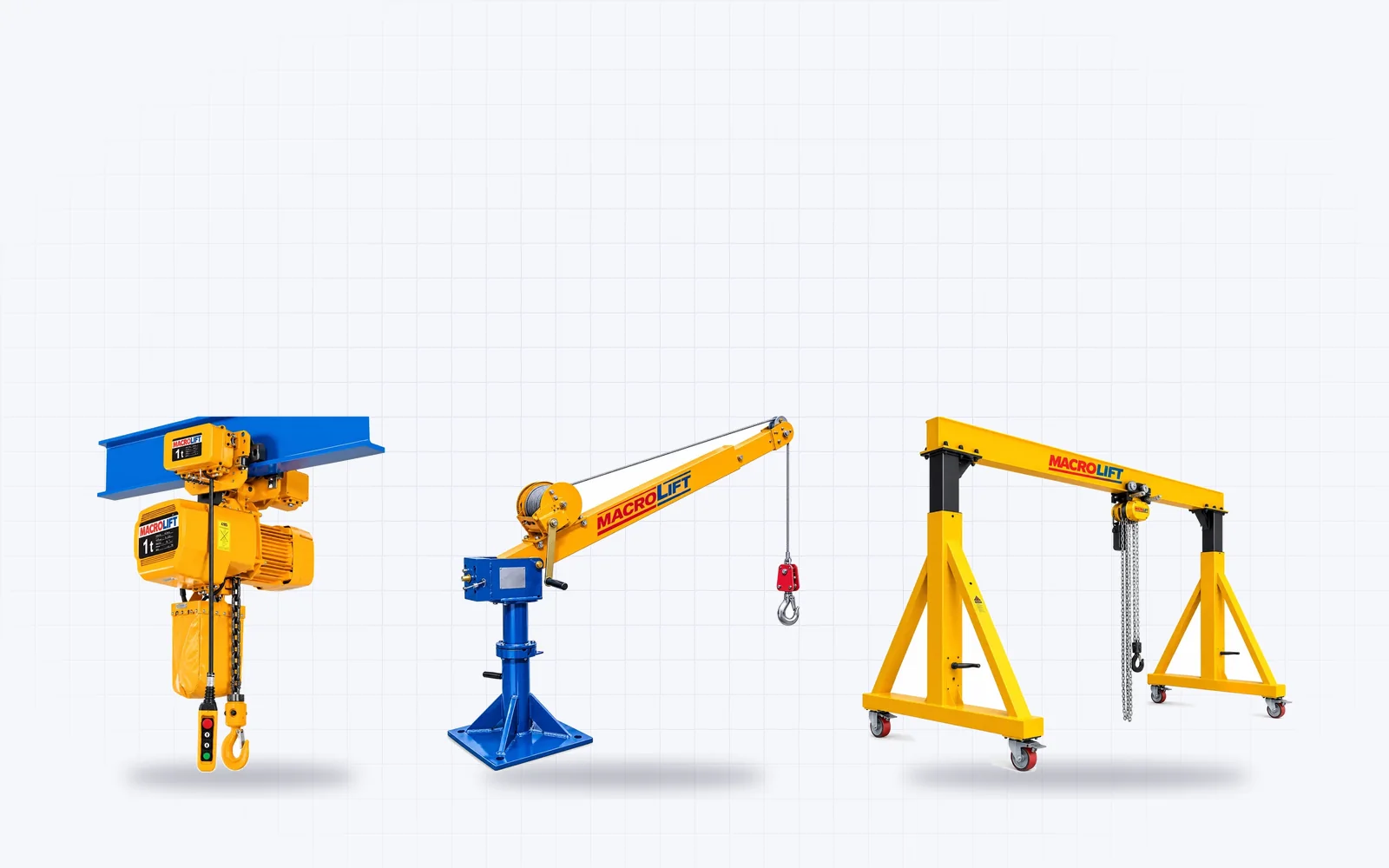
Once you decide to put a crane in your facility, the first question is what area it needs to cover. A monorail hoist carries the load along a single line, a jib crane covers a circular area around one point, an overhead bridge crane covers the whole of a rectangular area, and a gantry crane carries the load with a movable frame that stands on the floor. The right choice depends on where the load is picked up and where it goes.
Monorail hoist: one line, low cost
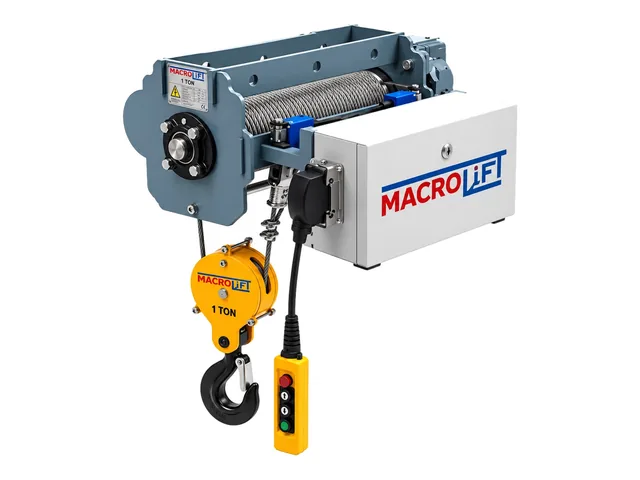
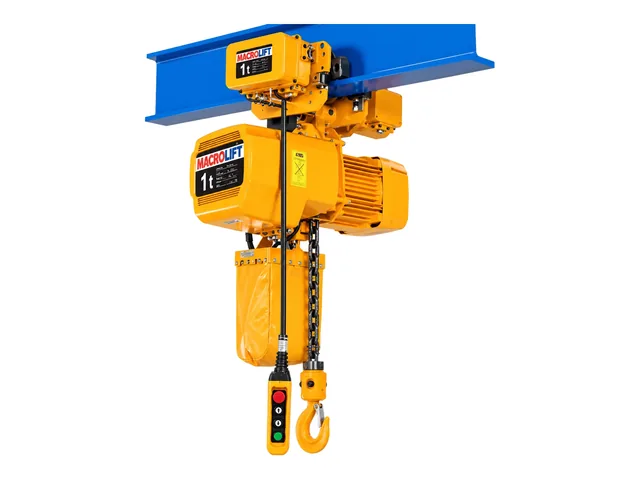
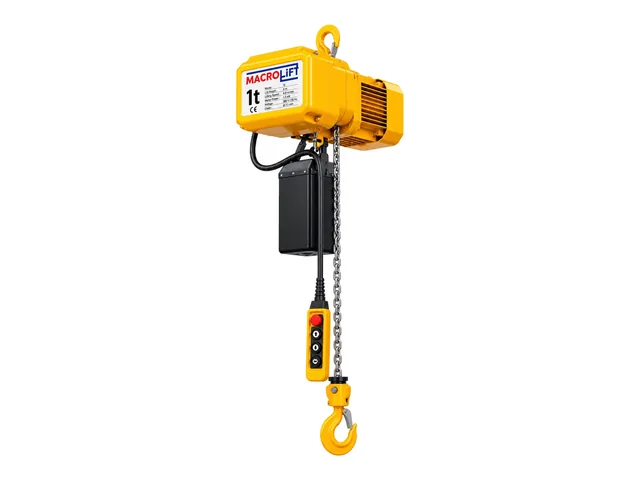
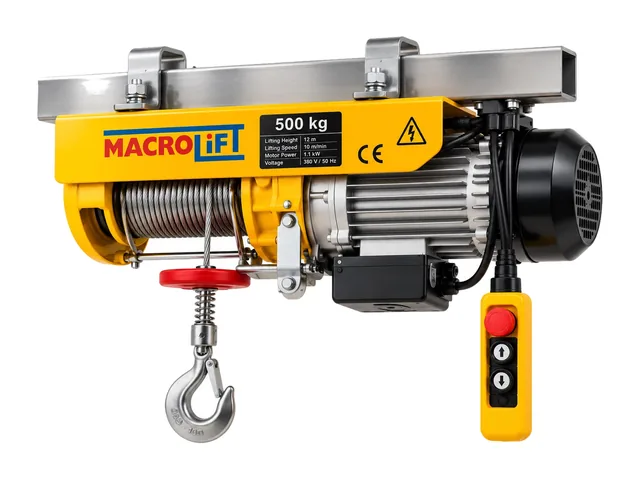
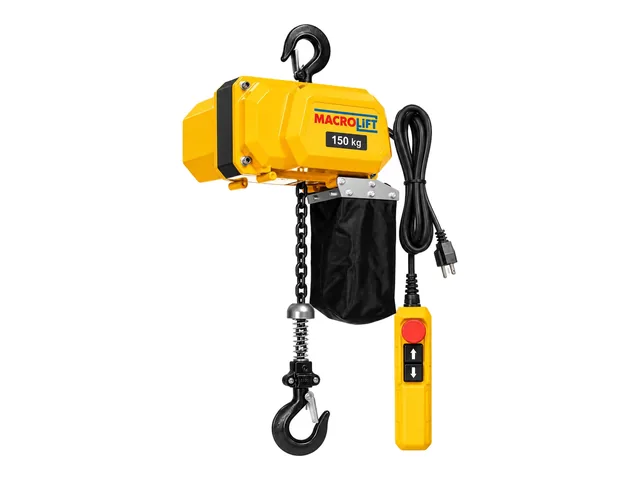
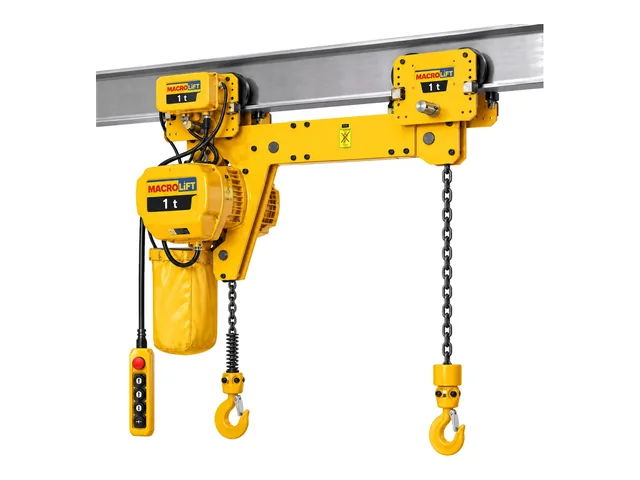
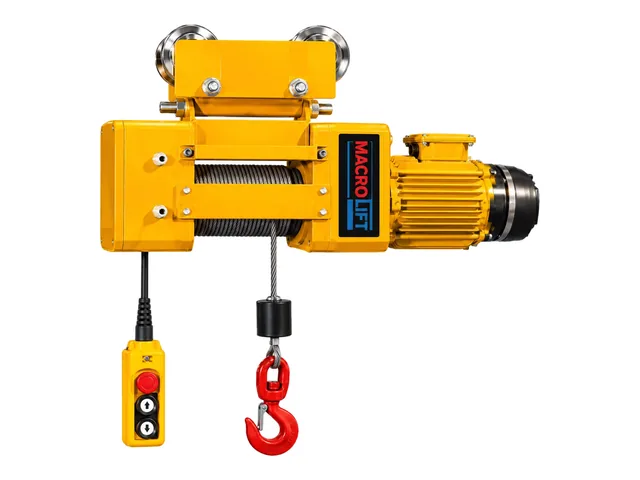
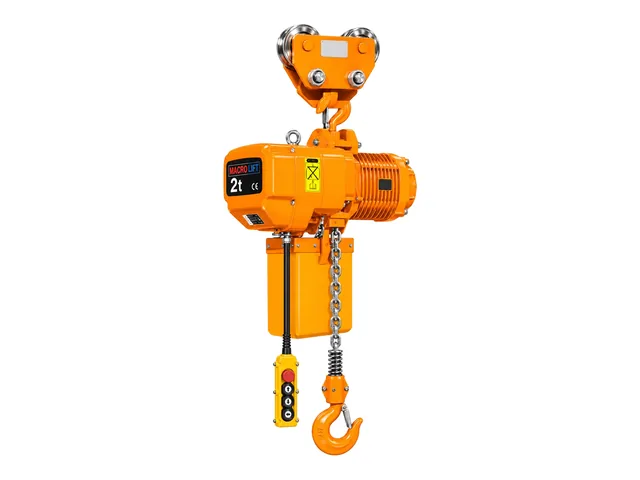
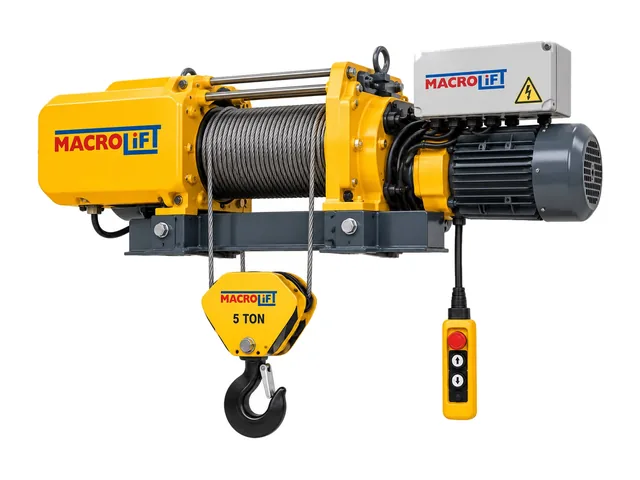
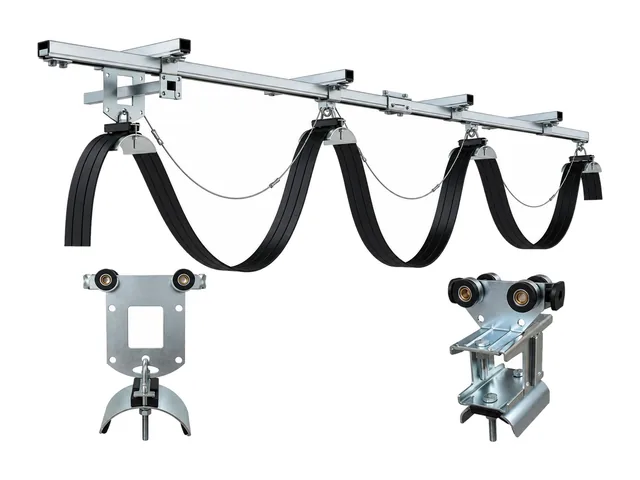
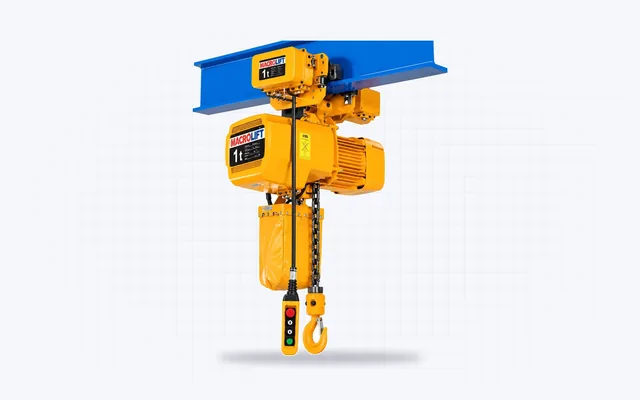
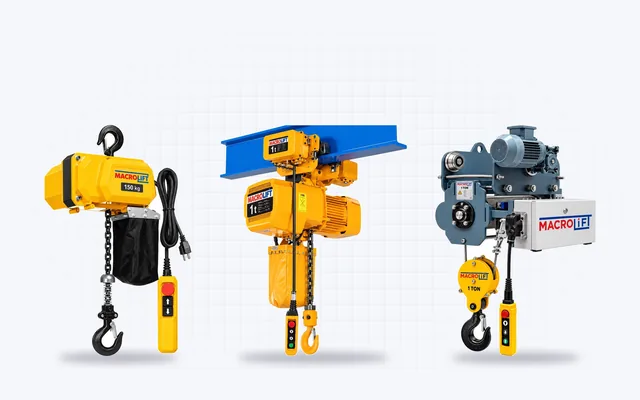
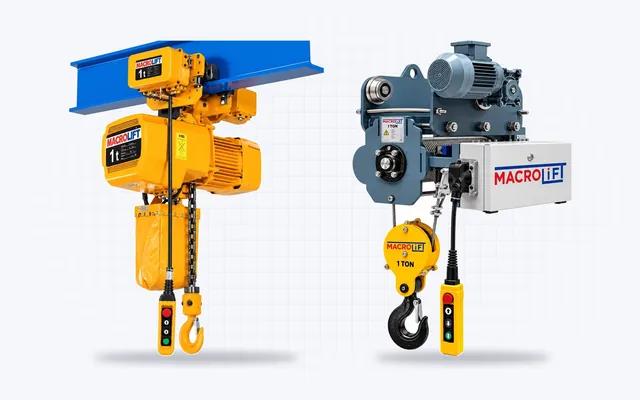
The beam runs along a single line and the hoist travels back and forth on it. If the load follows the same path every time, this is the most economical solution, for example on a production line, between machines or at a loading ramp. The beam can be straight, curved or fitted with switches. There are more details in our guide what is a monorail hoist? You will find the models on our monorail chain hoists and monorail wire rope hoists pages.
Jib crane: right next to a machine or workbench
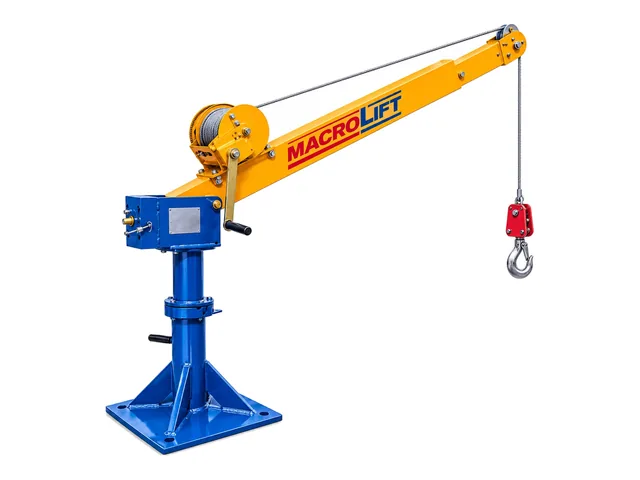
A jib crane is an arm that is fixed to a column or a wall and swings horizontally. The hoist travels along this arm. This means it can take the load to any point within a circle whose radius is the length of the arm. Column-mounted models usually swing through a wider angle, and wall-mounted models through a narrower one.
It is ideal for jobs with frequent lifts in a small area beside a machine, a workbench or a loading point. Typical examples are loading parts into a CNC machine or changing moulds at a press. For models, see our jib cranes page.
Overhead bridge crane: covers the whole area
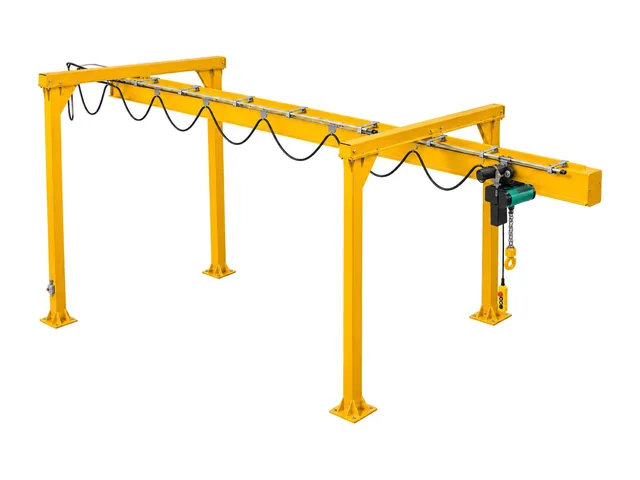
An overhead bridge crane has a bridge that moves along two parallel runways, with a hoist that travels along the bridge. This lets the hoist reach every point of the rectangular area between the runways. It is used in factories where heavy loads have to be moved to any part of a hall.
Because it covers a large area, the installation is large too. It needs two runway lines, the columns or building structure that carry them, and a bridge girder. That means more steel, a heavier load on the building and a higher investment.
Gantry crane: outdoors, or where the building cannot take the load
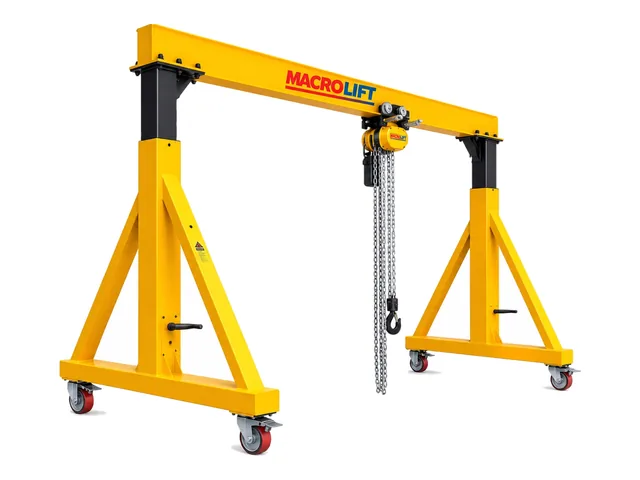
A gantry crane is a frame with two legs that stands on the floor. The hoist travels along the beam at the top. Models on wheels can be moved from one place to another. It is used when you do not want to put any load on the building, when the ceiling is not suitable or when you work outdoors. Typical uses are taking machines apart in a workshop, warehouses and maintenance areas. See gantry cranes.
Comparison table
| Feature | Monorail hoist | Jib crane | Bridge crane | Gantry crane |
|---|
| Area covered | A single line | A circular area | The whole of a rectangular area | The area under the frame, movable |
| Load on the building | On the ceiling or columns | On a column or wall | On the runway columns and the building | None, it stands on the floor |
| Installation | Medium | Easy to medium | Extensive | Easy |
| Investment cost | Low to medium | Low to medium | High | Low to medium |
| Best suited to | Repeated moves along the same route | Work at a machine, workbench or station | Heavy loads anywhere in the hall | Outdoor, temporary or mobile work |
Which one should I choose? Four examples
- On an assembly line, parts move along five stations: Monorail hoist. A single beam along the line, an electric trolley and curved sections if needed.
- Heavy parts are fitted to and removed from a lathe dozens of times a day: Jib crane. It is mounted on a column beside the lathe, and the operator can easily bring the load over the machine.
- In a steel fabrication workshop, heavy parts are moved to every part of the hall: Overhead bridge crane.
- In a rented building the ceiling cannot be touched, and lifting is needed now and then for machine maintenance: Gantry crane.
They can also work together
In many facilities these systems work side by side. For example, an overhead bridge crane handles the heavy moves along a hall while jib cranes take care of the smaller jobs at the stations. Or a monorail line coming from the loading ramp drops the load into the working area of a jib crane. This way the large crane is not kept busy for no reason.
Questions to answer before you decide
- Where is the load picked up, and where is it set down? Draw this on a sketch.
- Is this route the same every time, or does the load go to every part of the area?
- Can the ceiling or the columns carry extra load?
- How heavy is the heaviest load, and how many times a day is it lifted?
Send your sketch and answers to us on WhatsApp, and we can work out together which system suits you. For capacity and duty class, see our article how to choose hoist capacity. For costs, see monorail hoist prices.