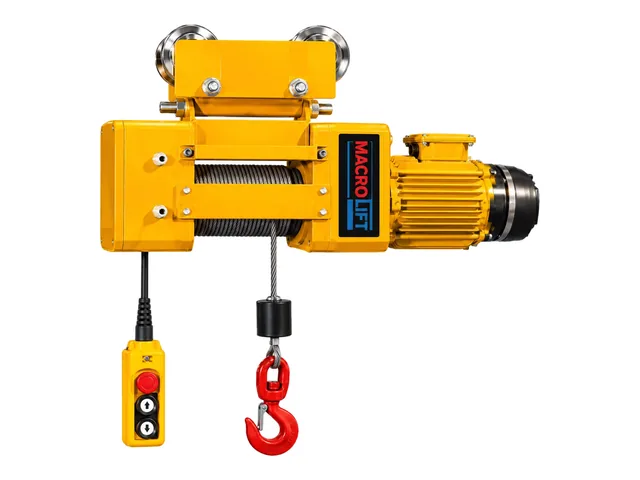
How does a wire rope hoist with a manual trolley work?
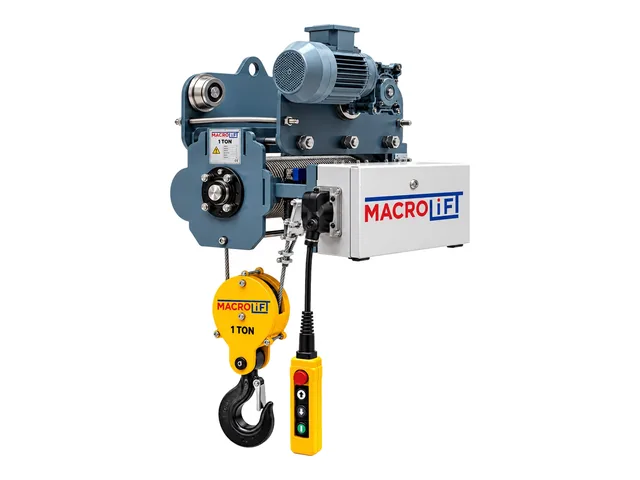
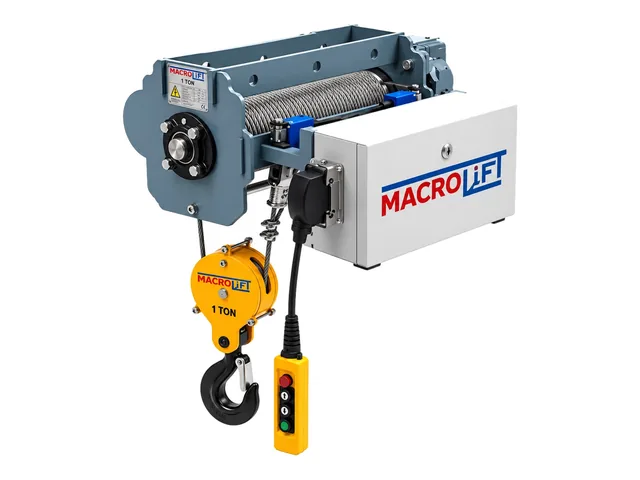
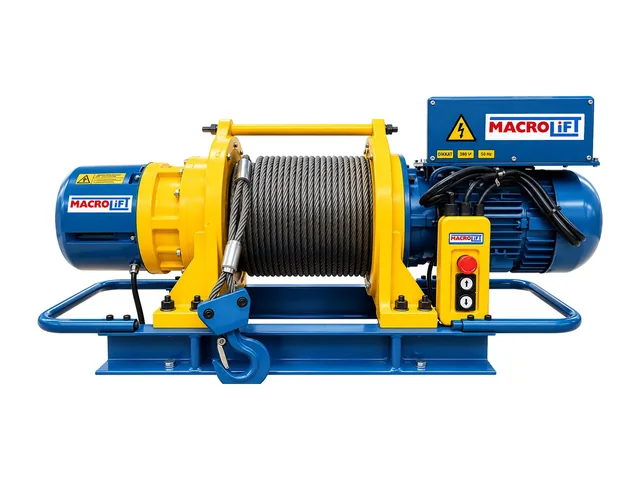
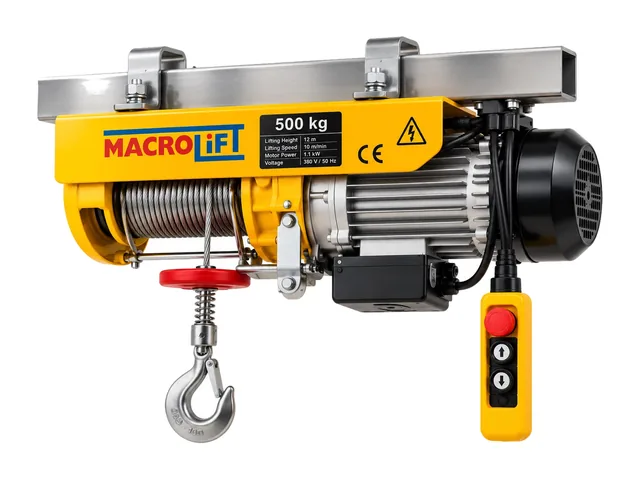
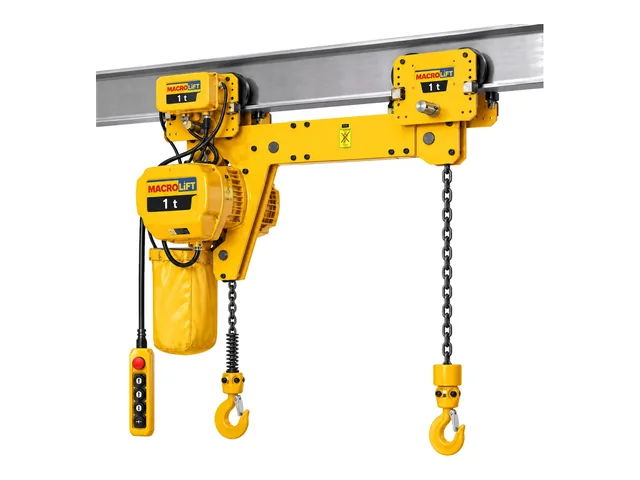
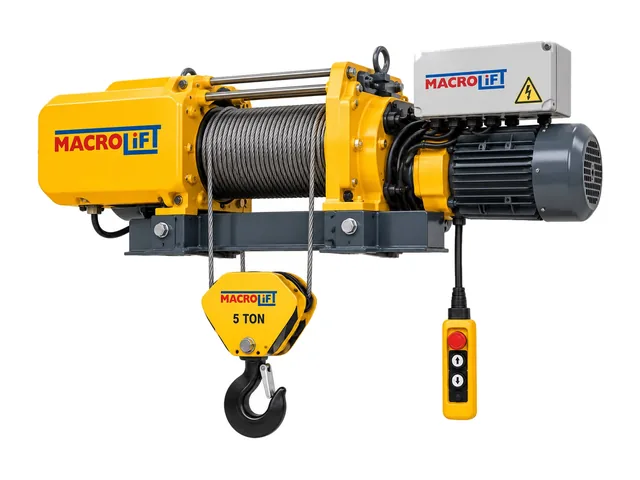
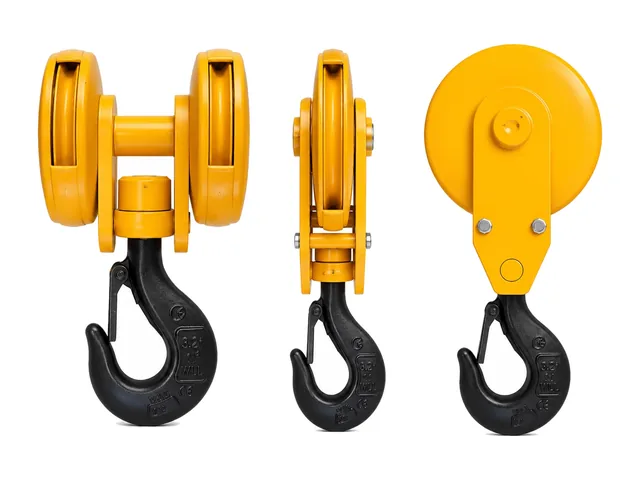
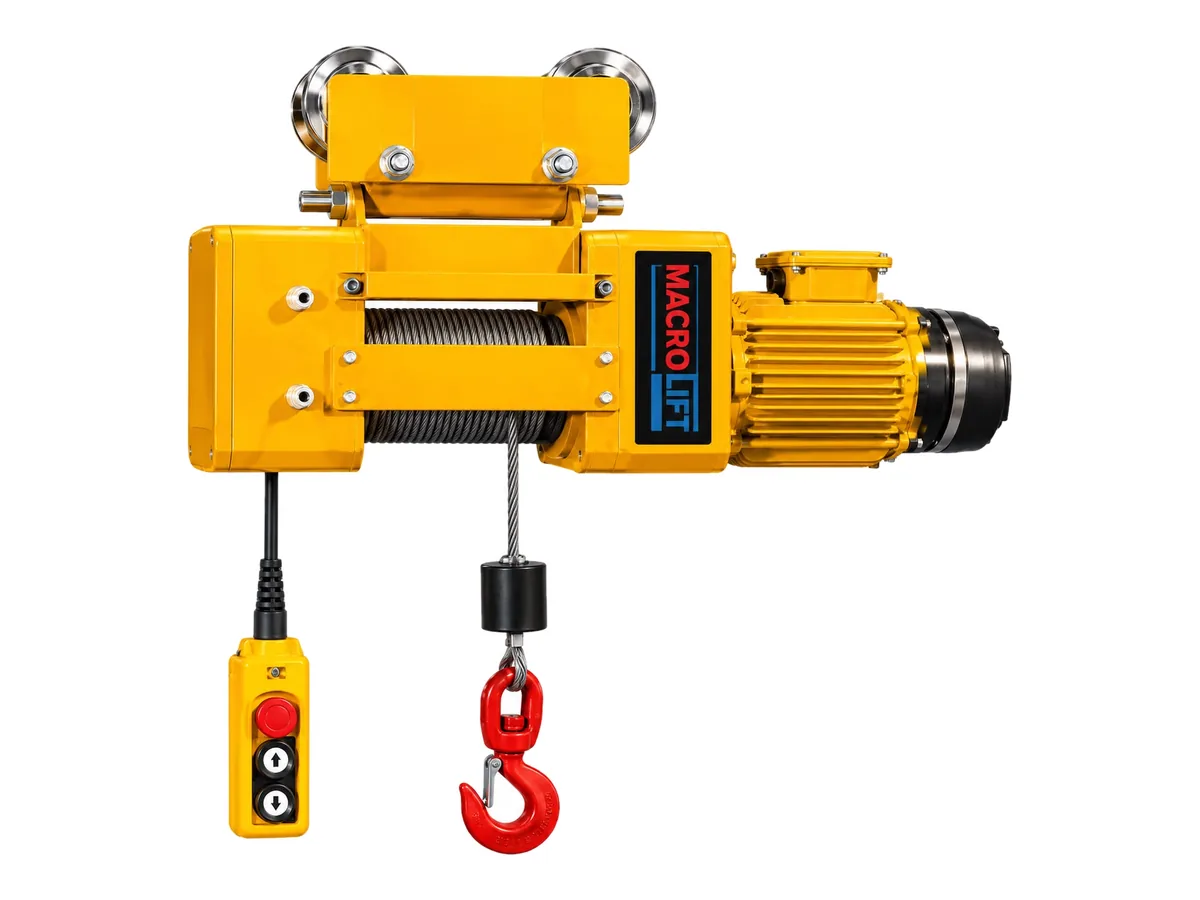
The system has two parts: an electric wire rope hoist and the manual trolley that carries it. The hoist body houses the lifting motor, the brake, the drum the rope winds onto and the electrical panel. The trolley has no motor. The operator only lifts and lowers from the pendant and moves the hoist along the beam by pushing the load. That is why it is also known as a push trolley wire rope hoist. For heavier loads, geared trolleys driven by a hand chain are also used.
Where is it used?
- Workshops with short beams: Areas where the load is moved a few metres from one workbench to the next.
- Maintenance points: Lifting a motor or part on a short beam above a machine and moving it to one side.
- Loading areas: Jobs where the load is taken off a vehicle and set down at a nearby point.
- Lines used only now and then: Places where the hoist travels a few times a day and a motorised trolley is not needed.
How it differs from motorised and fixed models
- Motorised trolley: On monorail wire rope hoists, the trolley has its own motor and is driven from the pendant. On long beams, with heavy loads and frequent travel, it saves the operator effort and makes the load swing less.
- Fixed mounting: Fixed wire rope hoists do not travel at all. They lift and lower at one point.
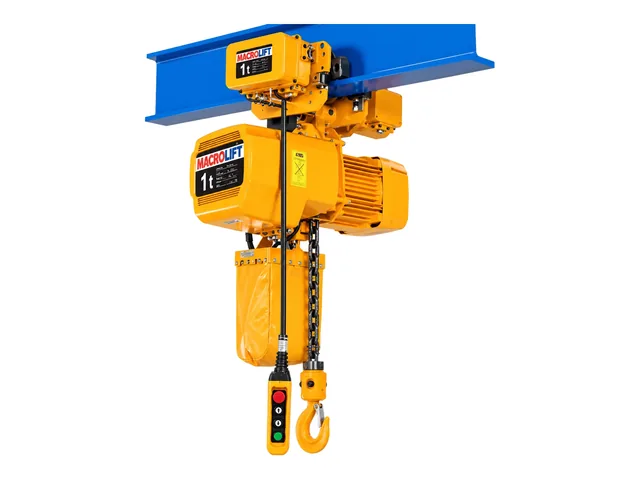
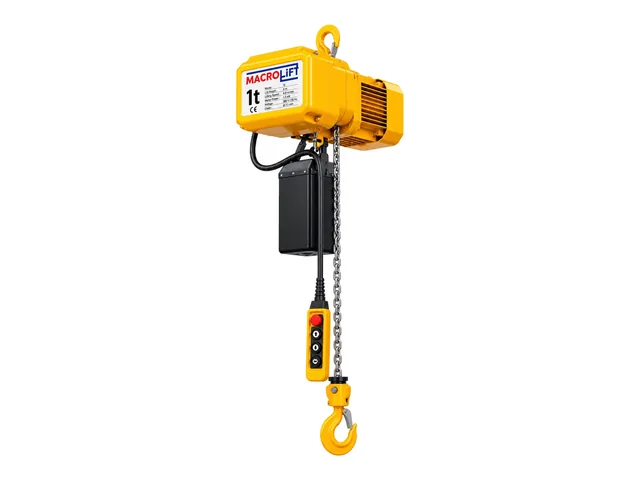
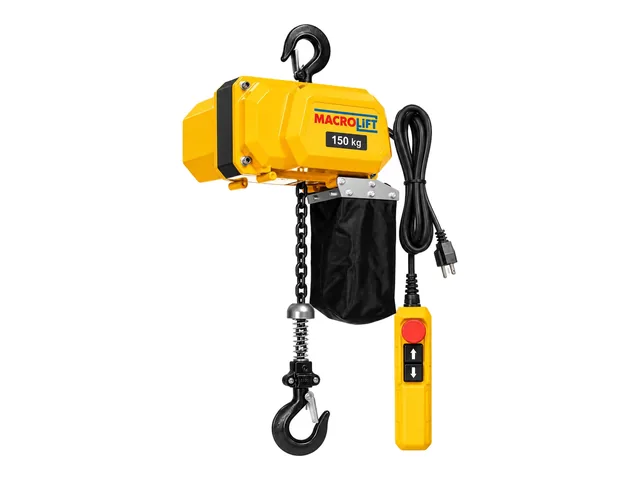
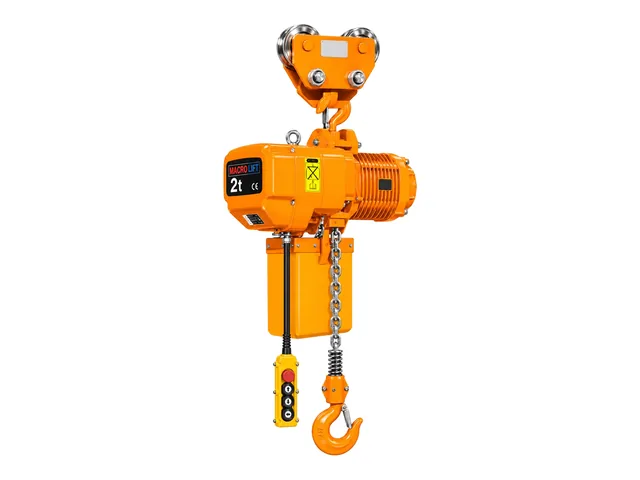
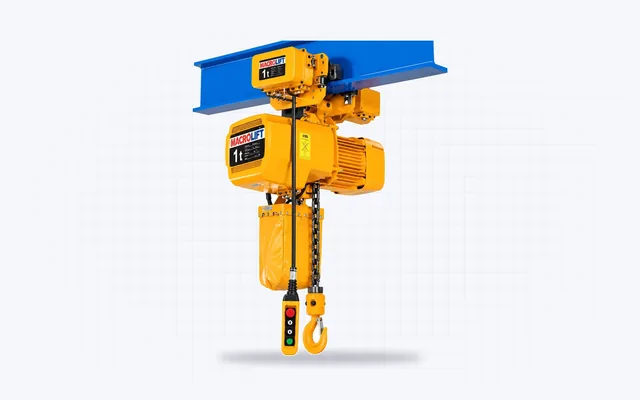
- Chain model: If the load is light and the lifting height is short, chain hoists with a manual trolley can be more compact and economical.
What to look for when choosing
- Load weight: Choose the capacity with the slings and attachments included. The heavier the load, the harder it is to push by hand. In that case a geared or motorised trolley is the better choice.
- Beam length and frequency of use: If the beam is short and travel is occasional, a manual trolley is enough. On long runs, a motorised trolley saves time.
- Beam profile: The trolley wheels must suit the flange type and width of the beam. The beam must also be level, as a manual trolley will roll on its own on a sloping beam. See monorail beams and installation.
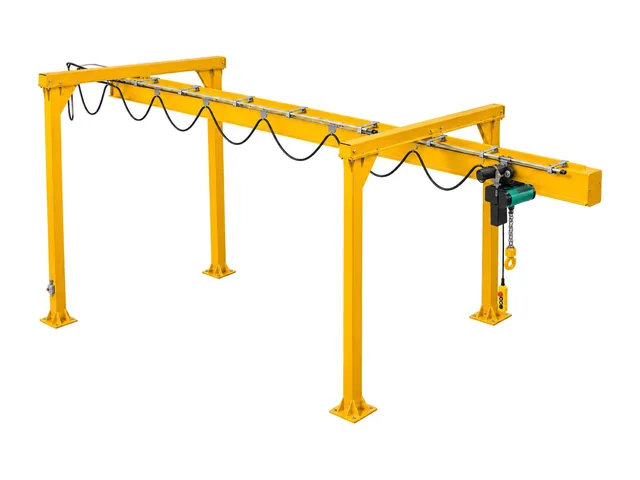
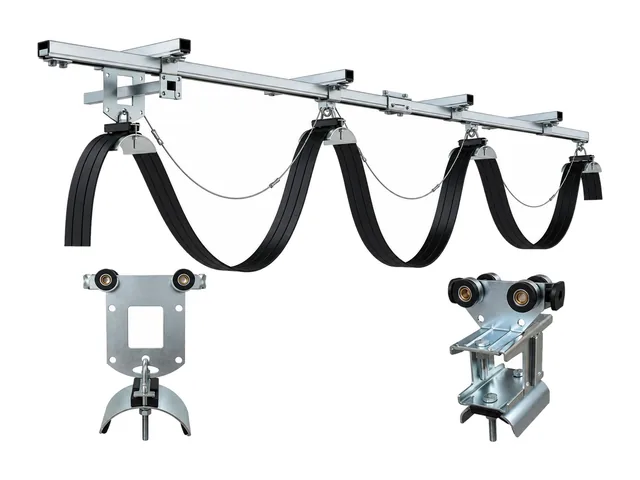
- Power supply line: Even though the trolley is pushed by hand, power still has to reach the hoist along the beam. Cable festoon systems are usually used for this.
- Power supply: Industrial wire rope hoists run on 400 V three-phase power.
Safe use
- Do not move the hoist by pulling on the pendant cable. The cable and its connections are not made for this.
- Push the load slowly and at a steady speed. If it starts to swing, stop and wait for it to settle.
- There must be end stops at both ends of the beam.
- Nobody should stand under the load or in the direction it is being pushed.
For general rules, see our article on hoist safety rules.
Prices of wire rope hoists with a manual trolley
The price depends on the capacity, lifting height, trolley type (push or geared), the beam, the power supply line and the installation. As the trolley has no travel motor or the electrics that go with it, it is usually more economical than a model with a motorised trolley at the same capacity. Just send us the load, the lifting height and the beam length on WhatsApp.
Installation and periodic inspection
We install and service the wire rope hoists with manual trolleys we sell from our base in Tuzla. The rope, hook, brake, limit switches and trolley wheels need regular checks. In Turkey, lifting equipment must by law have a periodic inspection at least once a year. For general information on systems that run on a single beam, see our monorail hoist page.