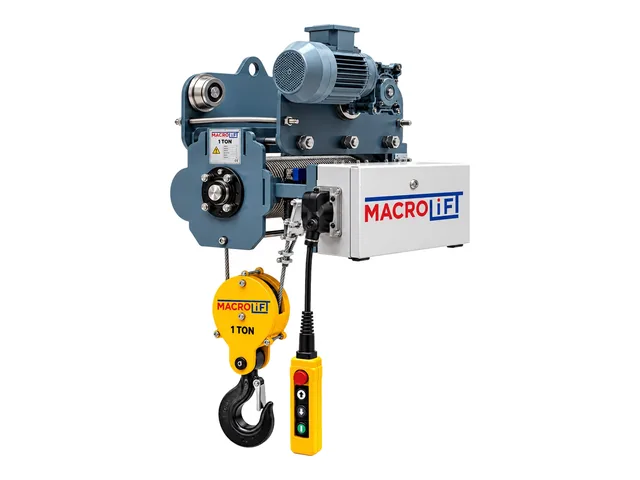
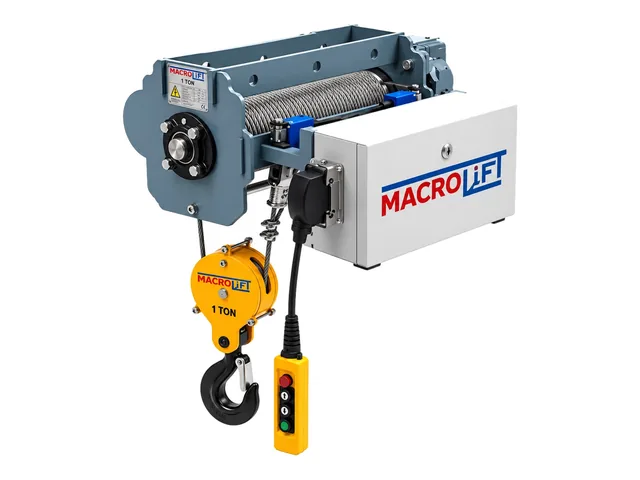
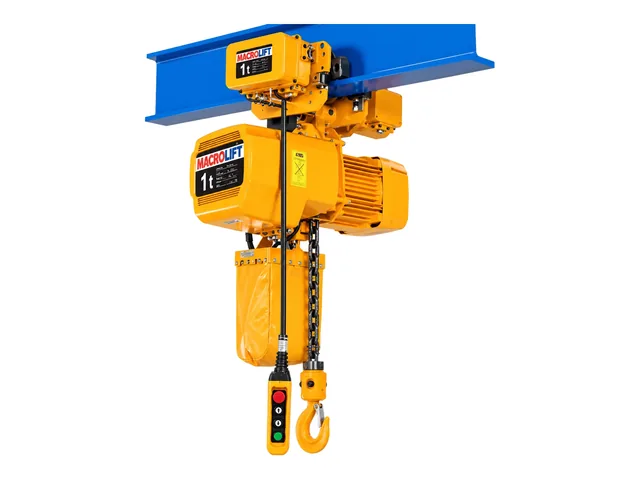
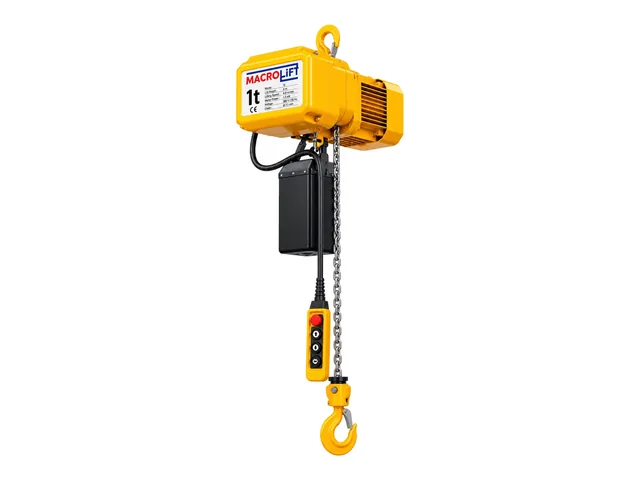
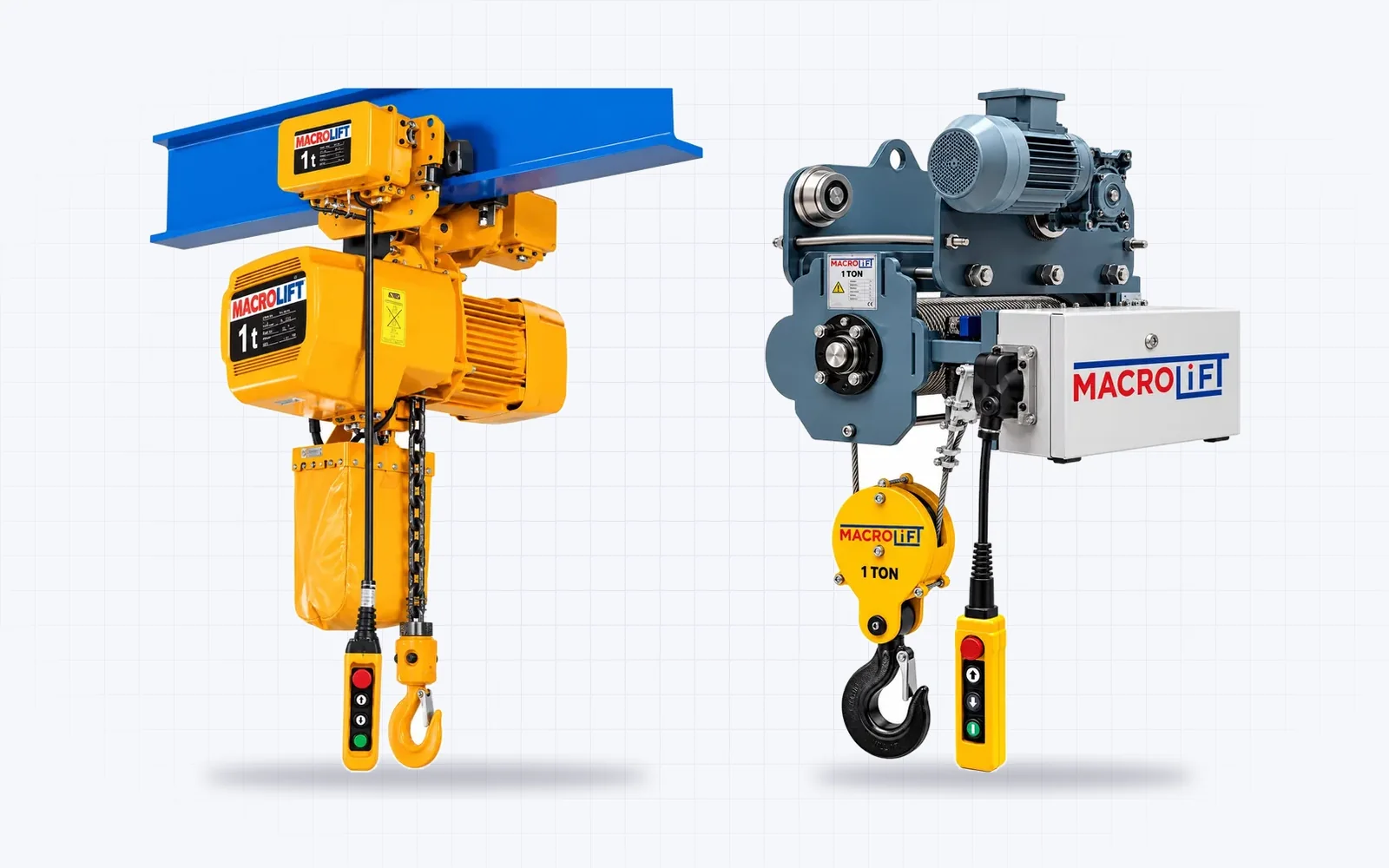
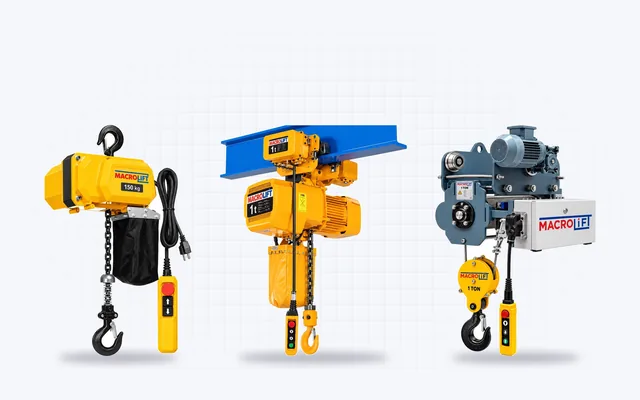
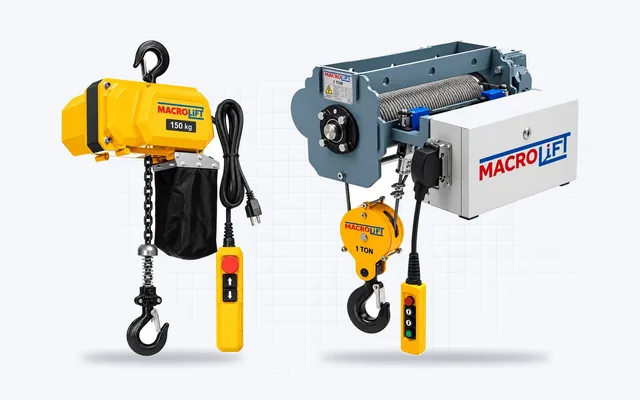
A chain hoist lifts the load with a chain, while a wire rope hoist lifts it with a steel wire rope wound onto a drum. In short: for light and medium loads, limited lifting heights and intermittent use, a chain hoist is usually enough and costs less. As the load gets heavier, the lifting height goes up or the hoist has to work all day, a wire rope hoist becomes the better choice.
This is the first question you will face when choosing a monorail hoist. Below we compare the two types point by point.
How does a chain hoist work?
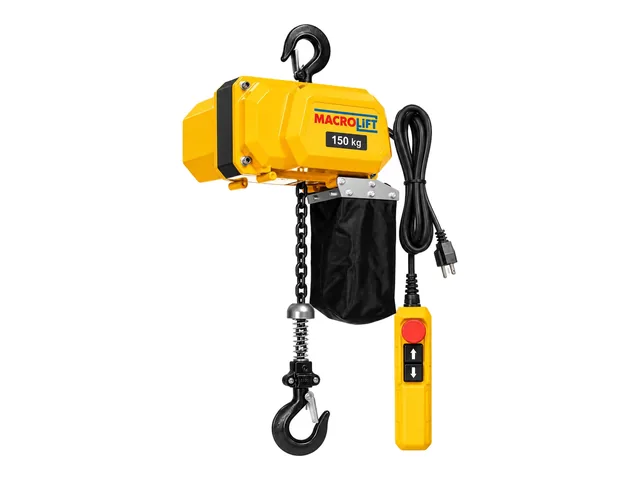
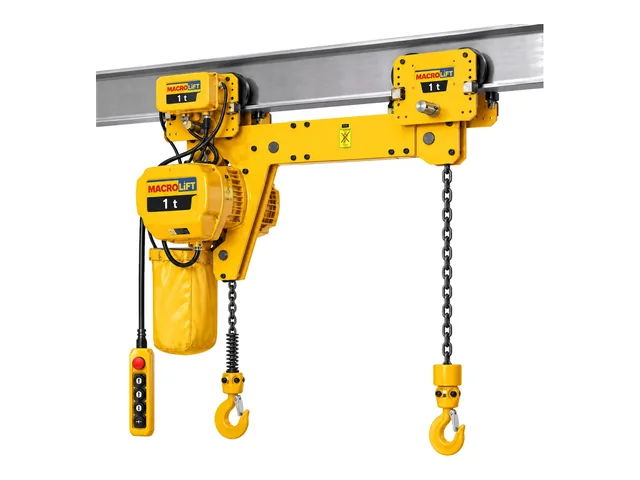
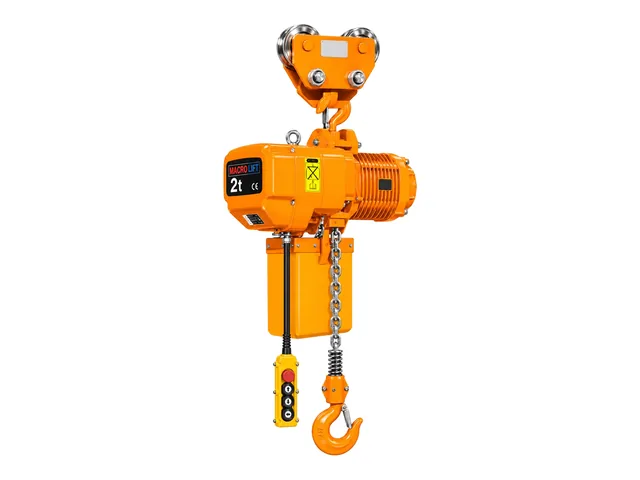
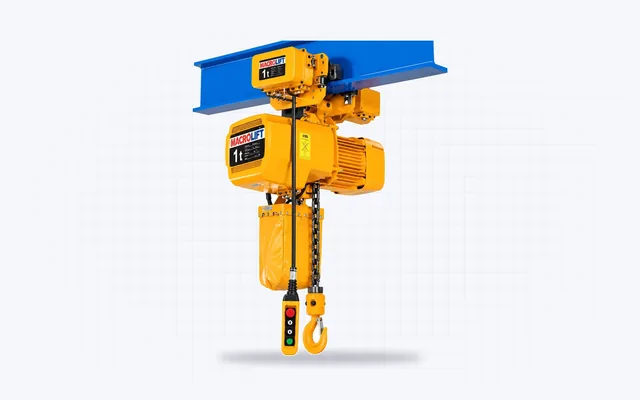
In an electric chain hoist, the motor turns a chain sprocket through a gearbox. The sprocket pulls a specially calibrated load chain. The slack chain collects in the chain bag under the body. The hook is at the end of the chain and rises straight up as the load lifts.
The body is compact and light. Apart from the chain bag, there is nothing that takes up extra space. That is why it works well in workshops with low ceilings and in tight spaces. An example model: Monorail Electric Chain Hoist 500 kg.
How does a wire rope hoist work?
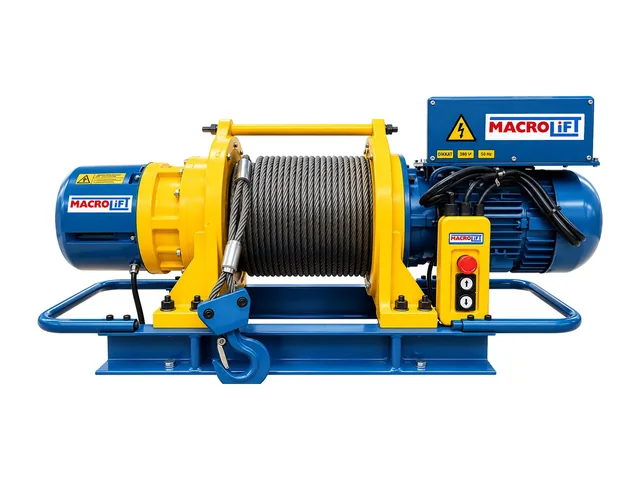
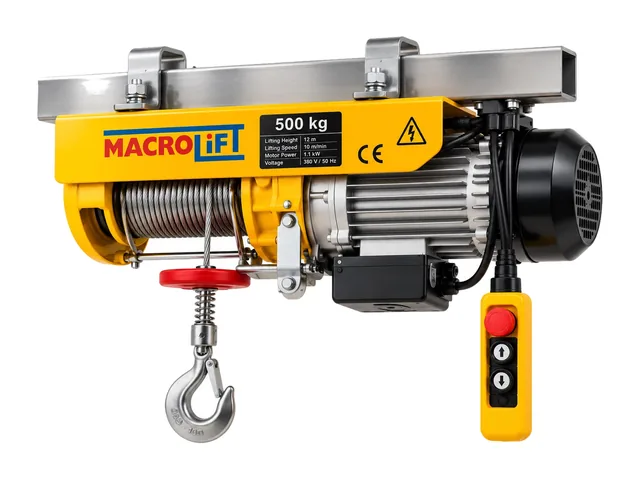
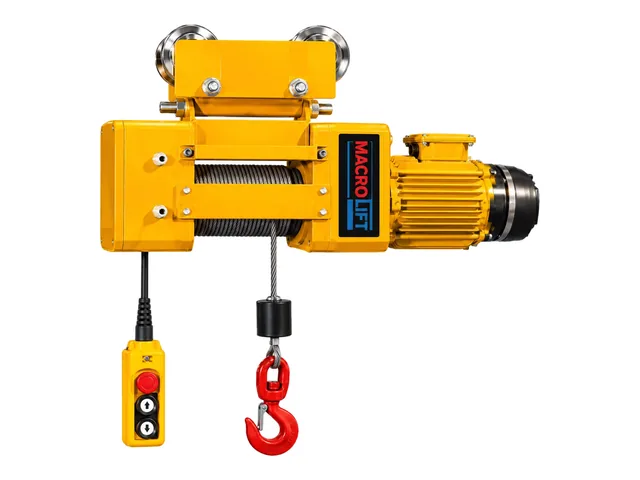
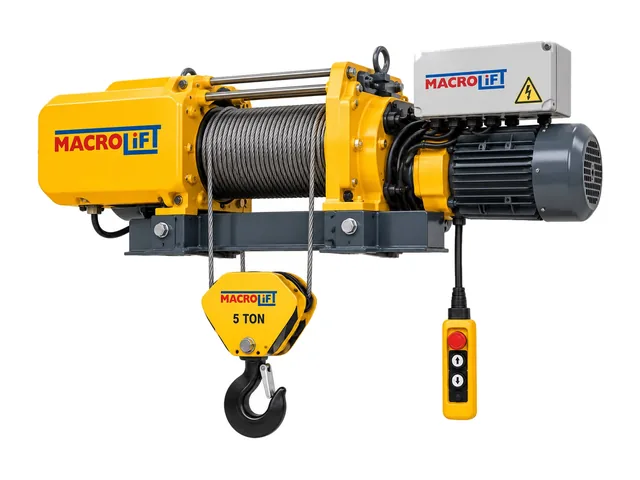
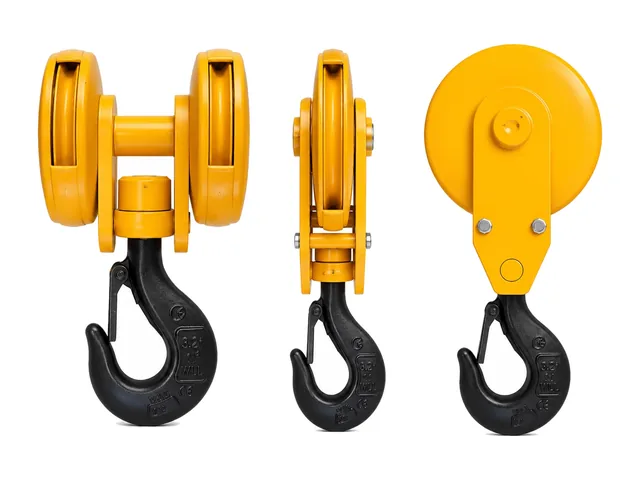
In a wire rope hoist, the motor turns a drum through a gearbox. The steel wire rope winds neatly onto this drum. The rope can run over the sheave in the hook block and be anchored back to the body. This is called the reeving (2/1, 4/1 and so on). The higher the reeving, the heavier the load the same motor can lift, but the speed drops.
Very long lifting heights can be reached by using a longer drum. Wire rope hoists stand up better to high speeds and long hours of work. An example model: Monorail Wire Rope Hoist 1 t 8 m.
Comparison table
| Feature | Chain hoist | Wire rope hoist |
|---|
| Suitable load range | Light and medium loads | Medium and heavy loads |
| Lifting height | Short and medium heights, the chain bag gets bigger as the height increases | Long heights, can be increased with a longer drum |
| Lifting speed | Usually medium speeds | Suits higher speeds |
| Body size | Compact, light | Larger, heavier |
| Hook movement | True vertical lift, the load does not drift sideways | With single-fall reeving, the hook can shift slightly along the drum |
| Intensive use | Intermittent and moderate use | Shift work, all-day operation |
| Maintenance | Simple, chain and brake checks | Regular checks of the rope, drum and sheaves |
| Price | Usually lower at the same capacity | Usually higher |
Which jobs suit a chain hoist?
- Lifting parts onto the workbench in a workshop, removal and refitting work
- Moving loads between stations on an assembly line
- Areas with low ceilings and narrow aisles
- Intermittent use for a few hours a day
- Light and medium loads where the budget comes first
For monorail lines, see our monorail chain hoists page. If the hoist will hang from a fixed point without a beam, see our fixed chain hoists page. We cover chain hoists in more detail in our article on the electric chain hoist.
Which jobs suit a wire rope hoist?
- Moving heavy moulds, machines and steel parts
- Work that needs a long lifting height (high-ceilinged hangars, shafts, platforms)
- Lines that run all day, on two shifts or more
- Work where a high lifting speed has a direct effect on output
For this kind of work, take a look at our monorail wire rope hoists and fixed wire rope hoists pages.
Three questions if you cannot decide
- How heavy is the heaviest load? For light and medium loads, a chain hoist may be enough. As the load gets heavier, lean towards a wire rope hoist.
- How far will the hook travel up and down? If the distance is long, the chain bag gets bigger and a wire rope hoist starts to make more sense.
- How many hours a day will the hoist work? For heavy, all-day use, a wire rope hoist and a higher duty class mean a longer service life.
We explain how duty class and capacity are worked out, with tables, in our article how to choose hoist capacity. If you want to know where the price difference comes from, see our article on monorail hoist prices.
Service life of chain and wire rope
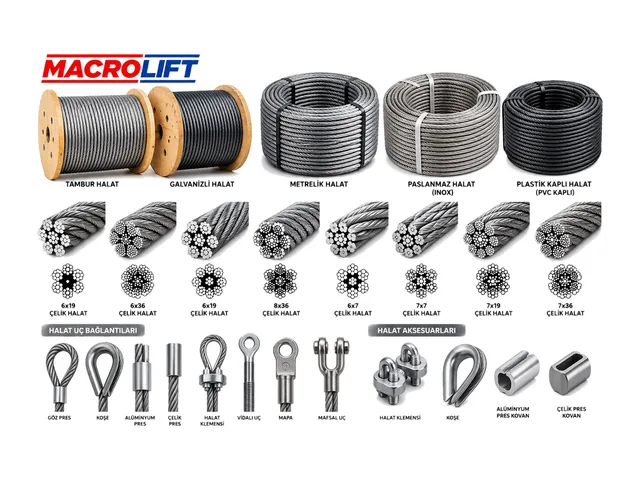
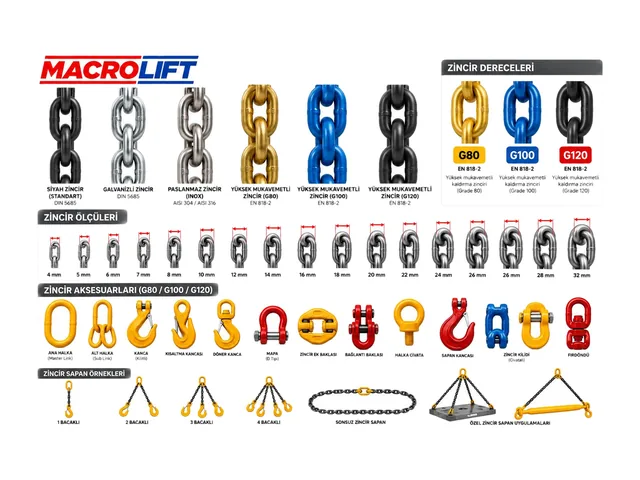
Both are wear parts. They must be checked at set intervals and replaced when needed. On a chain, look for stretch, wear, crushing and cracks. On a wire rope, look for broken wires, crushing, the opening up of the strands known as birdcaging, and rust. The discard limits are set by the manufacturer's values. Spare hoist chains and wire ropes are kept in stock. You will find the inspection intervals in our article on hoist inspection and maintenance.