Why is a cable system needed?
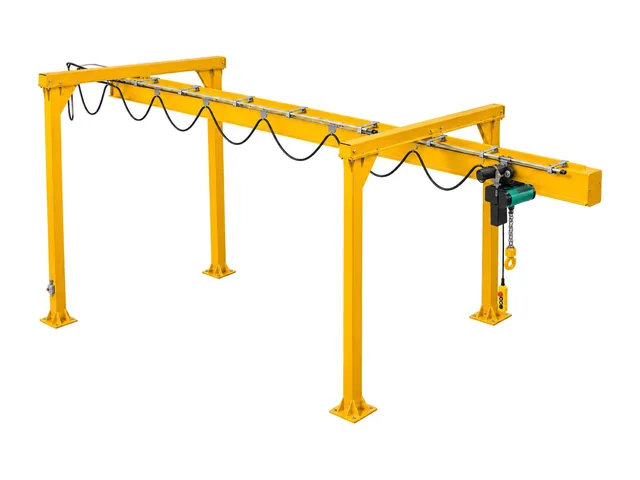
When a monorail hoist or an overhead crane is working, the trolley keeps moving along the beam. The cable that feeds the hoist has to follow this movement without sagging, tangling or getting crushed. A cable festoon system carries power and control signals safely along the whole line. The need is the same on monorail chain hoists and monorail wire rope hoists.
How does a C-rail festoon system work?
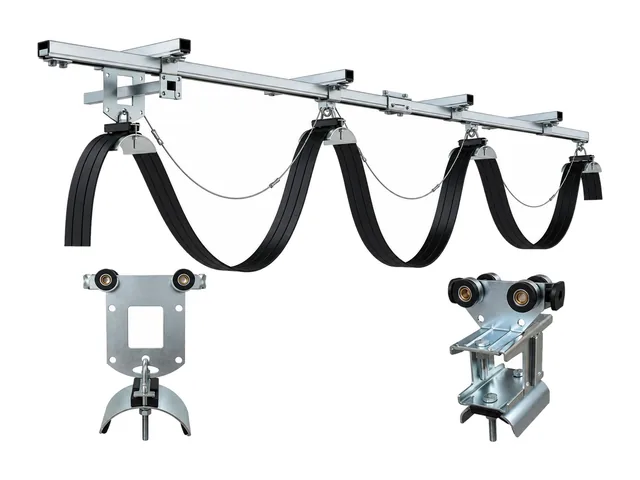
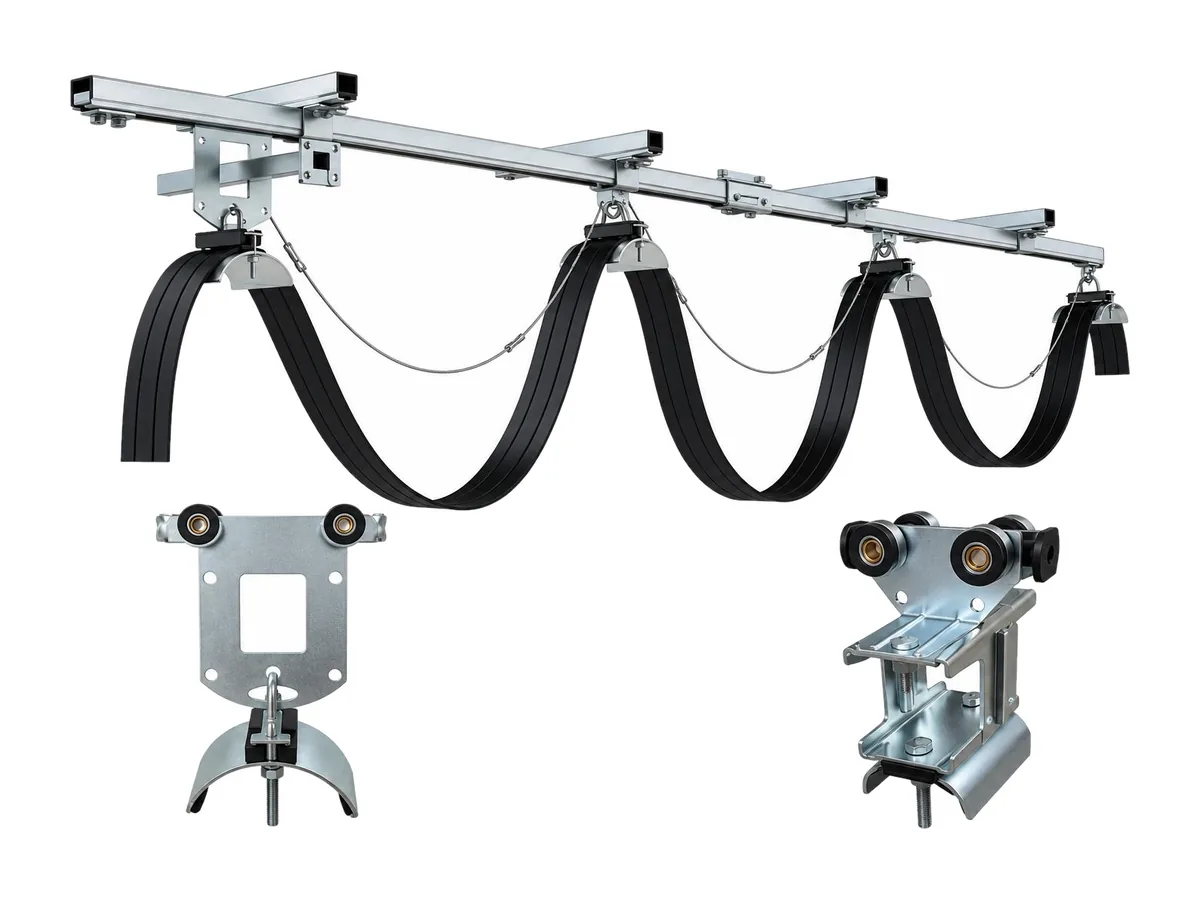
A C-rail is fitted beside or below the hoist beam. The cable hangs from cable trolleys that run on wheels inside this rail. As the towing trolley, which is connected to the hoist trolley, moves forward, the trolleys spread apart, and as it comes back they close up again, so the cable opens out and folds up like an accordion. A fixed end clamp at the start of the line holds the cable and takes the supply. Flat cable is used in most of these systems because it does not tangle when it folds and it stacks neatly. Some systems have a tension rope between the trolleys, so the pulling force is taken by the rope instead of the cable. Our range includes C-rail cable festoon systems and steel cable trolleys. The system is also known as a C-track festoon or a C-rail cable trolley system.
What is a conductor bar system?
In a conductor bar system, a line of conductor bars runs along the beam. A current collector (carbon brush) on the trolley slides along the bars and picks up the power. In enclosed conductor bar systems, the conductors sit inside an insulating housing and are protected against contact. In open conductor bar systems the conductors are exposed, so they must be installed out of reach of people and in line with electrical safety rules. With conductor bars there is no cable stack at the end of the line. Our range also includes crane conductor bar systems and open conductor bar systems.
Festoon or conductor bar?
| Topic | C-rail festoon | Conductor bar |
|---|
| Line length | Economical for short and medium lines | Preferred for long lines |
| Curves and switches | Usually used on straight lines | Adapts more easily to curved lines |
| Space at the end of the line | Needs room for the cable stack | No extra space needed |
| Control signals | Several cables can travel in the same package | Needs extra conductors or a radio remote |
| Maintenance | Needs little maintenance | Current collectors wear and are replaced |
In short, on a straight, short monorail line a festoon system is usually enough and practical. As the line gets longer, or as curves and switches are added, a conductor bar system becomes the stronger choice.
What to look for when choosing a cable festoon system
- Line length and shape: The beam length, curves and switches decide the type of system.
- Current and cable size: The motor power of the hoist and trolley decides the cable cross-section. On long lines, voltage drop must also be taken into account.
- Number of cables: If a control cable will travel with the power cable, the trolleys are chosen to carry both.
- Travel speed: The trolleys and the system must suit the travel speed of the hoist.
- Environment: Outdoor use, moisture, dust and temperature affect the choice of materials and cable.
Where the power line is fitted in relation to the beam is covered in our article on the monorail beam and installation. If the beam, the hoist and the power line will be planned together, see our monorail crane systems page.
Cable festoon system prices
The main factors that set the price are the line length, whether the system is a festoon or a conductor bar, the cable cross-section and number of cores, the number and type of trolleys, and the hangers and fittings. The power line is usually priced together with the beam length. Just send us the beam length, the motor power of the hoist and whether the line is straight or curved on WhatsApp.