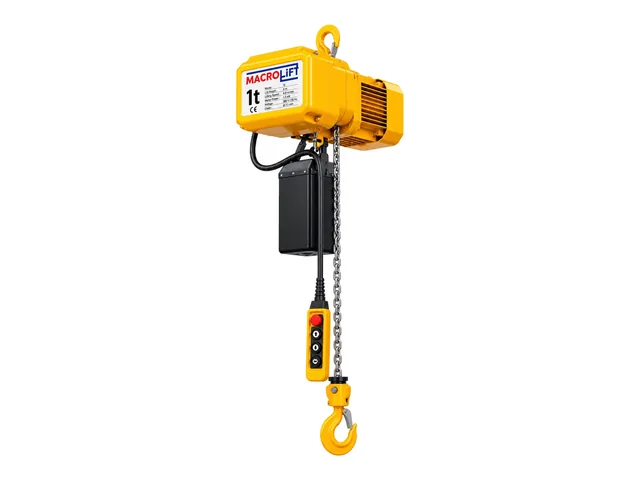
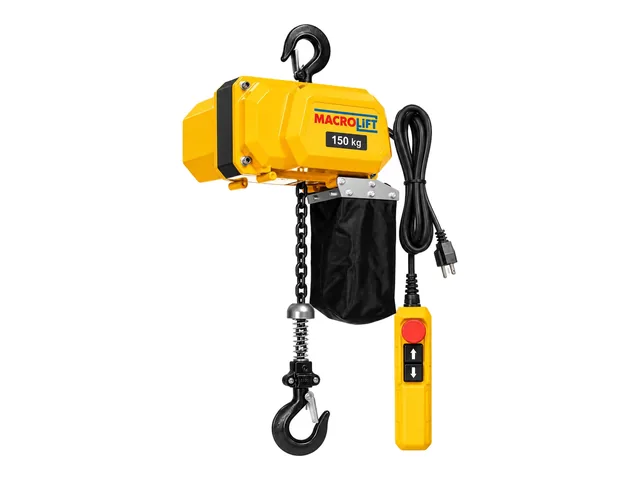
What is a monorail chain hoist?
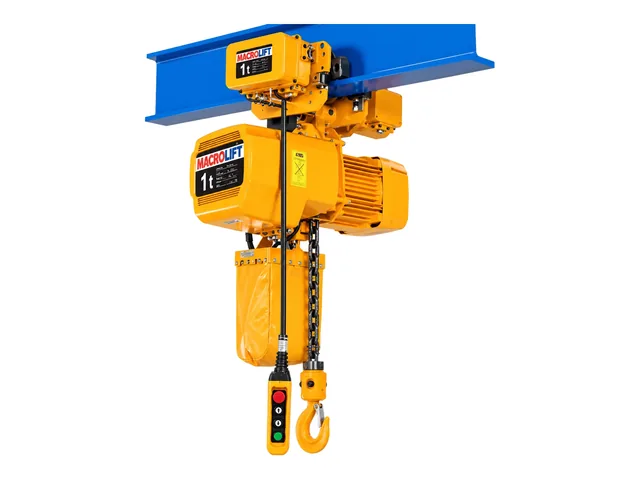
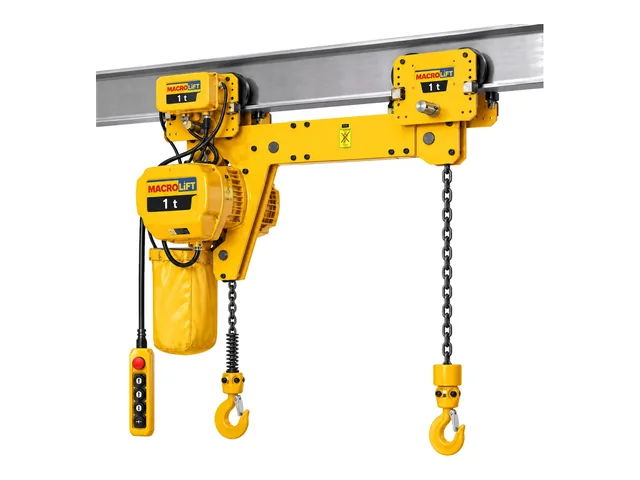
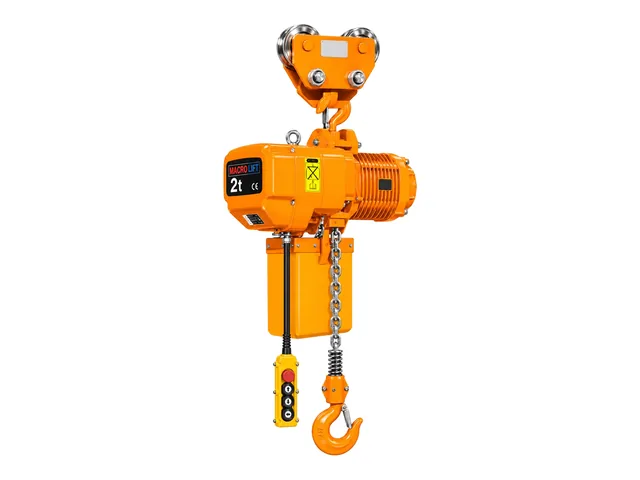
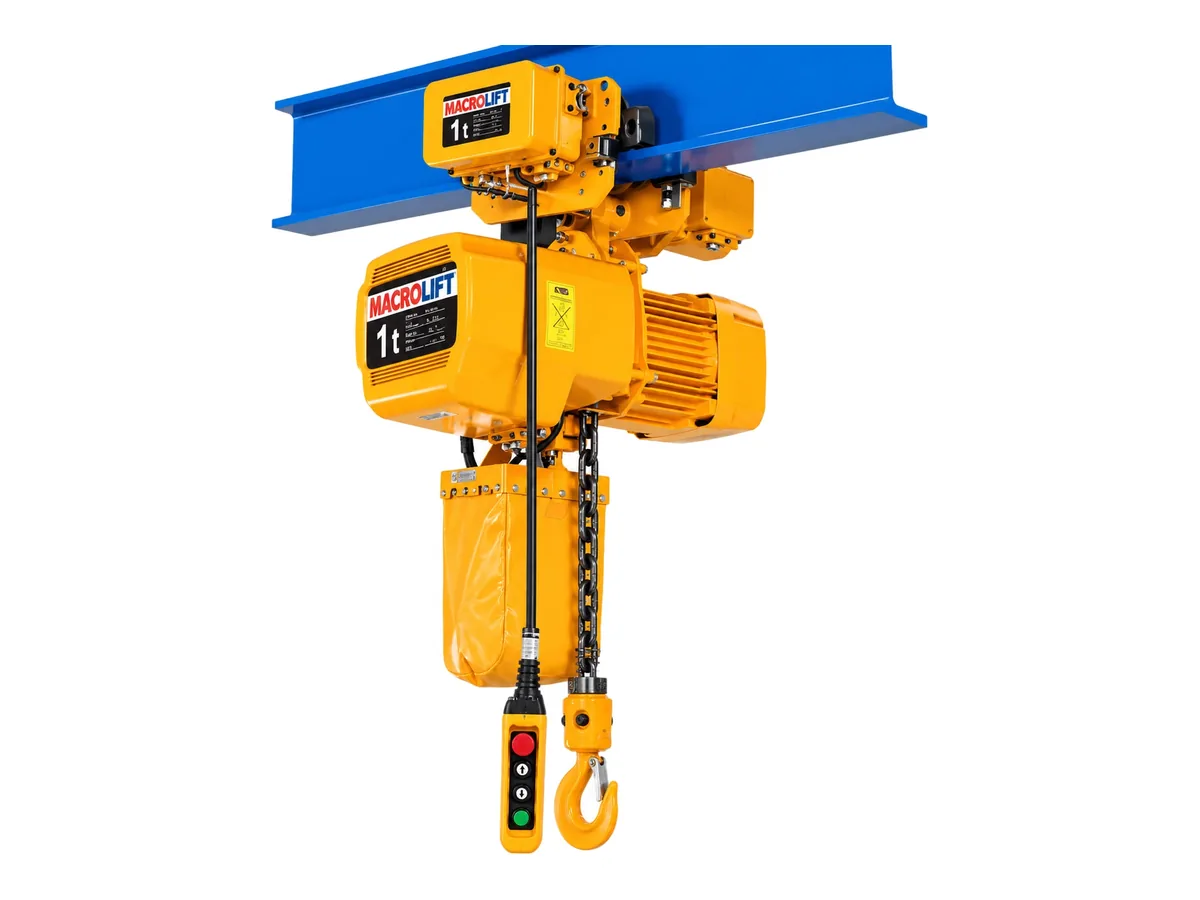
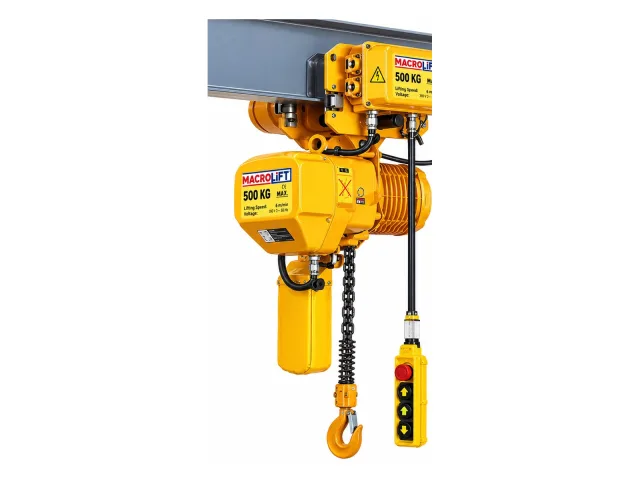
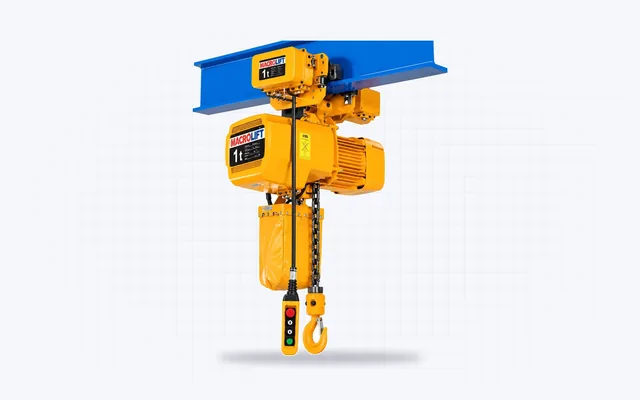
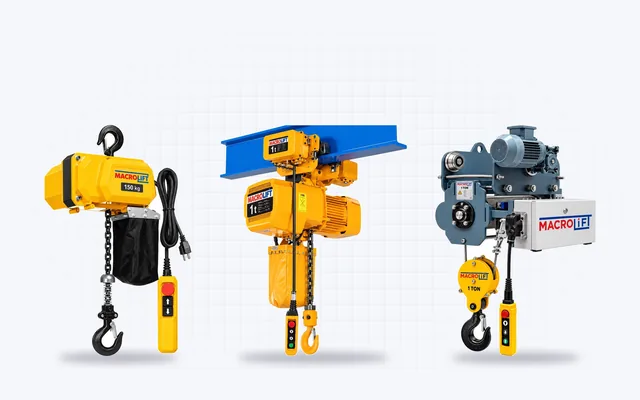
A monorail chain hoist has three main parts: the electric chain hoist that lifts the load, the motorised trolley that moves the hoist along the beam, and the push-button pendant the operator uses. The trolley runs on the bottom flange of a single I-beam hung from the ceiling or a steel structure. This lets the load be lifted, carried and lowered along a fixed line. With its compact body and easy maintenance, it is the most common type of monorail hoist working on a single line.
Where is it used?
- Production lines: Lines where parts always follow the same route from one machine to the next.
- Workshops and maintenance areas: Areas where motors, dies and machine parts are removed and refitted.
- Stores and loading areas: Lines where loads are picked up from a lorry, a ramp or a rack and set down at a given point.
- Paint, blasting and washing lines: Plants where parts pass from one station to the next while hanging.
Chain or wire rope?
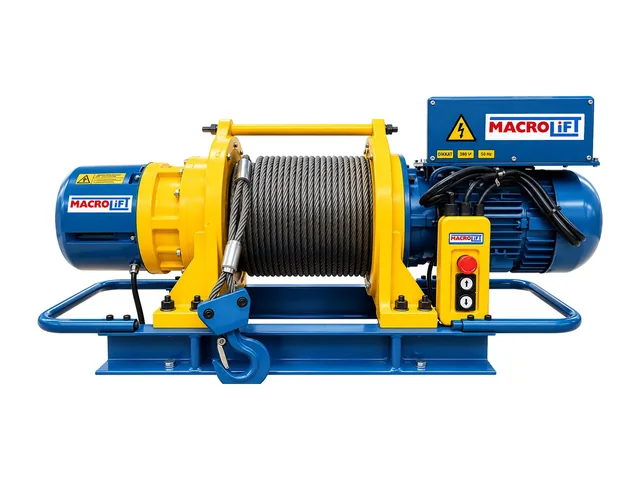
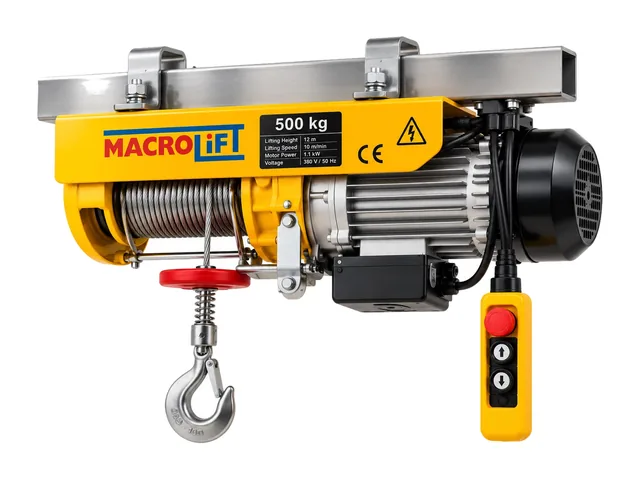
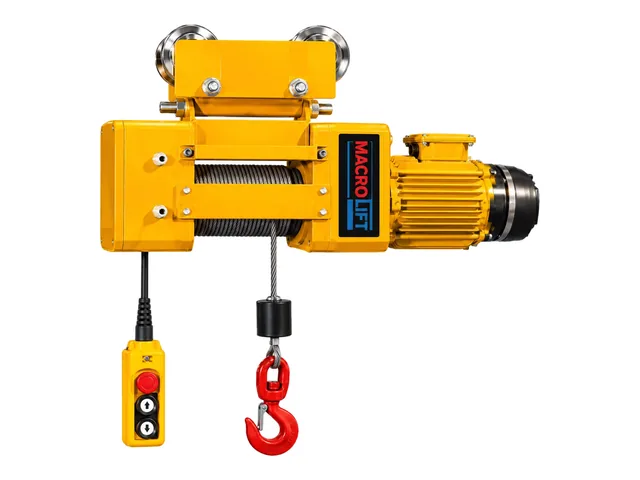
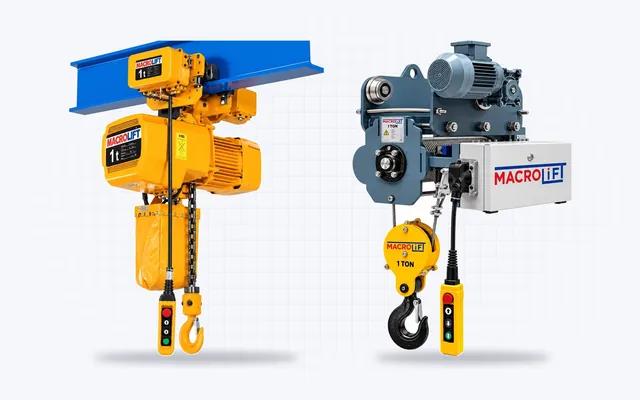
A chain hoist is more compact and lighter than a wire rope hoist of the same capacity, and its maintenance is simpler. For low and medium capacities and short to medium lifting heights, it is usually the more economical choice. As the load gets heavier, the lifting height increases or the hoist has to work all day, monorail wire rope hoists come to the fore. We compare the two types in a table in Chain or wire rope? Choosing a monorail hoist.
Figures to check in quotes and catalogues
- Lifting capacity: The heaviest load the hoist can lift safely. The weight of slings and attachments counts towards it.
- Lifting height: The distance between the lowest and highest points of the hook. It sets the chain length.
- Lifting and travel speed: Besides single-speed models, there are dual-speed models for setting the load down precisely.
- Power supply: Industrial models run on 400 V three phase.
- Protection class: Shows how well the hoist resists dust and water. IP54 is a common rating for indoor areas.
We explain what these figures mean on a real model in our electric chain hoist guide.
Choosing the right model
- The load at its heaviest: Add the sling, the hook attachment and any spreader beam. Choose a capacity above this total. For details, see how to choose hoist capacity.
- Lifting height: The highest point the hook must rise to from the floor sets the chain length and the price.
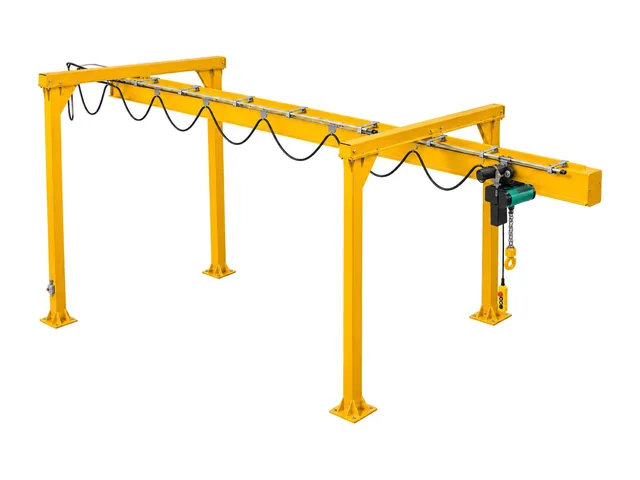
- Beam: If there is an existing beam, its section type and flange width are needed to match the trolley. If there is no beam, the beam, hangers and installation are planned together. See monorail crane systems.
- Workload: A few lifts a day and work through a full shift do not call for the same hoist.
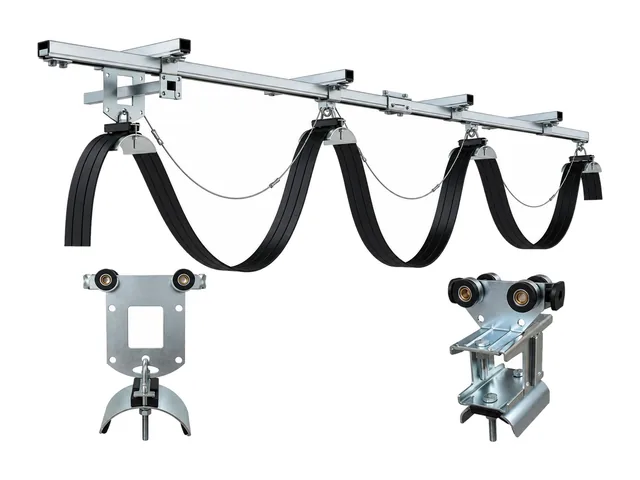
- Power: Whether the site has a three-phase supply, and how power will reach the hoist along the beam, should be planned from the start. See cable festoon systems.
Monorail chain hoist prices
The main factors that set the price are capacity, lifting height, speed option, trolley type and whether you buy a complete system with a beam or the hoist alone. The beam, hangers and installation labour have a large effect on the total cost. That is why we prepare a quote for your job rather than give a fixed list price. Just send us the load weight, the lifting height and the beam length on WhatsApp. All the items that affect the price are covered in monorail hoist prices.
Installation, periodic inspection and service
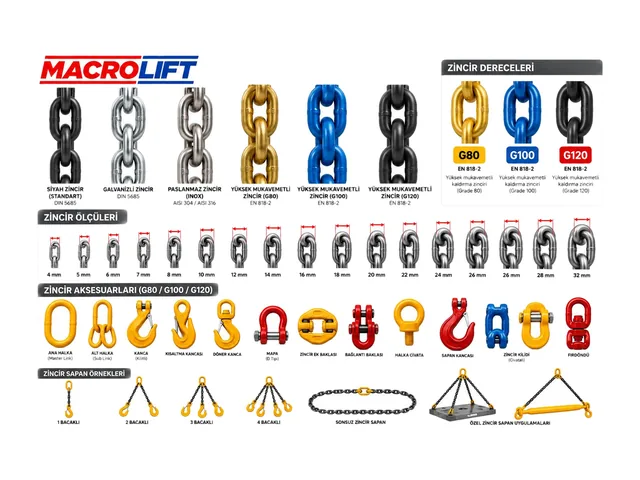
We install, commission and service the monorail chain hoists we sell from our base in Tuzla. The load chain, the brake and the limit switches are the parts that wear most and need checking most often. In Turkey, lifting equipment must by law have a periodic inspection at least once a year. Details are in our guide to hoist inspection and maintenance. For replacement chain, see our hoist chains page.