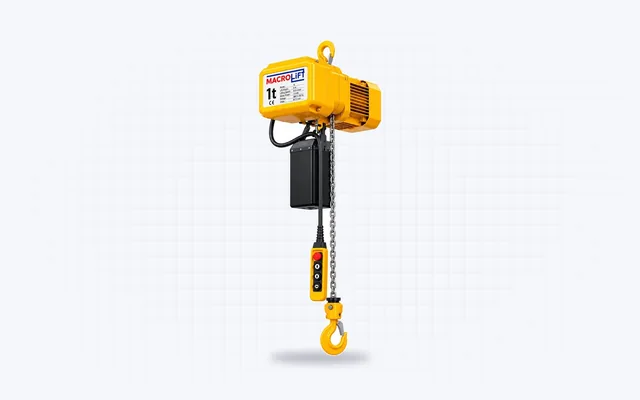
Types of crane hook
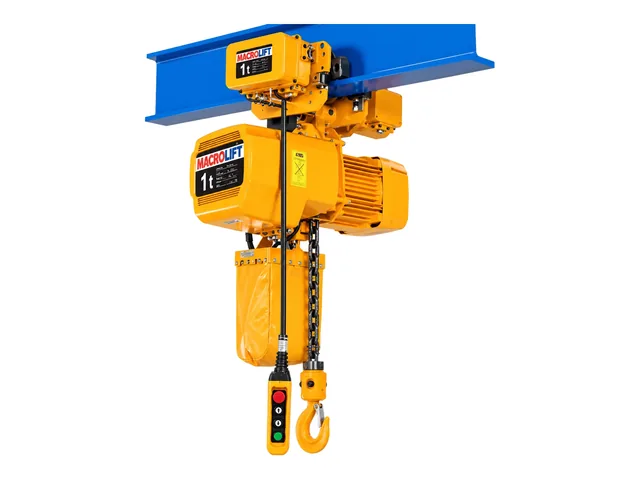
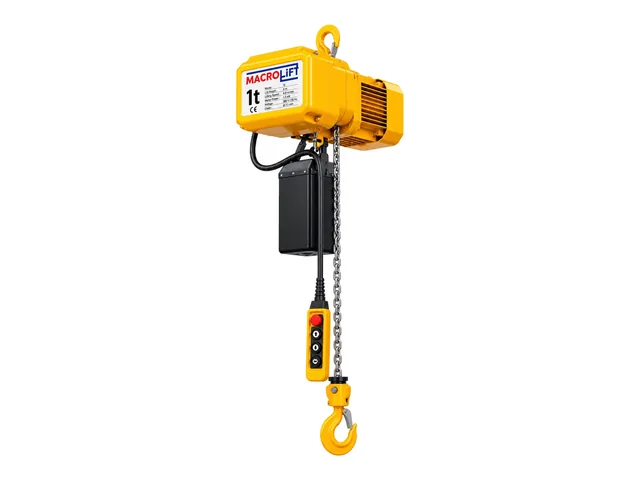
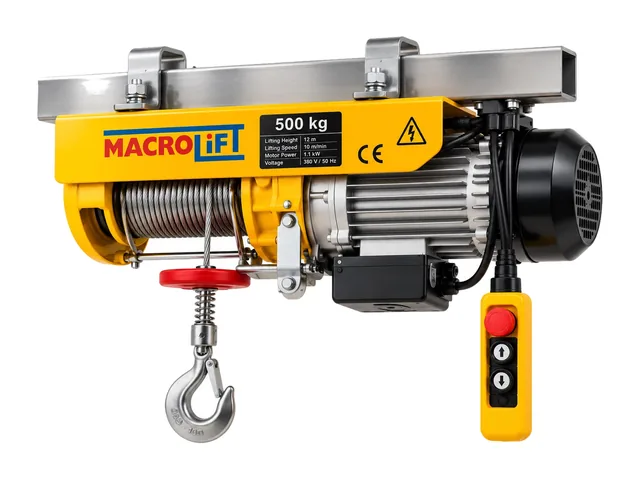
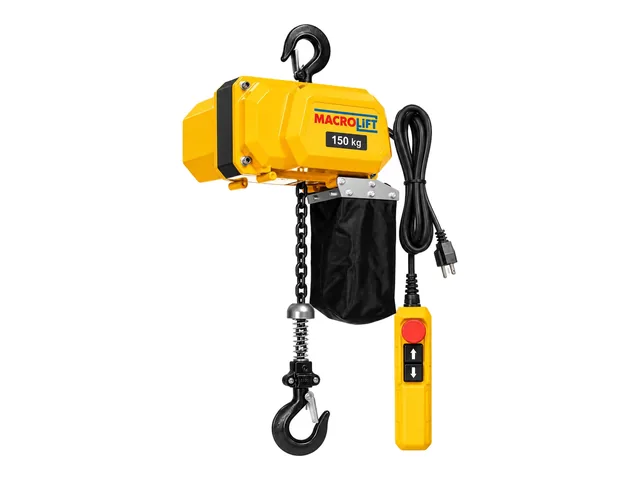
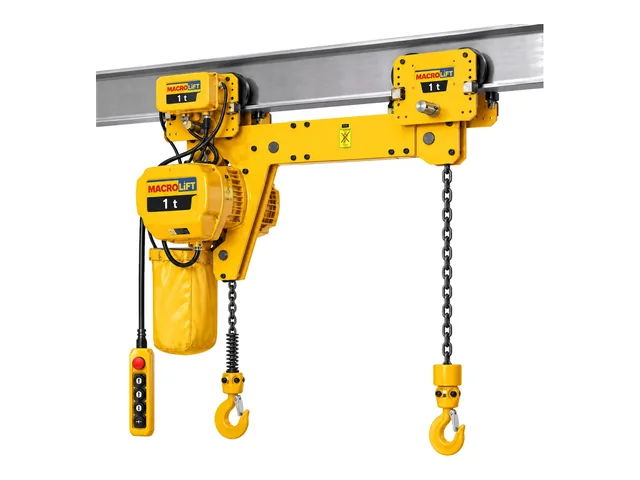
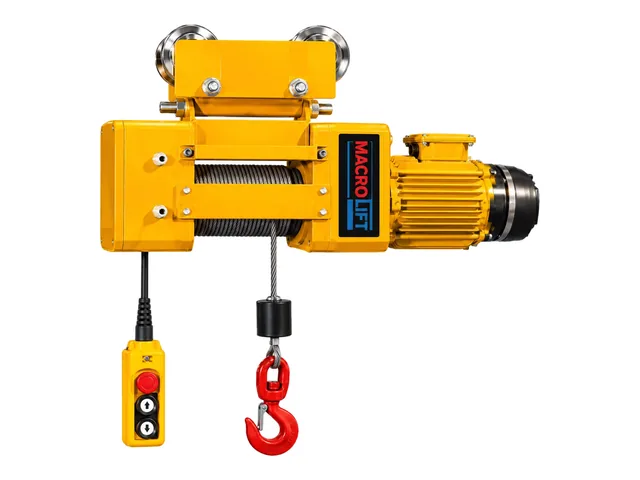
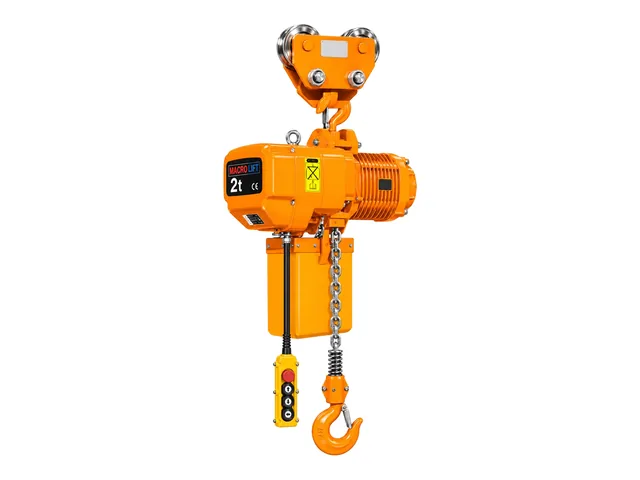
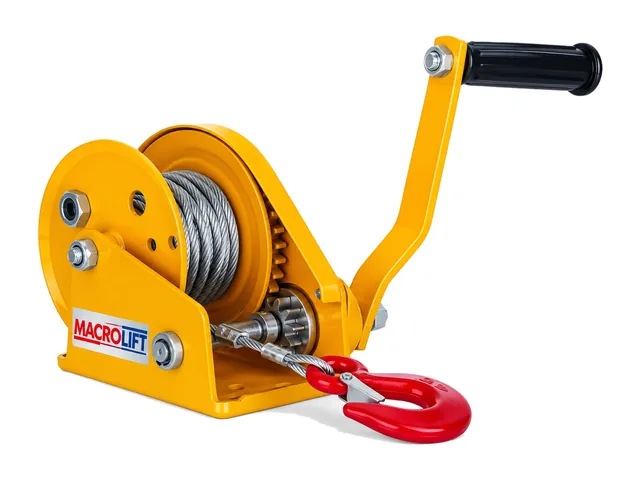
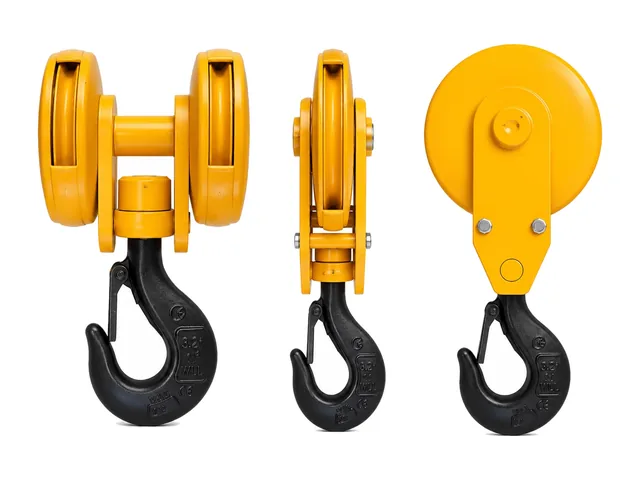
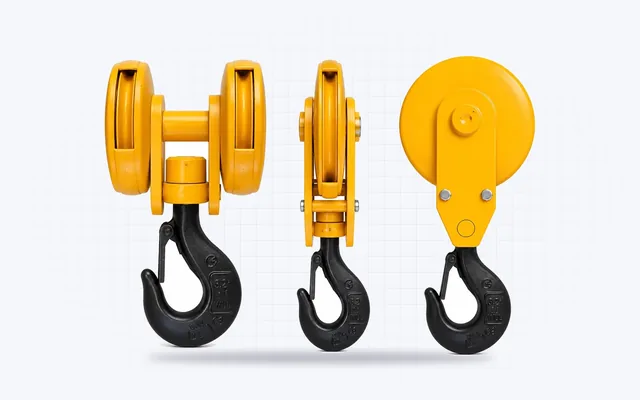
- Single hook: The most common type. Most chain and wire rope hoists use this hook.
- Double hook: Also called a ramshorn hook. Its two prongs spread the load evenly on both sides of the hook. It is found mostly on heavy-capacity cranes.
- Swivel and fixed hooks: A swivel hook turns on its own axis while the load is hanging, which makes it easier to position the load. A fixed hook does not turn.
- By type of connection: An eye hook connects with a ring or shackle, and a clevis hook is fitted to the chain or a link with a pin. Shank hooks are fixed into the hook block with a nut.
Most hooks have a safety latch. The latch stops the sling or ring from slipping out of the hook opening. These parts are also known as lifting hooks or load hooks.
Hook blocks and the number of sheaves
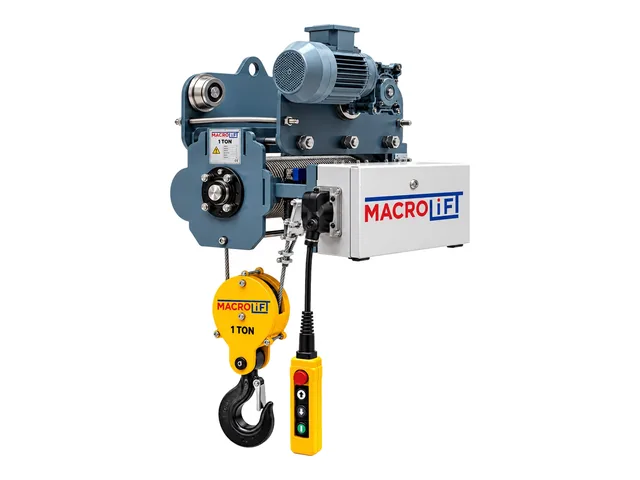
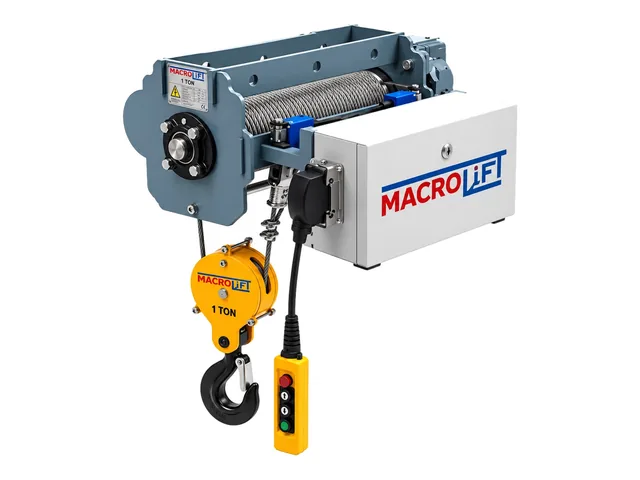
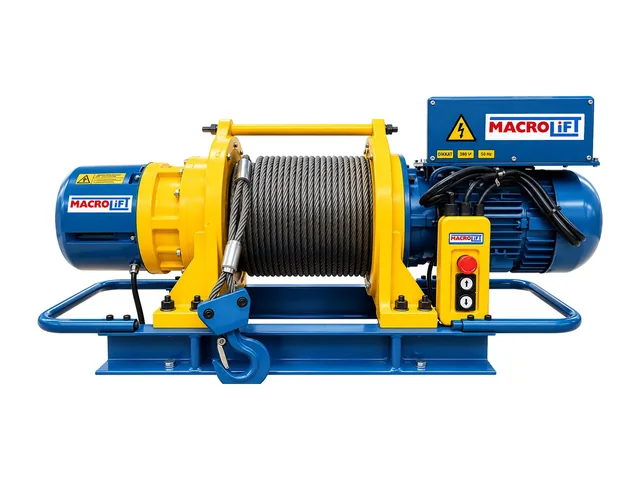
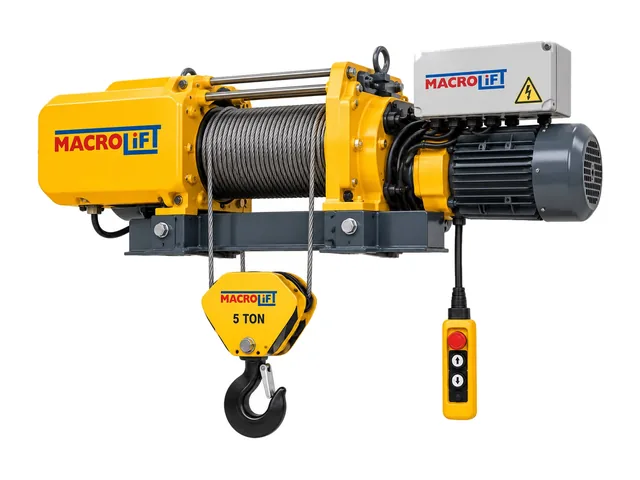
On wire rope hoists, such as monorail wire rope hoists, the hook is usually attached to a hook block with sheaves. The rope passes around the sheave in the block and is anchored again at the top, so the load is carried by more than one rope fall. This is called reeving. Single sheave blocks are usually used with 2/1 reeving and double sheave blocks with 4/1 reeving. The more falls there are, the heavier the load the same motor and rope can lift, but the lifting speed drops and a longer rope is needed. So the hook block must suit the reeving, capacity and rope diameter of the hoist. We also explain reeving in our article on chain hoist vs wire rope hoist.
How it differs from rope and chain
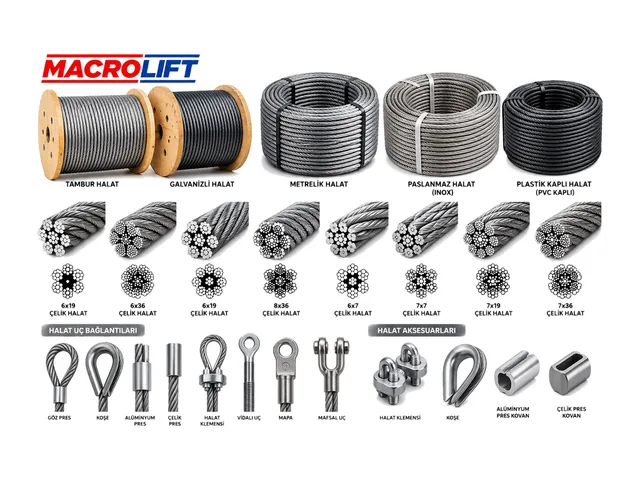
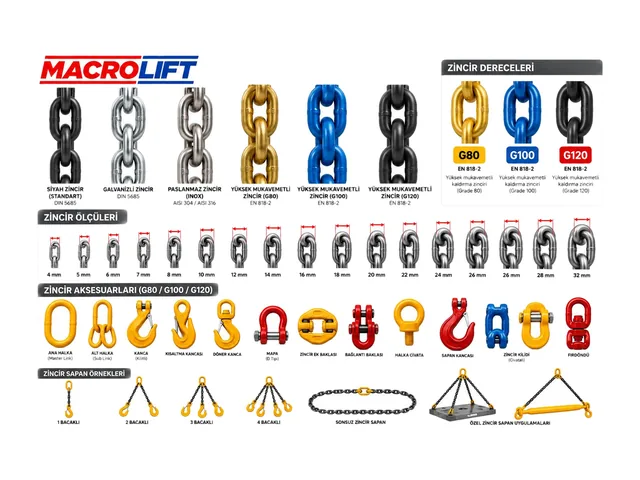
The hook is the connecting part at the end of the lifting chain or wire rope. The part that carries the load is the rope or chain itself, which you will find on our wire ropes and hoist chains pages. The sling hooks at the end of chain slings belong to the same family, but they are chosen together with the sling. When you replace a crane hook, check that the new hook fits the hoist chain or the hook block.
What to look for when choosing a crane hook
- Capacity: The working load limit (WLL) marked on the hook must not be lower than the capacity of the hoist. The load the system can carry is limited by the lowest rated part among the hook, the block and the hoist.
- Connection: How the hook will be fixed to the hoist, chain or block. Shank, eye and clevis hooks cannot be swapped for one another.
- Sheave and rope match: The sheave groove must suit the rope diameter.
- Safety latch: The latch must be sound and sprung, and it must close the hook opening fully.
- Standards and marking: The DIN 15400 series (DIN 15401 for single hooks, DIN 15402 for ramshorn hooks) is a common reference for crane hooks, and the EN 1677 series for sling hooks. The capacity and the manufacturer's mark on the hook must be readable.
What to check when inspecting a hook
- Opening of the throat: If the hook opening has widened compared with a new hook, this is usually a sign of overloading.
- Cracks and nicks: Especially at the bottom of the hook and where it joins the shank.
- Wear: Loss of section at the bottom of the hook, where the sling sits.
- Bending and twisting: Any bend of the hook out of its own plane.
- Latch and swivel bearing: Does the latch close, and does the hook turn smoothly without play?
- Sheaves: Groove wear and whether the sheave turns freely.
The point at which a hook must be taken out of service is set out in the manufacturer's instructions and in the standard that applies. A damaged hook is never welded, heated or bent back into shape. It is replaced. For a checklist, see our article on hoist inspection and maintenance, and for how the load should sit in the hook, see our hoist safety rules.
Crane hook prices
The main factors that set the price are the capacity, whether the hook is single or double, swivel or fixed, the type of connection, and the number and diameter of the sheaves in the hook block. Just send us the make and capacity of your hoist and a photo of the old hook on WhatsApp.