How does a mini wire rope hoist work?
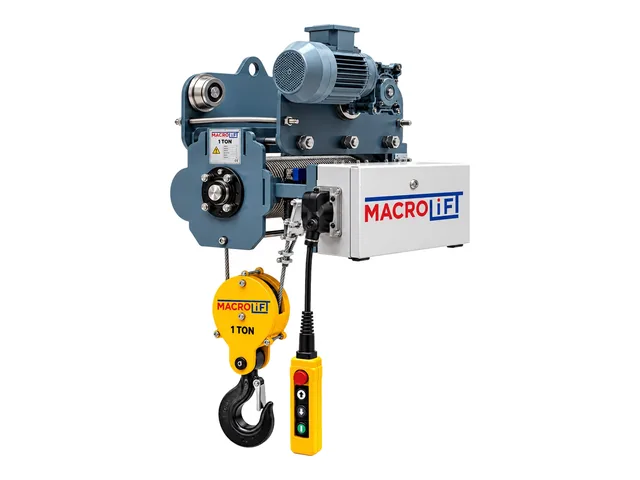
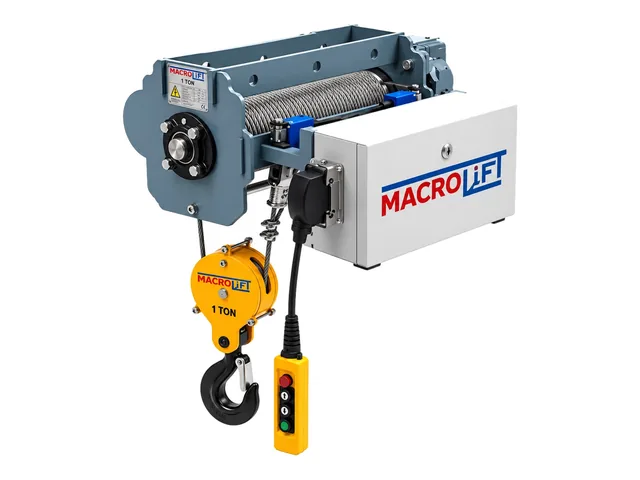
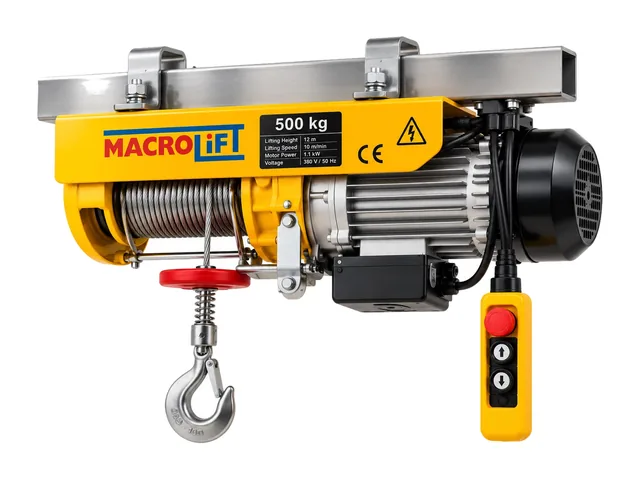
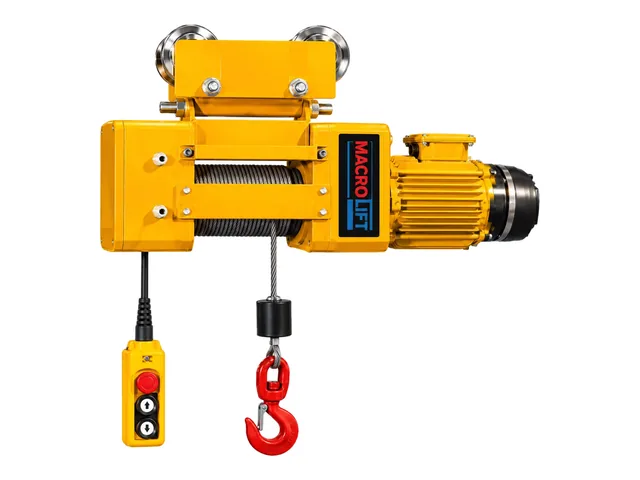
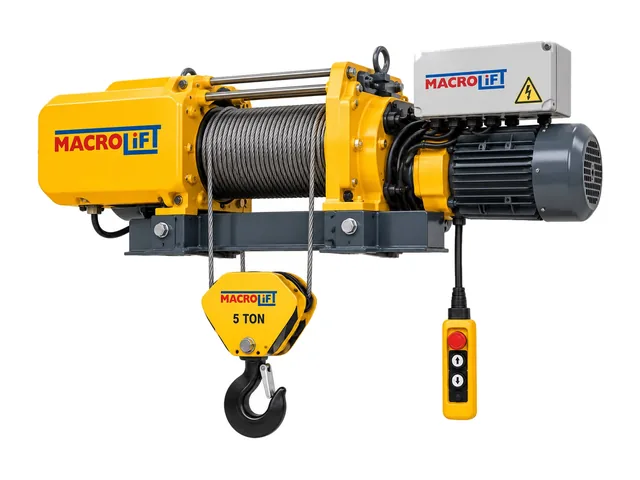
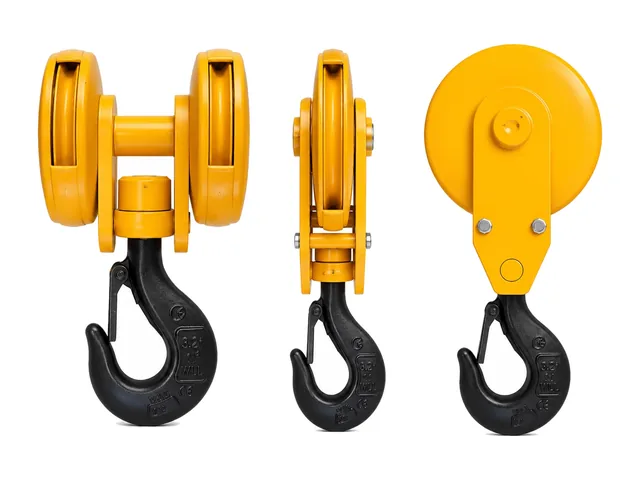
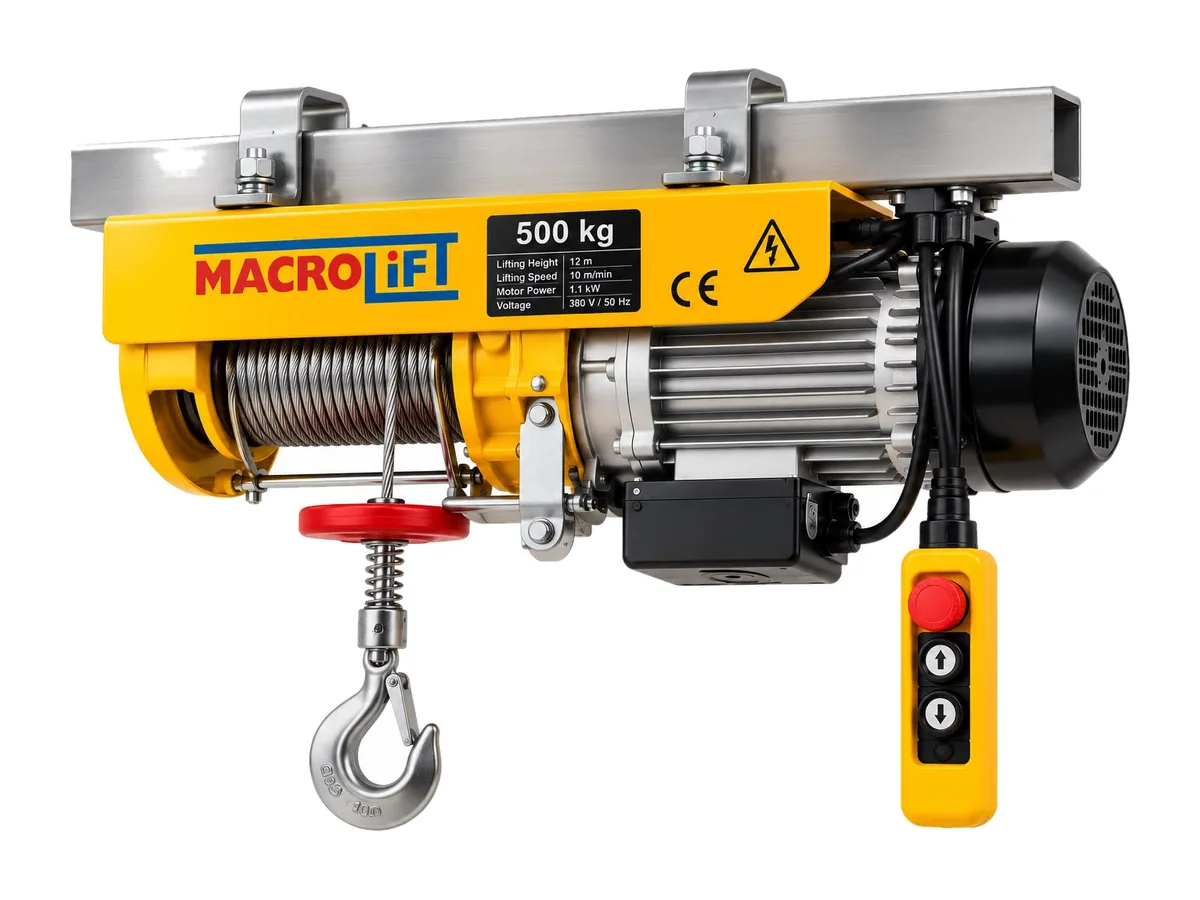
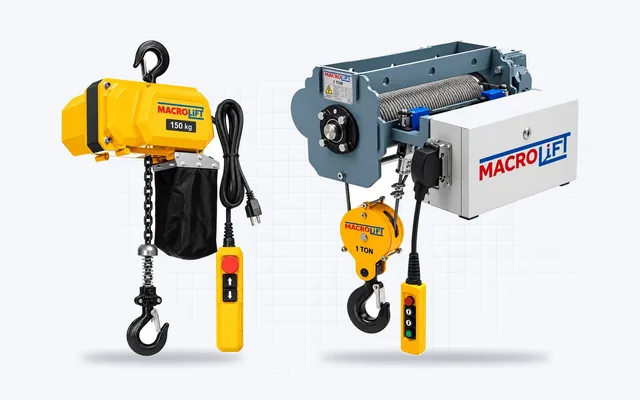
The body houses the motor, the brake, the drum and the steel wire rope. If the rope is attached straight to the hook, the hoist works on a single fall. If the rope is passed through a pulley hook and its end is fixed back to the body, the load is shared between two falls and the capacity doubles. This type is also known as a PA-type hoist, an electric mini hoist or a 230 V hoist. The figure on the label, for example "500 kg", is usually the capacity with the pulley block. On a single fall it lifts half of that.
| Use | Capacity | Lifting speed | Lifting height |
|---|
| Single fall | Half the label value | Full | Full |
| With pulley block (two falls) | Label value | Halved | Halved |
For example, on a model with 12 metres of rope, the lifting height drops to 6 metres with the pulley block.
Where is it used?
- Small workshops and service shops: Lifting parts, motors and materials onto the workbench.
- Stores and shops: Raising goods to a mezzanine or onto shelving.
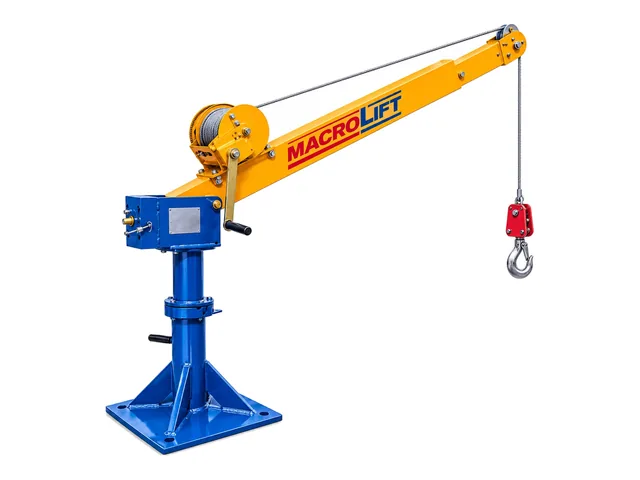
- Renovation and building sites: Hauling materials between floors with a hoist arm fixed to a solid structure.
- Places with no three-phase supply: Anywhere with only a 230 V socket.
How it differs from similar hoists
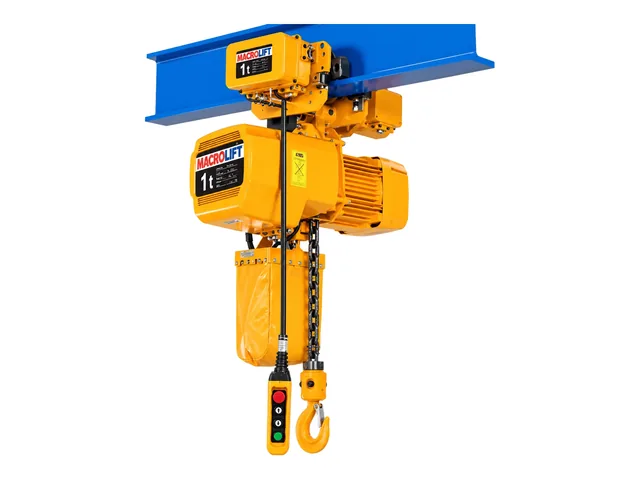
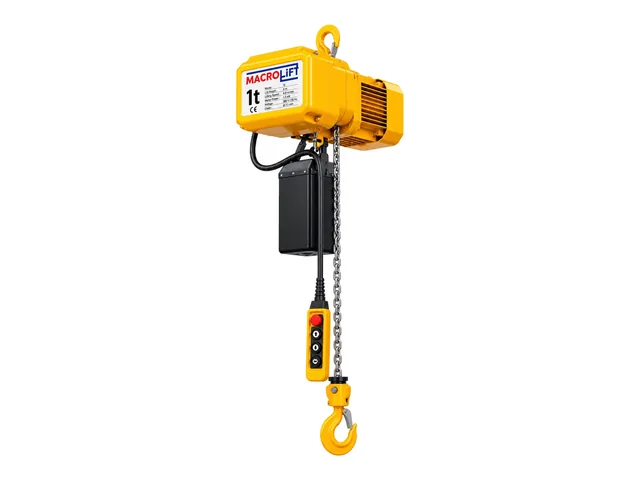
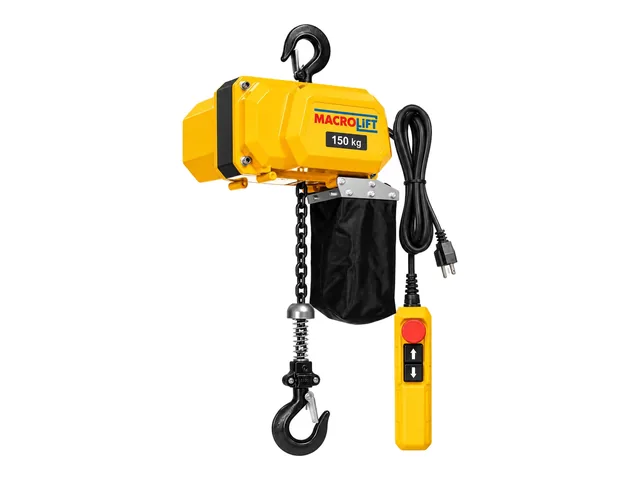
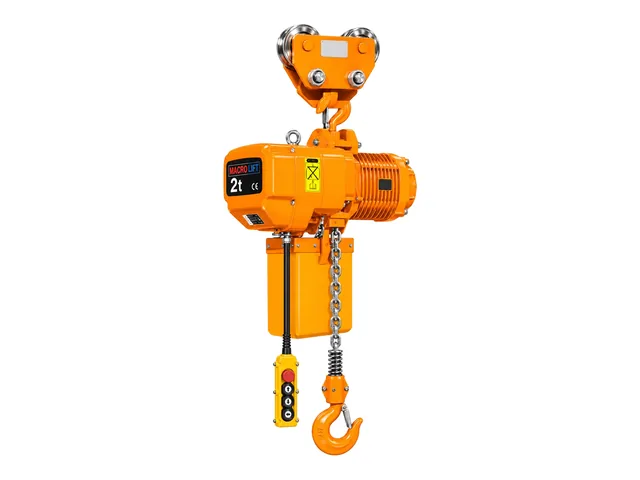
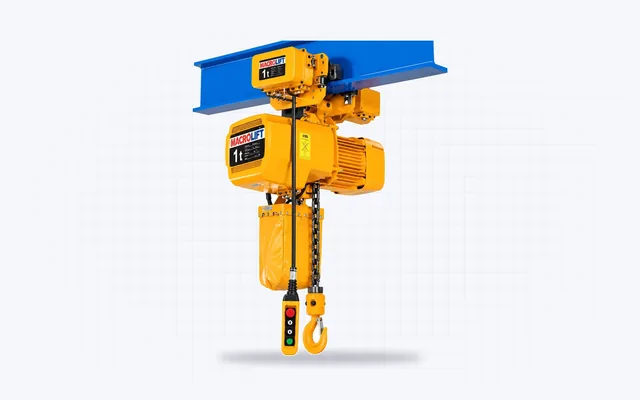
- Mini chain hoist: Mini chain hoists also run on 230 V, but they lift the load with a chain. On a mini wire rope hoist the rope winds onto a drum, so long lifting heights are easier to reach.
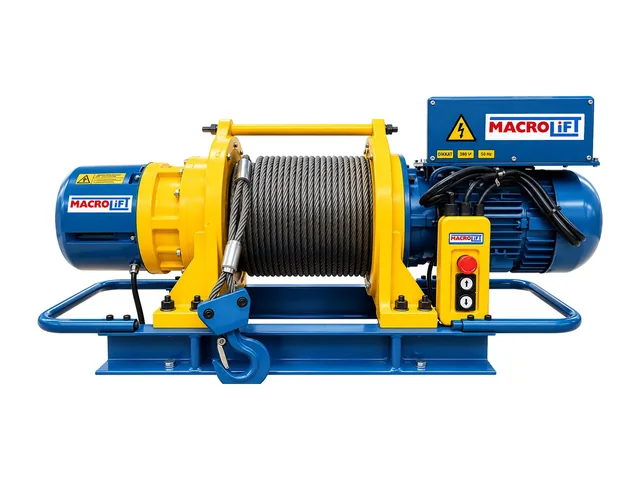
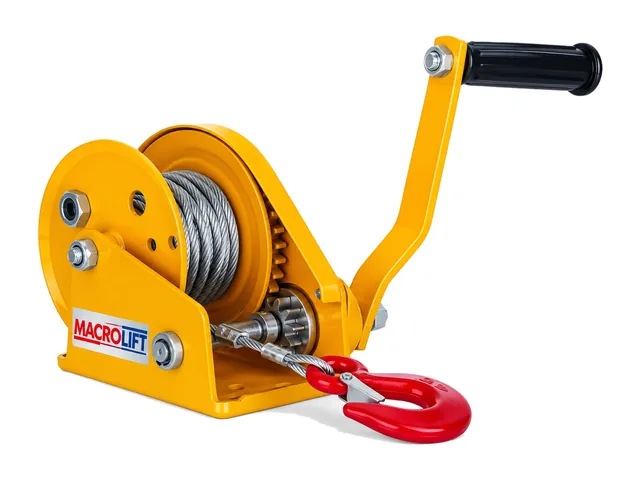
- Ground winch: Ground winches are fixed to the floor and work by pulling the rope. A mini wire rope hoist hangs overhead and lifts the load vertically.
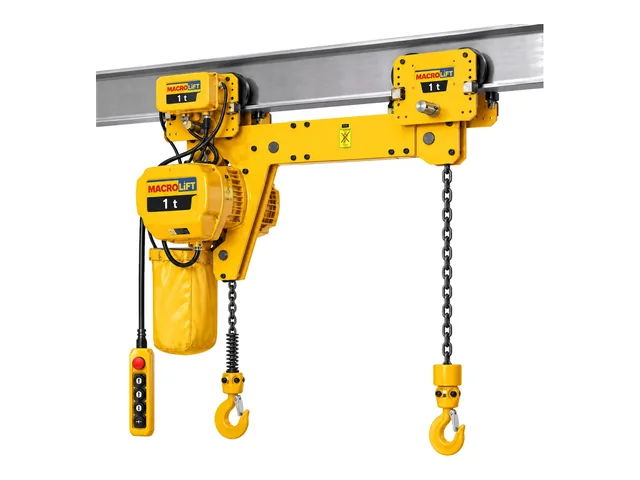
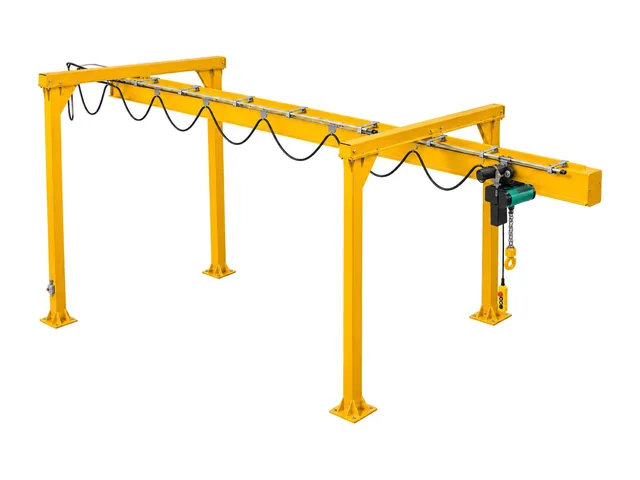
- Industrial wire rope hoist: For heavy loads, heavy use and a 400 V three-phase supply, fixed wire rope hoists or monorail hoist systems that travel along a beam are the better choice.
What to look for when choosing
- Heaviest load: Work out the heaviest load you will lift, including the sling. If it is more than the single-fall capacity, you need to use the pulley block.
- Lifting height: Remember that the lifting height is halved with the pulley block.
- Mounting point: The ceiling, beam or hoist arm must easily carry the combined weight of the hoist and the load. If you use an arm, check the arm's own capacity too.
- How often it will be used: Mini hoists are made for intermittent use. If the hoist will work all day, choose an industrial model.
Duty cycle and safe use
Mini wire rope hoists are rated for intermittent duty (S3), which means they need to rest after running for a certain time. On most models the rating is 20%: in a 10-minute cycle, about 2 minutes of work and 8 minutes of rest. Some models are rated at 25%. The exact figure is on the hoist's label and in its manual. If the limit is exceeded, the motor overheats, and on models with thermal protection the hoist stops itself.
- A mini hoist must never be used to lift or carry people.
- With the hook at its lowest point, at least three turns of rope must stay on the drum.
- The upper limit switch is a safety device and must not be used as a stop button.
- Plug the hoist into an earthed socket and do not pull the load sideways.
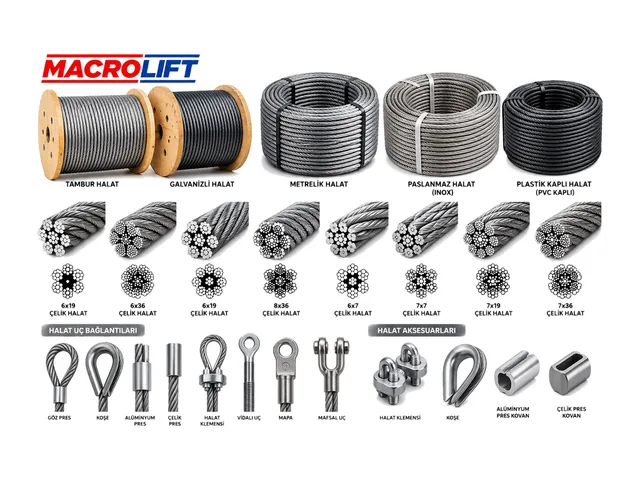
- Replace a crushed rope or one with broken wires straight away. For a spare rope, see our wire ropes page.
Mini hoists used at work are lifting equipment too and must have a periodic inspection at least once a year. General rules are in our article on hoist safety rules.
Mini wire rope hoist prices
The price depends on the capacity, rope length, motor power, control type and accessories such as a hoist arm. Just send us the weight of the load, the lifting height and where you will fit the hoist on WhatsApp.