How a hoist wire rope is built
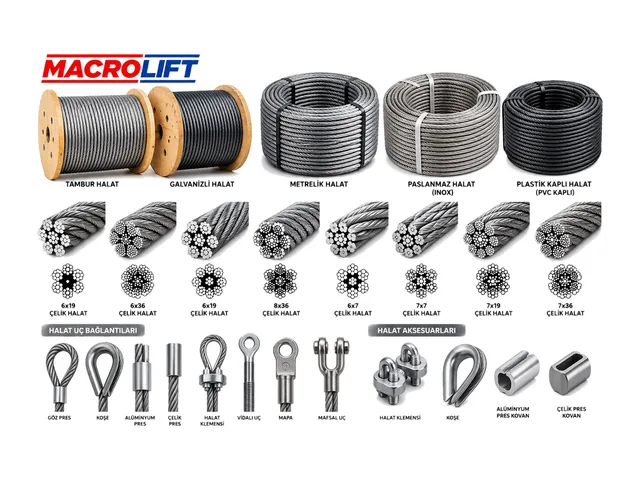
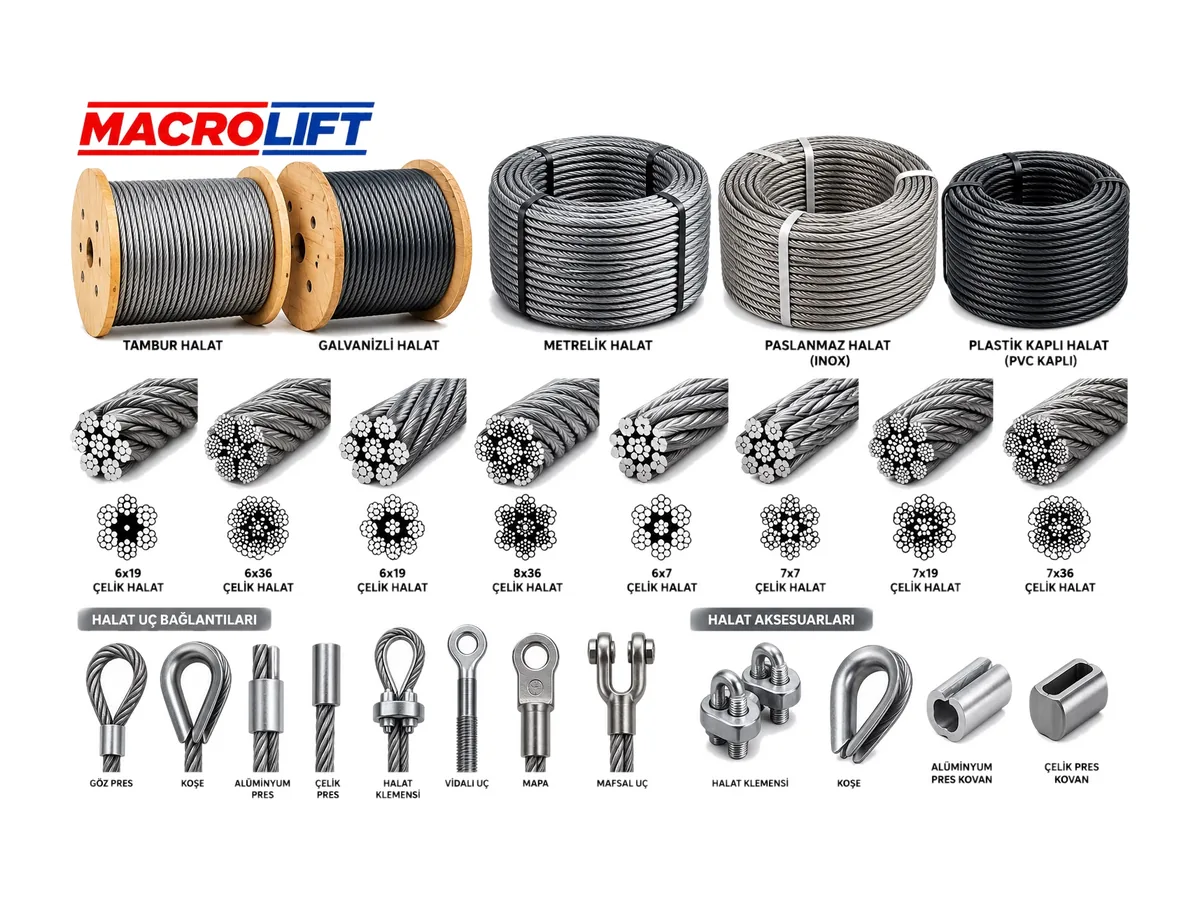
A steel wire rope is made by first laying fine steel wires into strands, then laying those strands around a core. The core can be fibre (FC) or steel (IWRC). Steel-core ropes stand up better to crushing on the drum. The name of a rope describes its construction: 6x19 means 6 strands with 19 wires in each strand. The wire strength is given in N/mm², for example 1770 or 1960.
| Construction | Feature | Typical use |
|---|
| 6x19 | Thicker outer wires, resists abrasion, stiffer | General pulling and lifting work |
| 6x36 | Many fine wires, flexible, resists fatigue over sheaves and drums | Electric hoist drums, reeved hook blocks |
| 18x7 (rotation-resistant) | Resists turning about its own axis under load | Single-fall lifting, long lifting heights |
Types of rope
- Galvanised steel wire rope: The wires are zinc-coated. It resists rust better outdoors and in damp conditions.
- Bright (ungalvanised, lubricated) steel wire rope: It has no zinc coating and is lubricated during manufacture. It is common on the drums of hoists that work indoors.
- PVC-coated steel wire rope: The outside of the rope is covered in plastic. It is used for balustrades, tensioning, sports and garden work. The coating hides the wires and makes broken wires harder to spot, so hoist drums usually use uncoated rope.
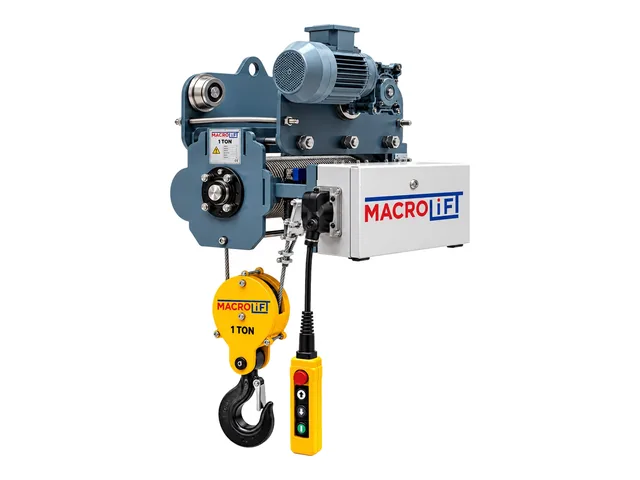
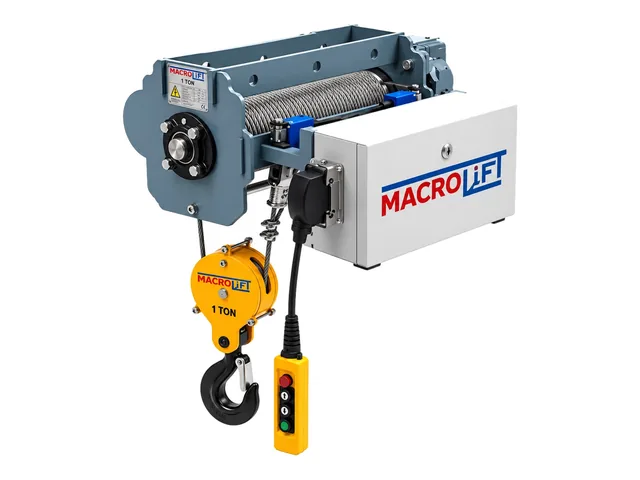
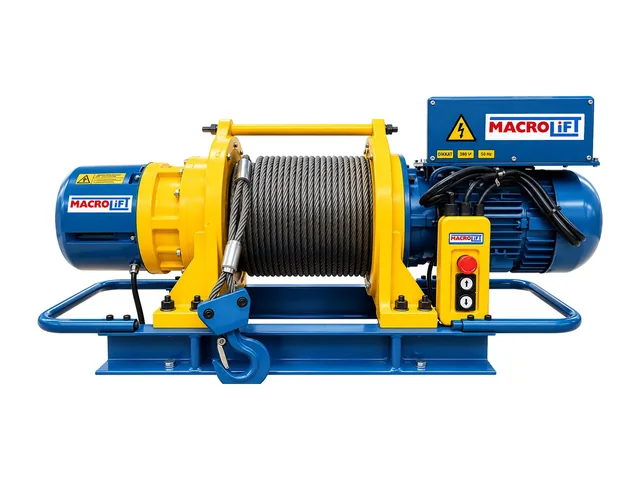
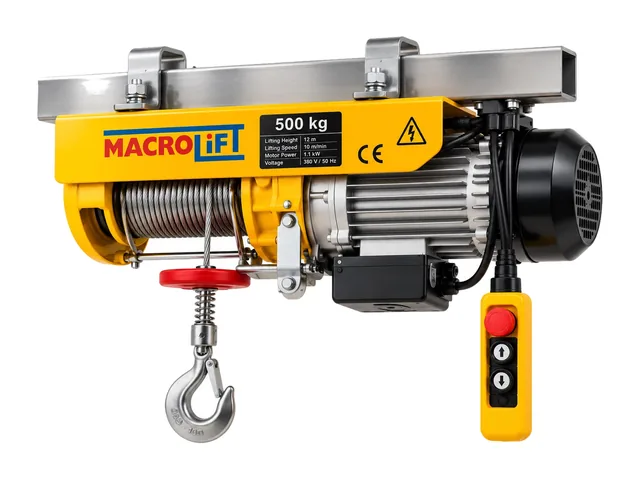
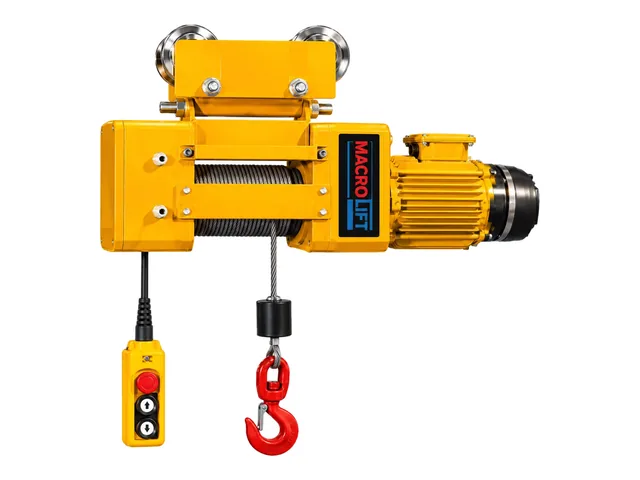
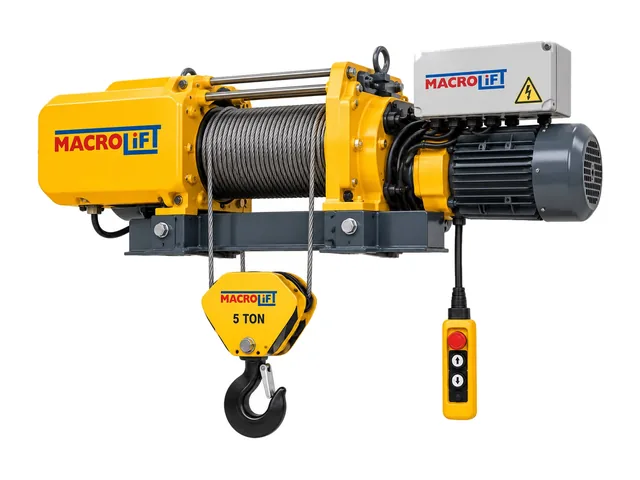
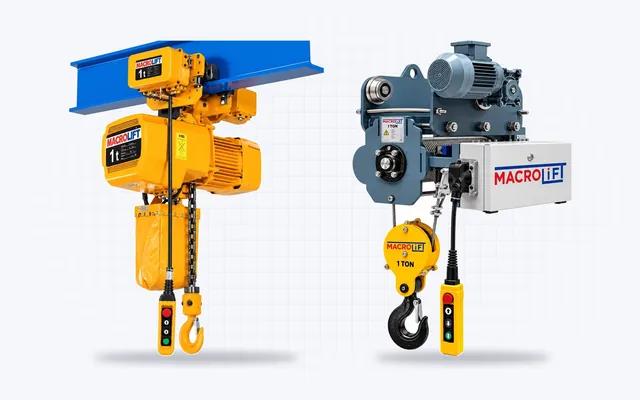
- Drum rope: The lifting rope that winds onto the drum of monorail wire rope hoists and fixed wire rope hoists.
- Rotation-resistant rope: For jobs where the load must not spin with the rope. Take particular care not to twist it while unreeling and fitting it.
How to choose the right rope
- The hoist manufacturer's values: The rope diameter, construction, wire strength and lay direction must match the values in the hoist's catalogue or on its label. The grooves of the drum and sheaves are machined for that diameter. Fitting a rope of a different diameter wears out both the rope and the drum early.
- Length: The rope length is the lifting height multiplied by the reeving, plus the turns that stay on the drum and an allowance for the end connections. For example, on a hoist with an 8 metre lifting height and 2/1 reeving, the rope is longer than 16 metres.
- End termination: The rope end must suit how the hoist is connected: a pressed eye, a thimble eye or a drum anchorage, for example.
Wire rope fittings
- Wire rope clip: A U-bolt clamp used to fold the rope end back on itself to form an eye. The saddle sits on the load-bearing part of the rope and the U-bolt on the tail. At least three clips are usually used, and more as the diameter goes up. Tighten the nuts again after the first loading. Clip terminations are for tensioning and securing work, not for lifting loads.
- Thimble: A grooved fitting placed inside the rope eye. It stops the rope being crushed or bent sharply in the eye.
- Turnbuckle (rope tensioner): Tensions the rope as its threaded ends are turned. It is used on balustrade and securing ropes.
- Pressed ends: An end termination where the rope eye is secured by pressing a metal ferrule onto it.
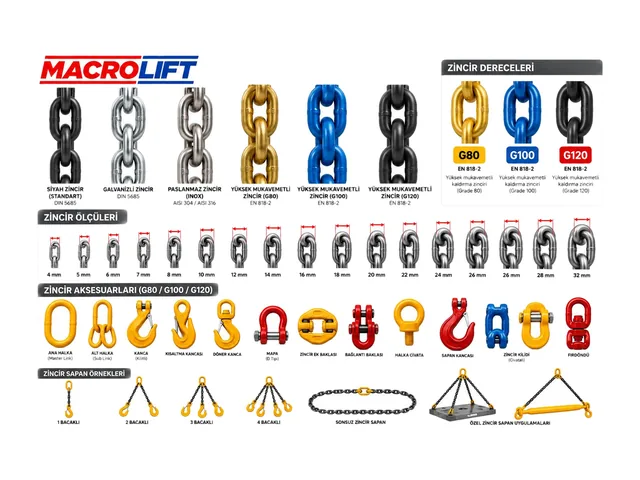
For hooks and chains, see our crane hooks and hoist chains pages.
When should a rope be replaced?
The discard limits are set by the hoist manufacturer's values and the ISO 4309 standard. The rope is checked visually before each use and in detail at the periodic inspection. If any of the following signs appear, the rope is assessed and replaced if necessary:
- Broken wires: Especially breaks grouped in one area or close to the end termination.
- Loss of diameter: The rope getting thinner through wear or loss of core.
- Deformation: Crushing, flattening, sharp bends known as kinks, and birdcaging where the strands open up.
- Corrosion: Rust on the wires and wires working loose.
- Heat damage: Welding or arc marks, discolouration.
Rotation-resistant ropes have stricter discard limits. For inspection intervals, see our article on hoist inspection and maintenance.
Hoist wire rope prices
The price of a rope depends on its diameter, construction, core type, wire strength, coating and length. Fittings are priced separately. Just send us your hoist model or the rope details on its label, and the length you need, on WhatsApp.