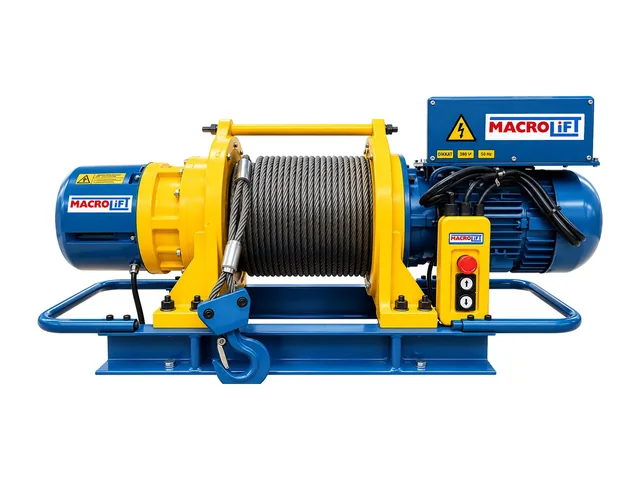
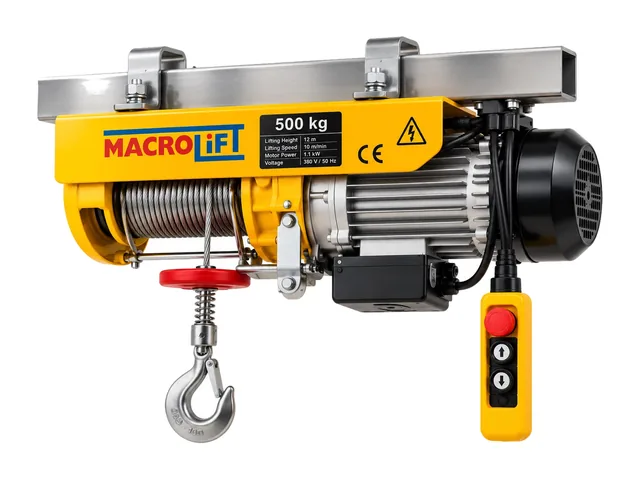
What is a fixed wire rope hoist?
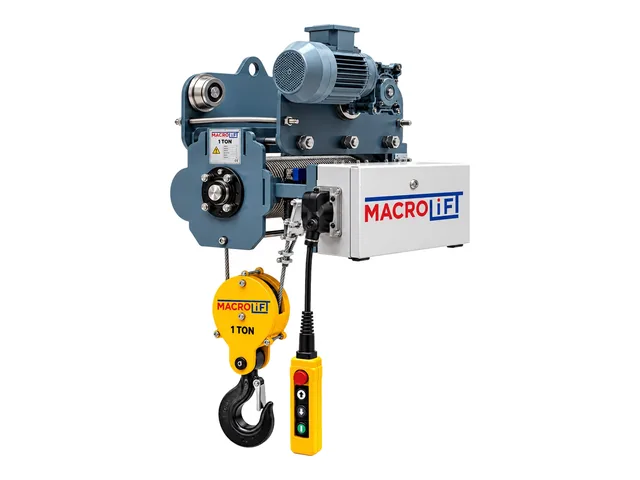
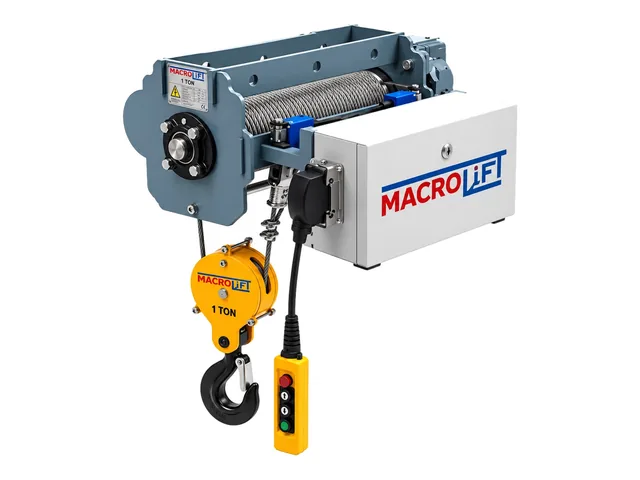
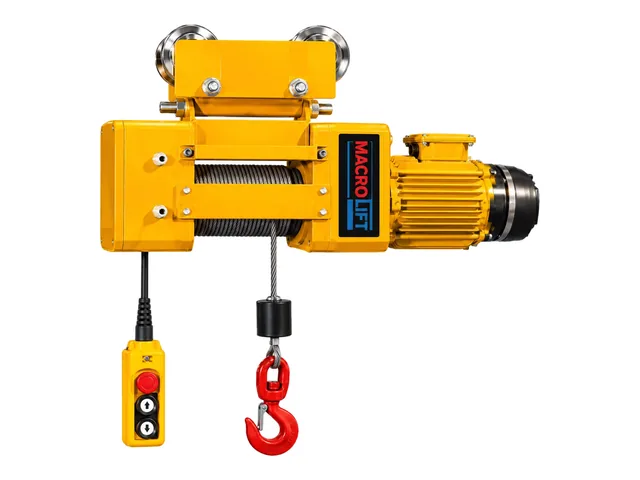
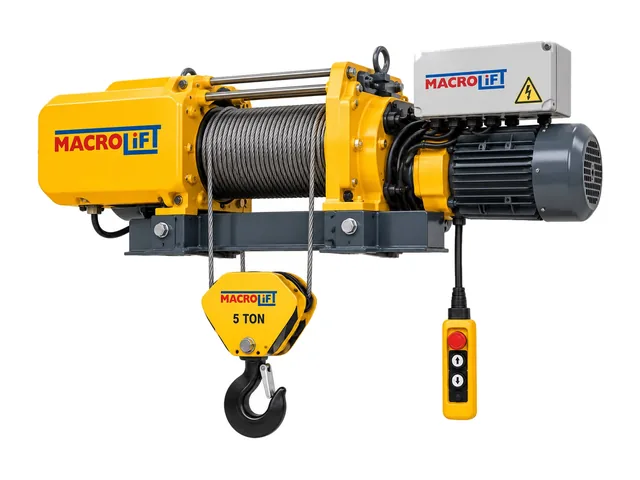
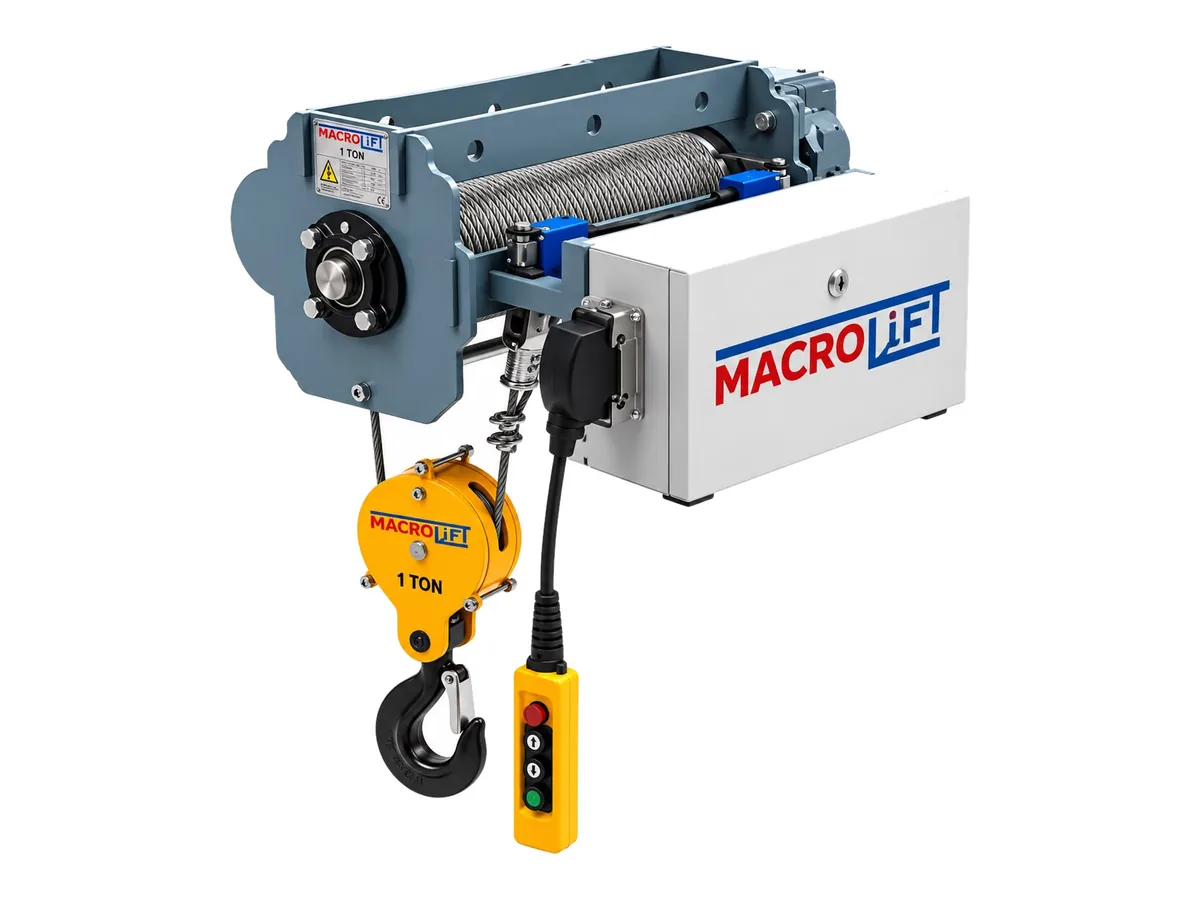
The body is built the same way as the wire rope hoist on monorail models: lifting motor, gearbox, brake, the drum the rope winds onto and the electrical panel. The difference is how it is mounted. The hoist hangs by a top hook or a suspension eye from a ceiling girder, a steel structure or a platform. Some models are bolted in place through feet on the body. As there is no trolley, the pendant only has up, down and emergency stop buttons. That is why people also search for it as a hook-mounted or stationary wire rope hoist.
Where is it used?
- Wells, shafts and voids: Jobs where the load is lowered and raised a long way through a vertical opening.
- Machine rooms and pump rooms: Lifting a motor or pump for maintenance above a fixed piece of equipment.
- Presses and workbenches: Stations where a part or a mould is always picked up and set down at the same point.
- Mezzanines and platforms: Hauling material vertically from the lower floor to the upper floor.
Twin-drum wire rope hoists
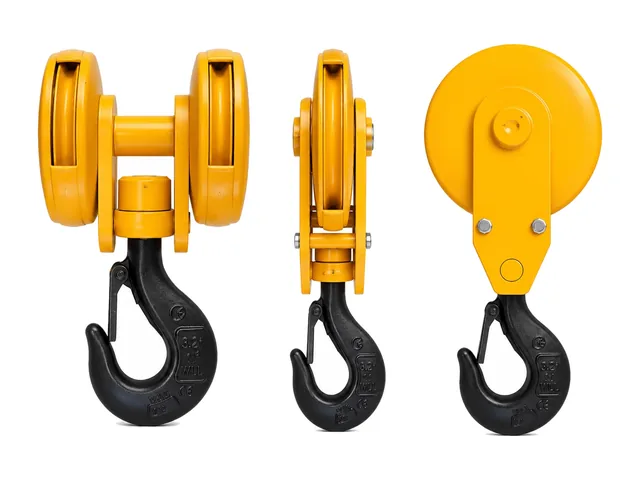
Our range also includes twin-drum wire rope hoists. On these models, the rope winds onto two drums. Depending on the model, they work with two hooks and are used to lift long or wide loads evenly from two points. The right design depends on the length of the load and how its weight is spread. So when you ask for a quote, please send us the dimensions of the load as well.
How it differs from similar hoists
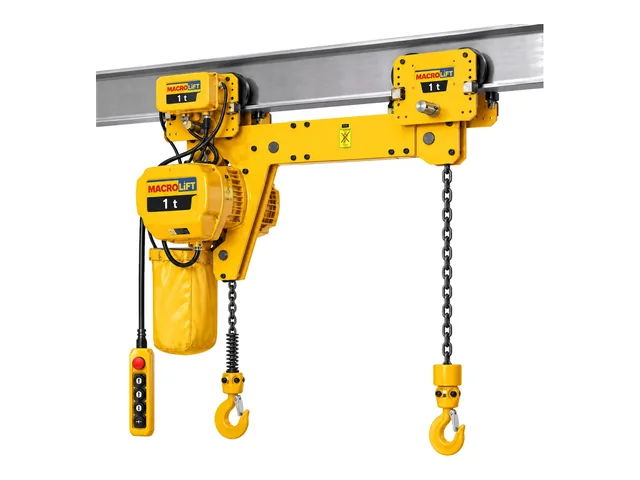
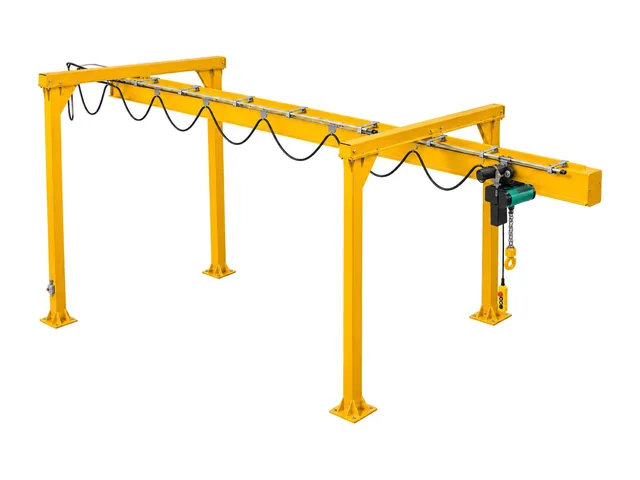
- Monorail wire rope hoist: The same hoist is attached to a motorised trolley that runs along an I-beam and carries the load along a line. See monorail wire rope hoists.
- Manual trolley model: The hoist is pushed along the beam by hand. If you only need to move the load a short distance, wire rope hoists with a manual trolley are a middle way.
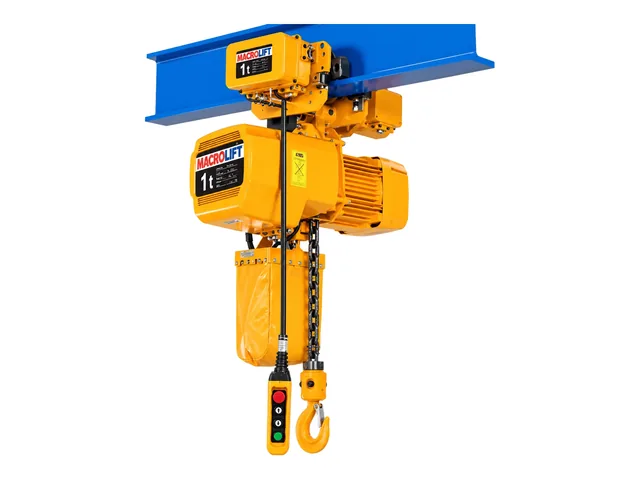
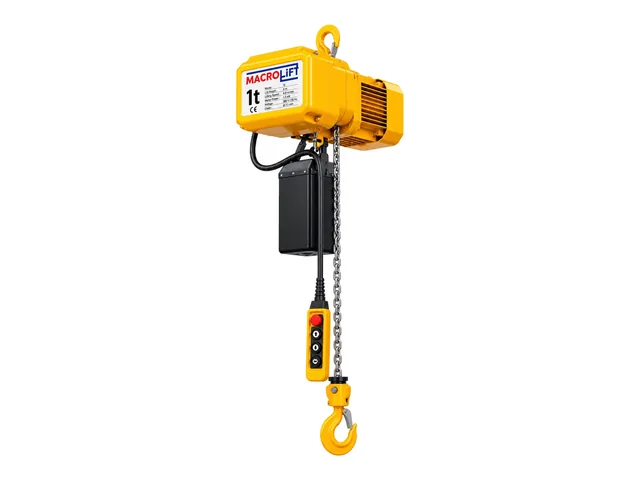
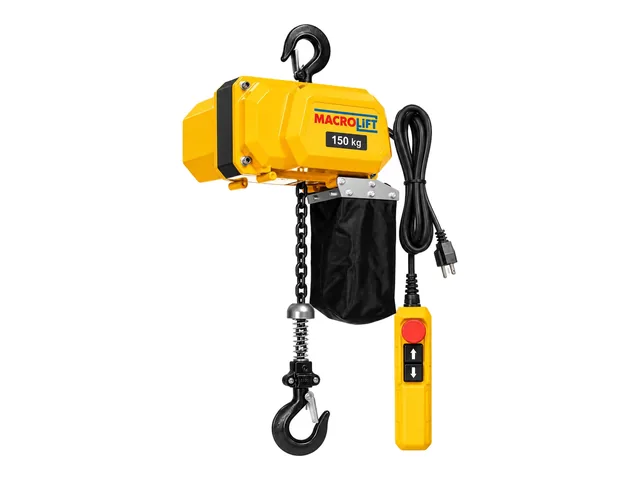
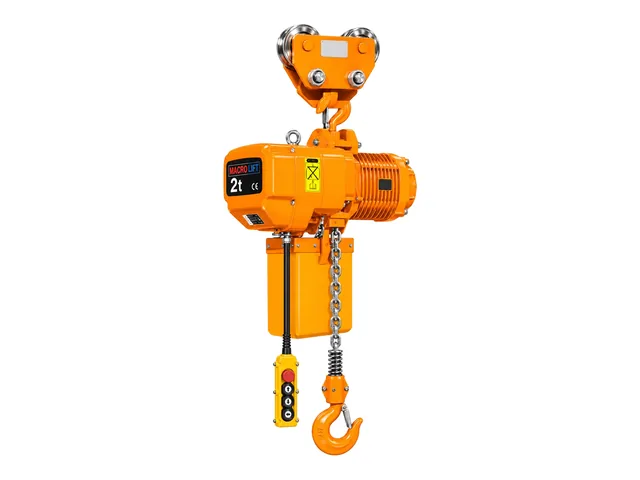
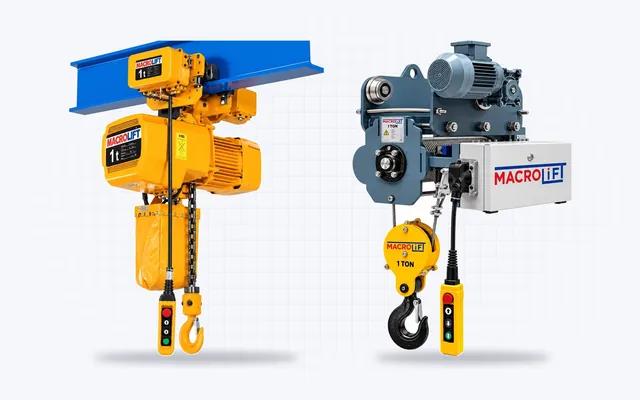
- Chain model: Fixed chain hoists are more compact and economical for light and medium loads and short lifting heights.
- Lift hoist: If the lifting distance is very long, you can also look at lift hoists, which are made for that job.
What to look for when choosing
- Capacity: Add the weight of slings and attachments to the heaviest load and choose a capacity above that total.
- Lifting height: In wells and shafts the distance is long. The rope length and the drum are chosen to match.
- Suspension point: The girder or structure the hoist hangs from must carry the hoist's own weight, the load and the dynamic effects during lifting, all together. This is decided by calculation, not by eye.
- How hard it will work: The daily operating time sets the duty class of the hoist. See how to choose hoist capacity.
- Power supply: Industrial models need 400 V three-phase power. If your site only has 230 V single-phase, mini wire rope hoists can be an option for light work.
Fixed wire rope hoist prices
The price depends on the capacity, lifting height, reeving, speed option, duty class and whether the hoist has one drum or two. As no trolley or beam is needed, the total cost is usually lower than a monorail system of the same capacity. If a support structure is needed for the suspension point, that is added to the price. Just send us the load, the lifting height and where the hoist will hang on WhatsApp.
Installation, periodic inspection and service
We install and service the fixed wire rope hoists we sell from our base in Tuzla. The rope, drum, hook, brake and the upper and lower limit switches are the parts that need regular checks. In Turkey, lifting equipment must by law have a periodic inspection at least once a year. See our guide to hoist inspection and maintenance for the details. If you also need to move the load along a line, take a look at our monorail hoist solutions.