
Lift Hoists
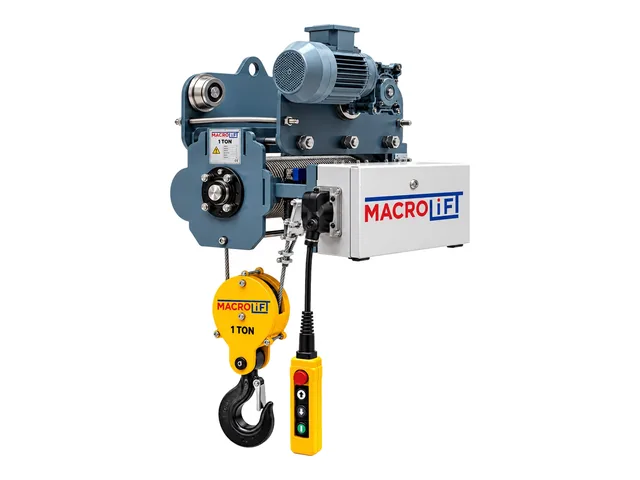
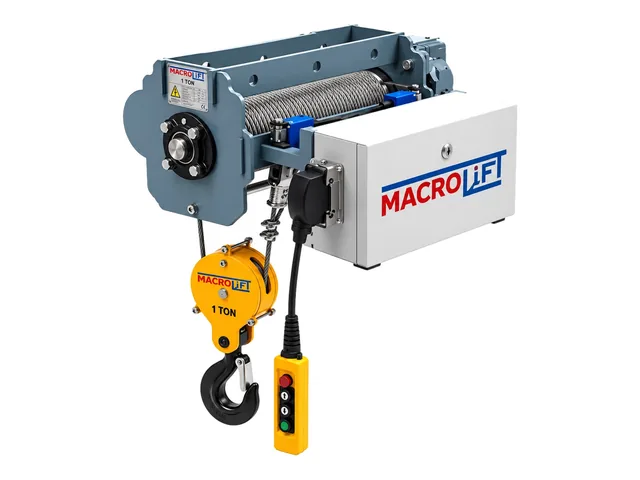
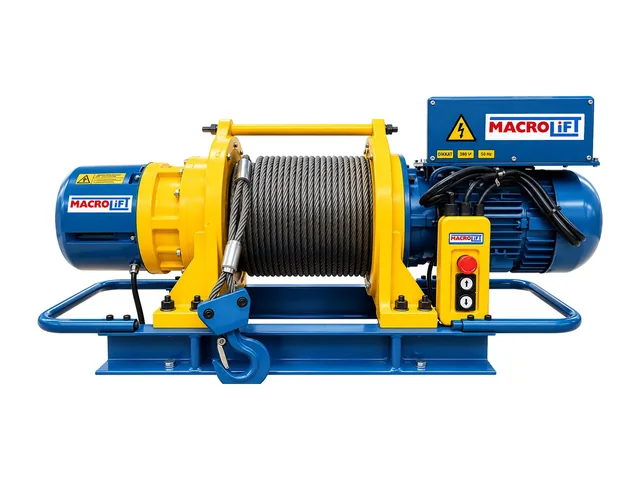
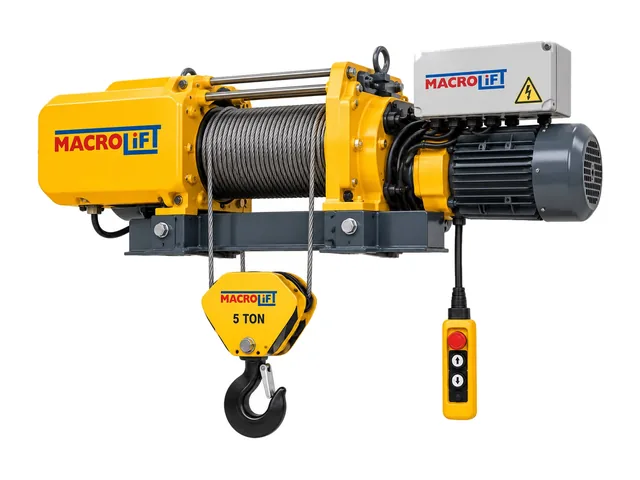
A lift hoist is an electric wire rope hoist with a drum, designed for long lifting heights. It is used on building sites and tall buildings to lift materials up the facade to the upper floors. It is also known as a builder's hoist or material hoist.

We send the model list and current prices for this category on WhatsApp. Tell us the load and the lifting height and we'll pick the right models with you.
Get a Quote on WhatsAppAbout Lift Hoists
How does a lift hoist work?
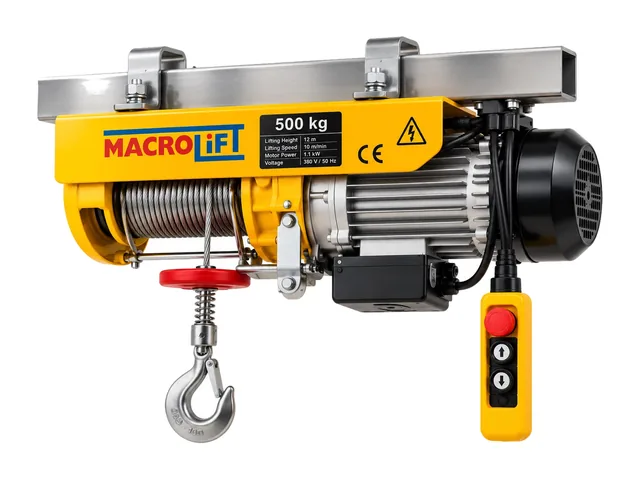
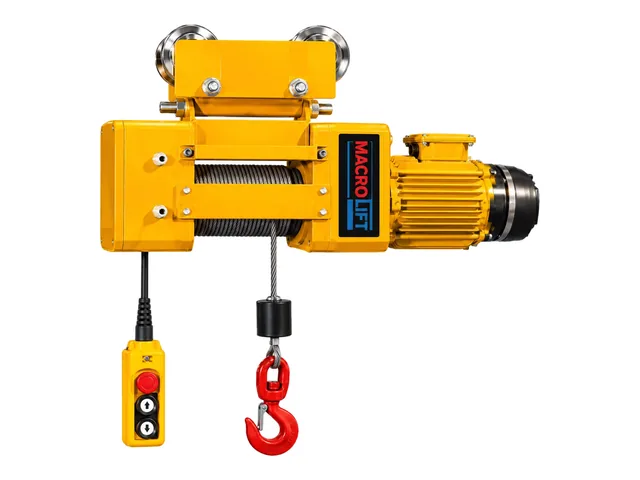
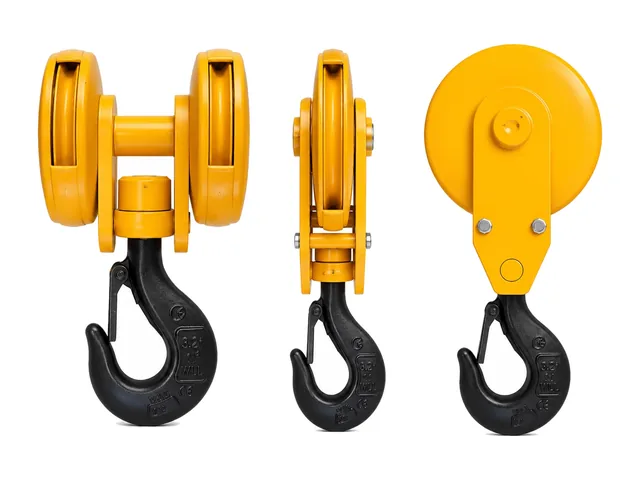
A lift hoist is made up of a motor, a gearbox, a brake, a long drum, a steel wire rope and a hook block. The hoist is fixed at a high point, on the roof, on a beam or on a steel bracket. The rope runs down and the load is lifted from directly below. Because the drum is long, it holds a lot of rope, so the lifting height is much greater than on a chain hoist. When the motor stops, the brake holds the load.
If the hook block has a sheave, the rope can be reeved in two falls. This raises the capacity, but the lifting height and speed drop by about half. We explain how reeving works in our article chain hoist vs wire rope hoist.
Models
Our wire rope lift hoist models have capacities of 250 kg, 300 kg and 500 kg. The 250 kg model has a lifting height of 60 metres. Ask us for the lifting height of the other models.
Where are they used?
- Building sites: Lifting materials such as bricks, mortar, rebar and panels to the upper floors.
- Facade and roof work: Carrying cladding, insulation and roofing materials up the facade.
- Tall buildings: Lifting equipment to the roof or to plant floors.
- Goods and material lifts: The hoist can also be used to raise a platform that runs between guide rails. Such an installation needs its own design, installation and inspections.
How is it different from a ground winch and other wire rope hoists?
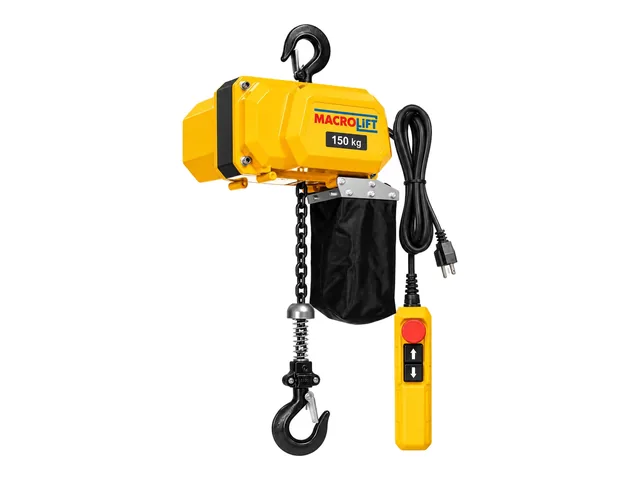
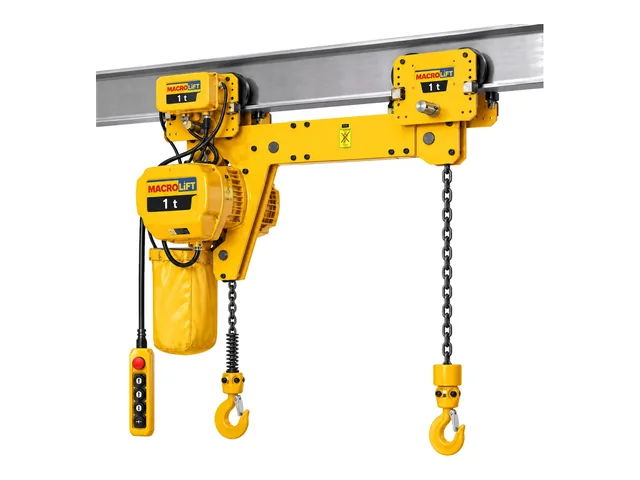
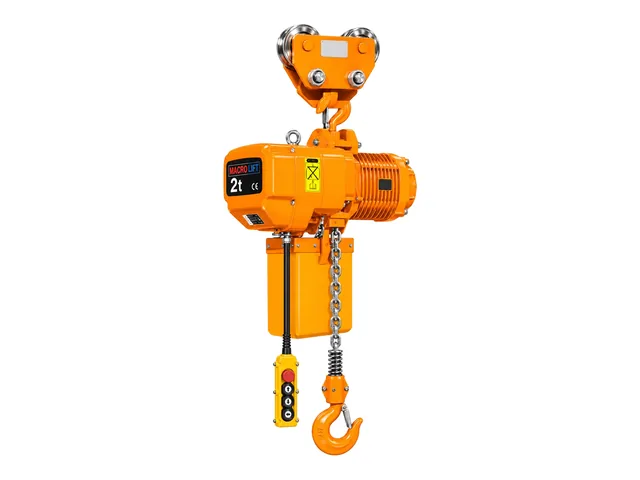
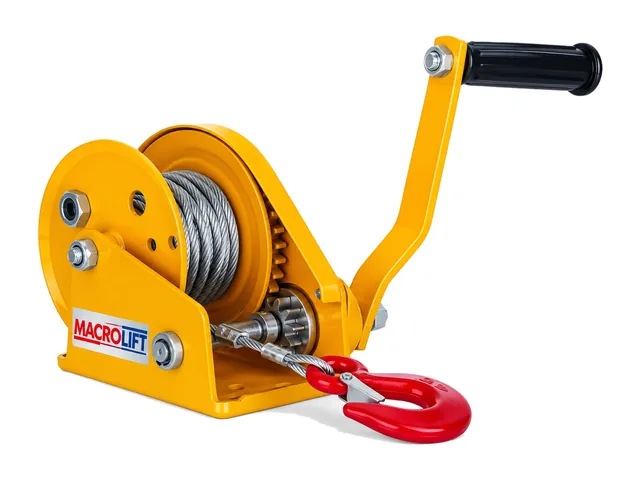
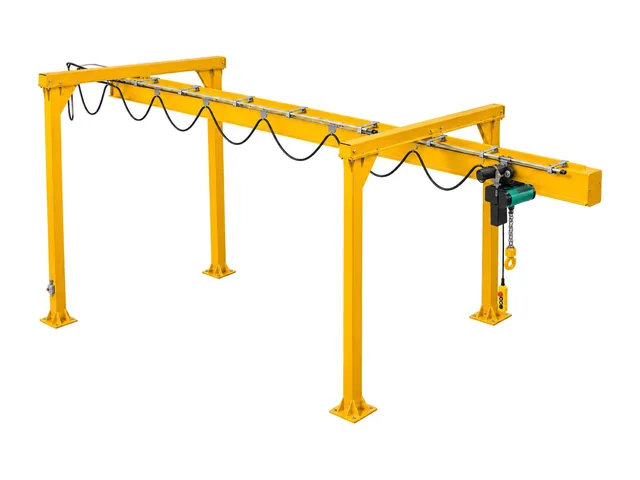
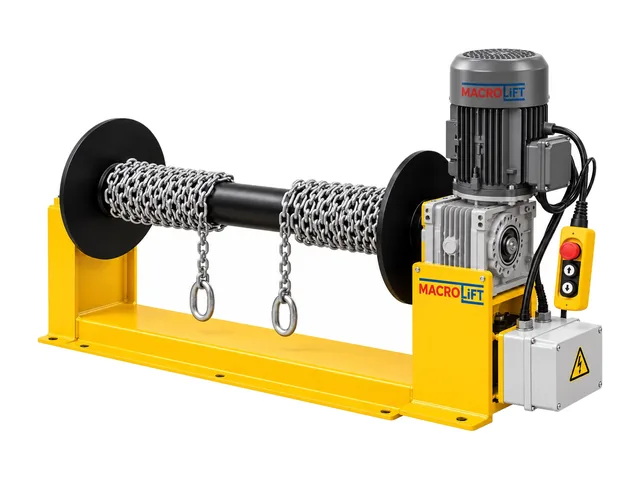
A ground winch is fixed to the floor and is mostly used for pulling. For lifting, its rope is led over a sheave. A lift hoist, by contrast, is fixed at the top and lifts the load from directly below over a long distance. For heavy loads and continuous use inside a factory, fixed wire rope hoists are the better fit, and for light jobs of a few hundred kilograms, mini wire rope hoists. To carry the load along a beam line, a monorail hoist is used.
What to look for when choosing a lift hoist
- Load: Add the weight of the bucket, pallet or sling to the heaviest load.
- Lifting height: The distance from the point where the hoist is fixed down to the ground where the load is picked up. A few turns of rope must stay on the drum even when the hook is at its lowest point.
- Mounting point: The roof beam, bracket or steel structure must carry the combined weight of the hoist and the load, plus the dynamic forces during lifting.
- Power and controls: Find out what power is available on site and where the operator will stand. The length of the pendant cable is chosen to match.
- Speed: On tall buildings, the lifting speed has a direct effect on how long the job takes.
Safe use: never for people
- Materials only: A lift hoist is never used to carry people. No one may ride on the hook, the load, a bucket or a platform. Lifts that carry people are covered by separate regulations, and these hoists are not designed for that purpose.
- Below the load: Close off the landing area and its surroundings with tape, and never move a load over people.
- Limit switch: Test the upper limit switch at the start of every shift.
- Wind: In windy weather the load can swing and hit the facade. Hold long loads from below with a tag line, and do not work in strong wind.
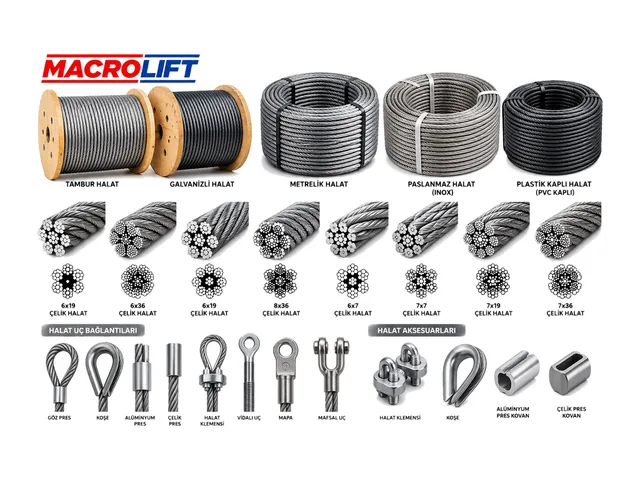
- Rope: Replace a crushed rope, or one with broken wires, straight away. For a spare rope see our wire ropes page.
In Turkey, lifting equipment must by law have a periodic inspection at least once a year. Details: hoist inspection and maintenance.
Lift hoist prices
The main factors in the price are the capacity, the lifting height and the rope and drum length that go with it, the lifting speed, the power supply type, the controls and cable length, and the mounting fittings. We provide service and spare parts for the hoists we sell from our base in Tuzla, Istanbul. Just send us the load weight, the lifting height and where the hoist will be fixed on WhatsApp.
Frequently asked questions
Can a lift hoist carry people?
No. A lift hoist is only for lifting materials. Lifts and platforms that carry people are covered by separate regulations, and these hoists are not designed for that.
How high can a lift hoist lift?
It depends on the model and the rope length. Our 250 kg model has a lifting height of 60 metres. When you measure the height you need, allow for a few turns of rope staying on the drum when the hook is at its lowest point.
Where is a lift hoist mounted?
It is fixed to a roof beam, a steel bracket or another strong load-bearing structure. The mounting point must carry the weight of the hoist, the load and the dynamic forces during lifting all together. If you are not sure, have a structural check done.
Is a construction hoist the same as a lift hoist?
In Turkey the two names are often used for the same product. Both are electric wire rope hoists with a drum, used on building sites to lift materials to upper floors. Large construction machines such as tower cranes are a separate class.
How do you maintain a lift hoist?
Check the rope by eye before every use and lubricate it regularly. Test the brake, the upper limit switch and the controls at the start of every shift. On top of this, the hoist must have a periodic inspection by an authorised person at least once a year.
Three details are enough for a quote
The load, the lifting height and the beam length. Send them on WhatsApp or give us a call and we'll come back with a model and a price.