What is a monorail wire rope hoist?
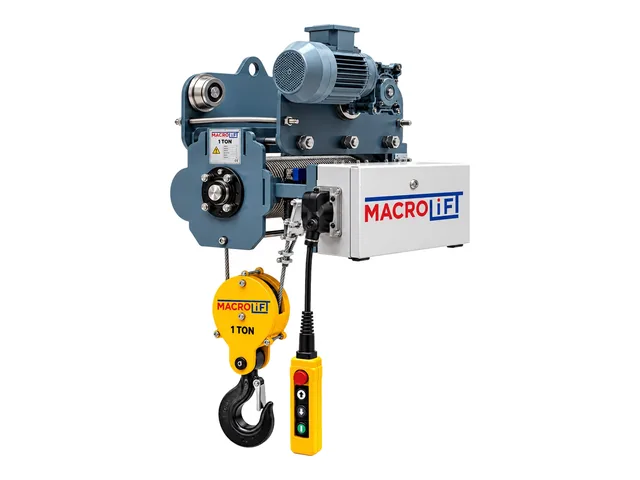
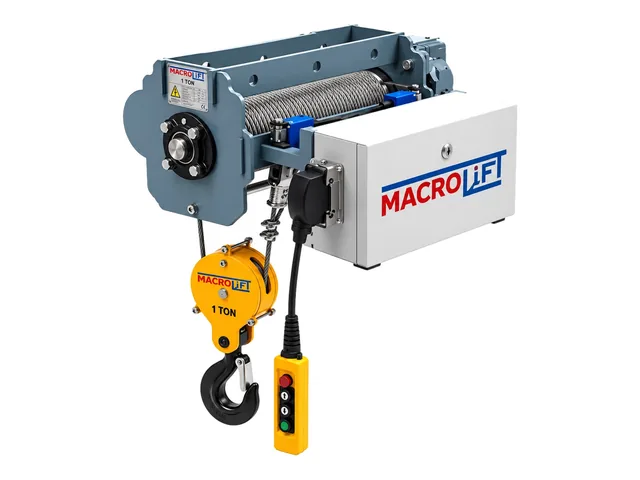
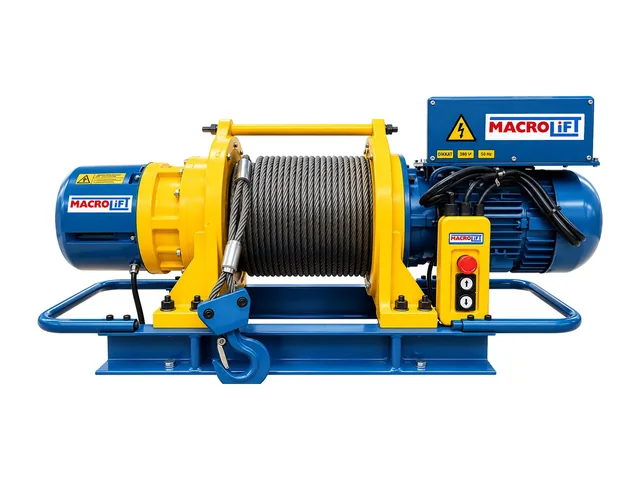
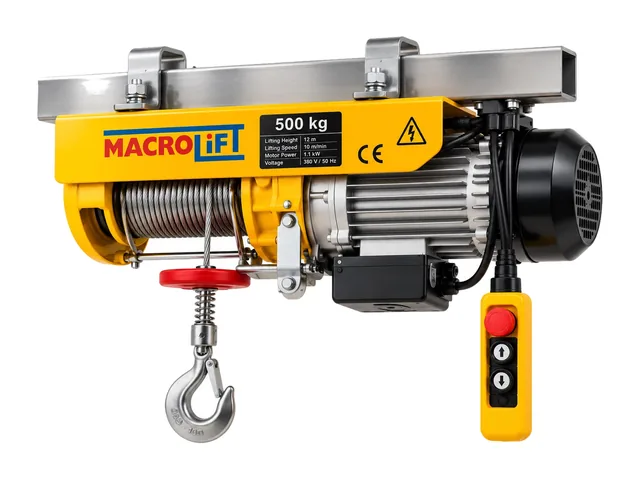
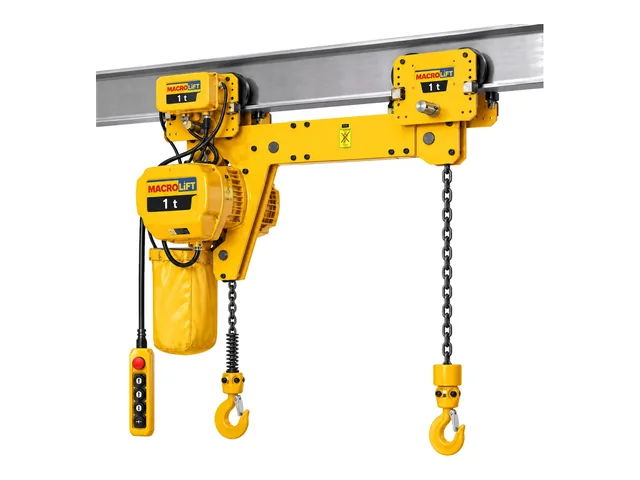
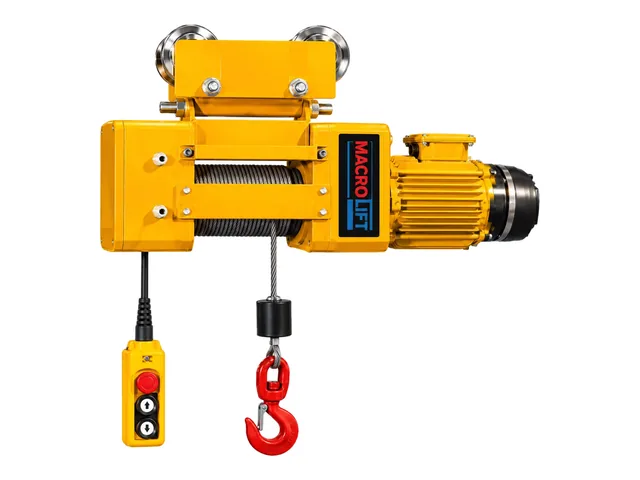
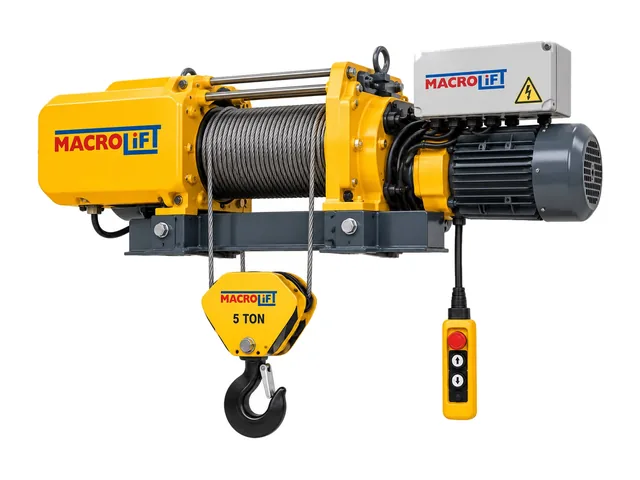
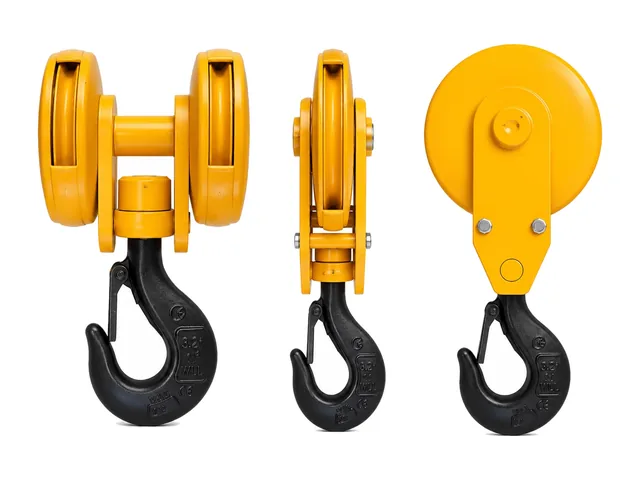
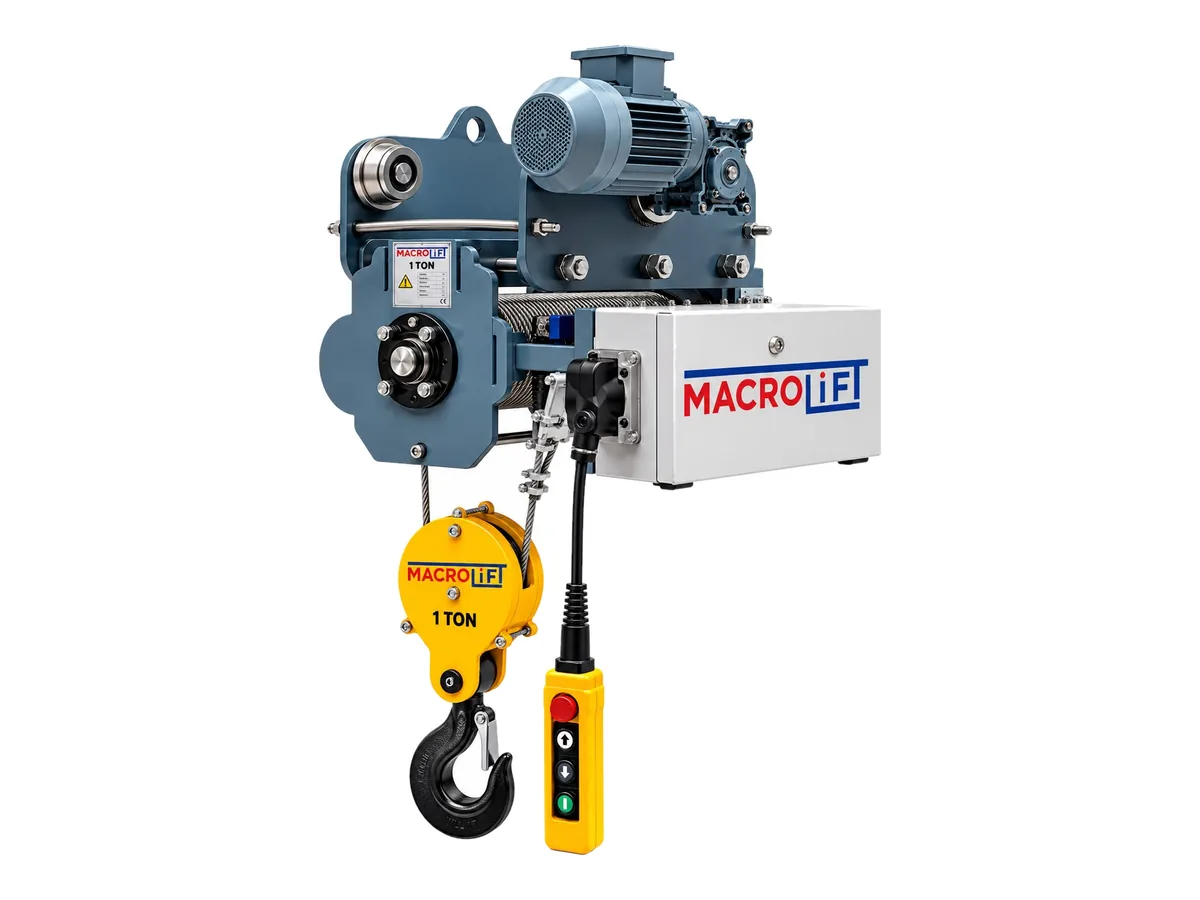
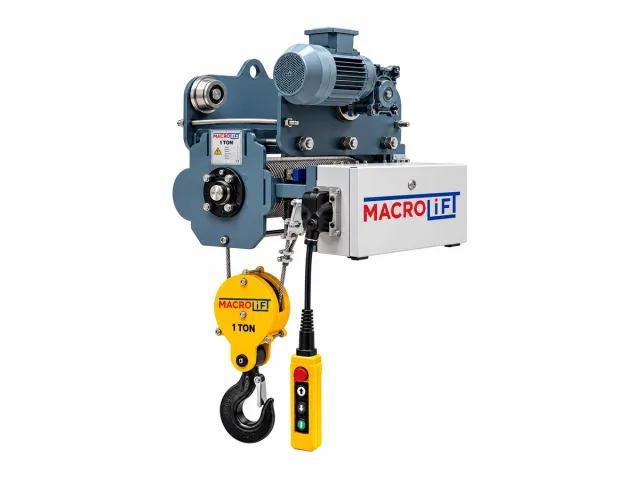
A monorail wire rope hoist has three main parts: the wire rope hoist body, the motorised trolley and the push-button pendant. The body houses the lifting motor, the gearbox, the brake, the drum the rope winds onto and the electrical panel. On the compact models known as European-type wire rope hoists, all of these sit in a single body, so the hoist takes up little space. The rope can run over a sheave in the hook block and be anchored back to the body. This is called the reeving (2/1, 4/1 and so on). The higher the reeving, the heavier the load the same motor can lift, but the speed drops. The trolley runs on its own motor along a beam hung from the ceiling or a steel structure. The operator makes four movements from the pendant: up, down, left and right.
Where is it used?
- Mould shops and press lines: Moving heavy moulds between presses and changing them.
- Machine building and maintenance workshops: Removing and refitting motors, gearboxes and large machine parts.
- High-ceilinged warehouses and hangars: Work where the hook has to travel a long way up and down.
- Production lines on shifts: Plants where the hoist runs all day at short intervals.
How it differs from similar hoists
The differences from its sister models come down to two things: the lifting medium and how the hoist travels along the beam.
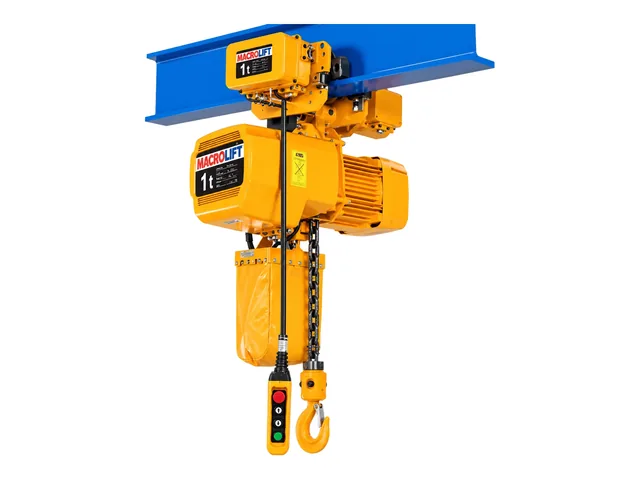
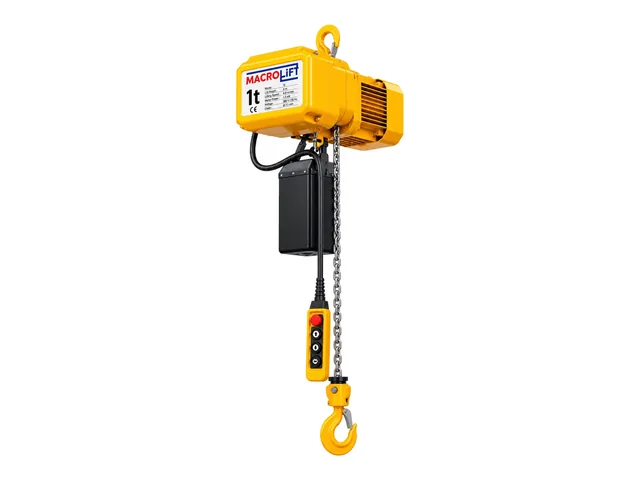
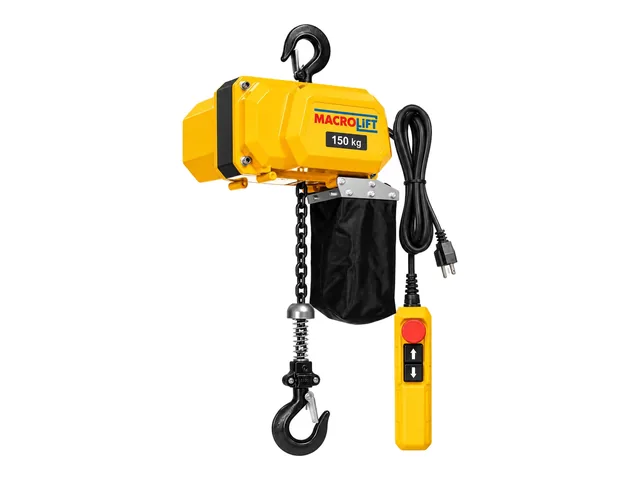
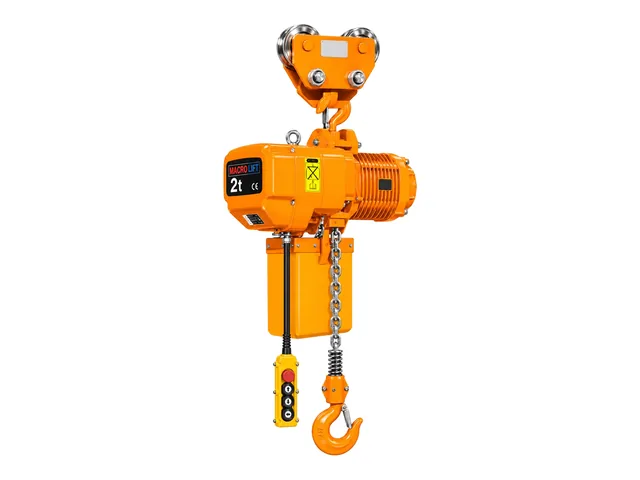
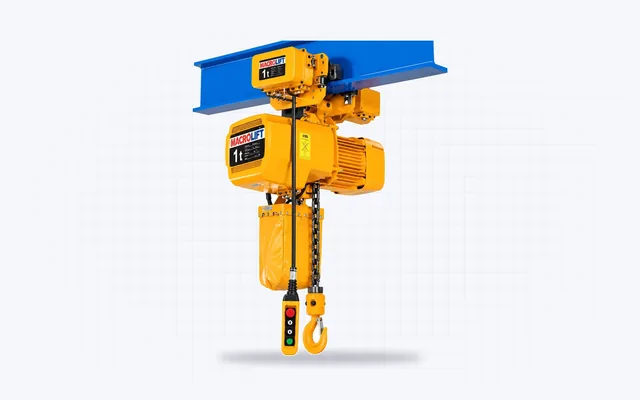
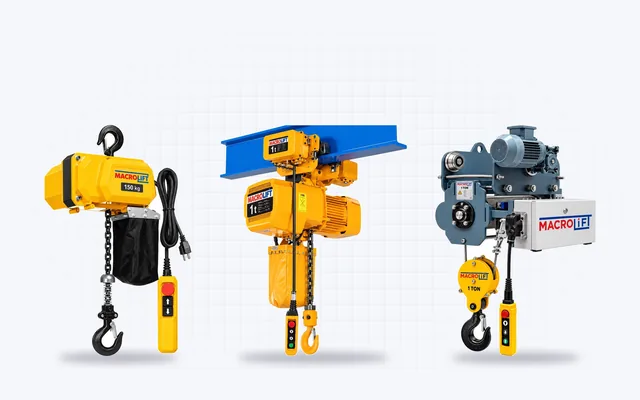
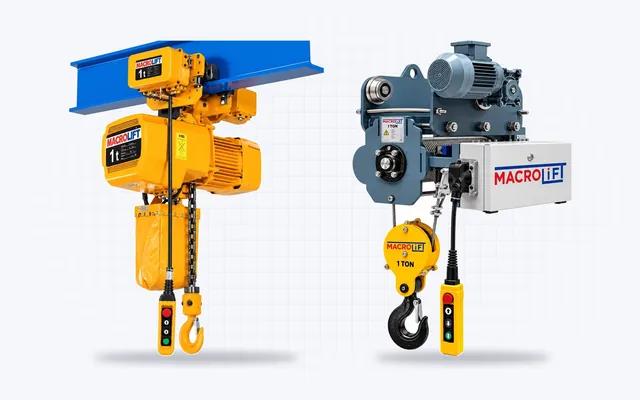
- Chain model: Monorail chain hoists are more compact and lighter, and for light and medium loads they are often more economical. As the load gets heavier, the lifting height goes up or the hoist works harder, the wire rope hoist takes the lead.
- Fixed model: Fixed wire rope hoists hang from a single point and only lift and lower. If the load does not need to move along a line, this is enough.
- Manual trolley model: On wire rope hoists with a manual trolley, lifting is electric but the hoist is pushed along the beam by hand. They suit short beams and occasional travel.
We compare chain and wire rope in a table in our article chain hoist vs wire rope hoist.
What to look for when choosing
- Capacity: Add the weight of the slings, the below-the-hook device and any spreader beam to the heaviest load. Choose a capacity above that total.
- Lifting height: The distance between the lowest and highest hook positions sets the rope length and the drum length.
- Speed: Besides single-speed models, there are two-speed wire rope hoists. The slow speed is used to set the load down precisely.
- Duty class: How many hours a day the hoist will work and with what loads sets its FEM class (such as 1Am, 2m or 3m).
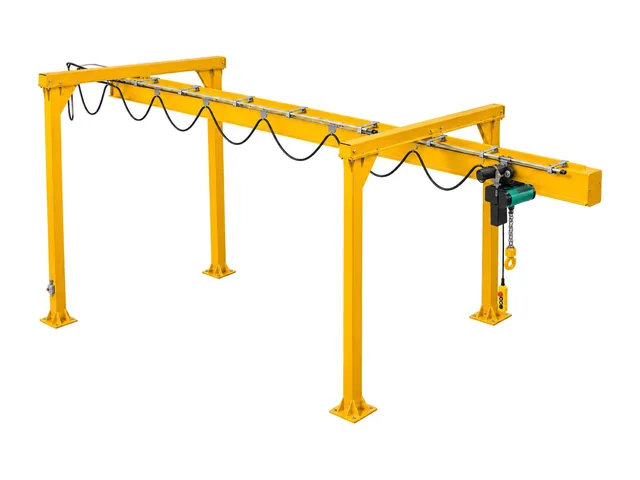
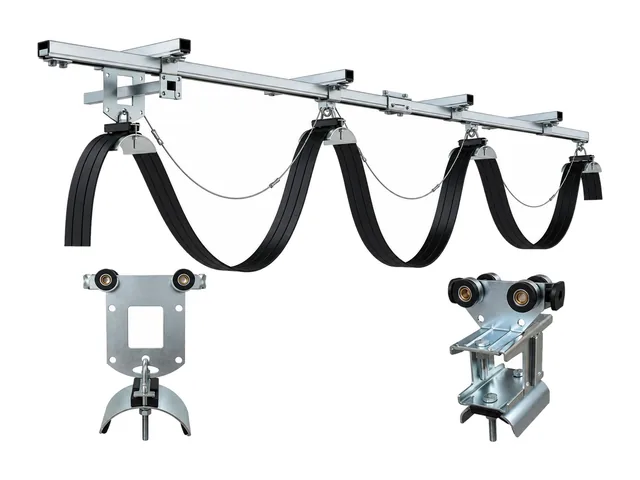
- Beam and trolley: Every trolley fits a certain range of flange widths. If there is an existing beam, we need its profile type and size. If there is no beam, the beam, hangers and power supply line are designed together. See monorail crane systems.
- Power supply: Industrial wire rope hoists run on 400 V three-phase power.
Monorail wire rope hoist prices
The main factors behind the price are the capacity, lifting height, reeving, single or two-speed option, duty class and trolley type. The beam, hangers, power supply line and installation labour are added to the total cost. At the same capacity, the price is usually higher than a chain model. Just send us the load weight, the lifting height and the beam length on WhatsApp.
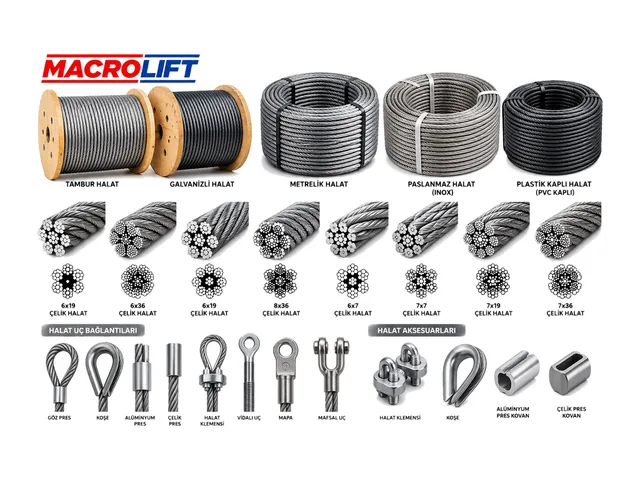
Installation, periodic inspection and service
We install, commission and service the monorail wire rope hoists we sell from our base in Tuzla. On wire rope hoists, the parts to check most often are the rope, the drum, the sheaves, the brake and the limit switches. If the rope shows broken wires, crushing, birdcaging (strands opening up) or rust, it is replaced. For a spare rope, see our wire ropes page. In Turkey, lifting equipment must by law have a periodic inspection at least once a year. For general information on all systems that run on a single beam, see our monorail hoist page.