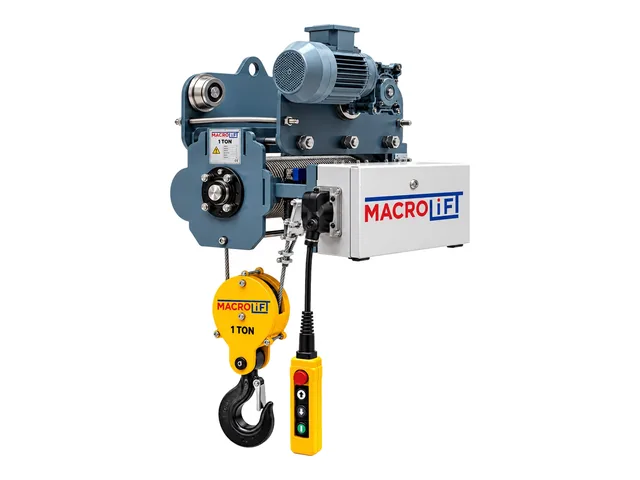
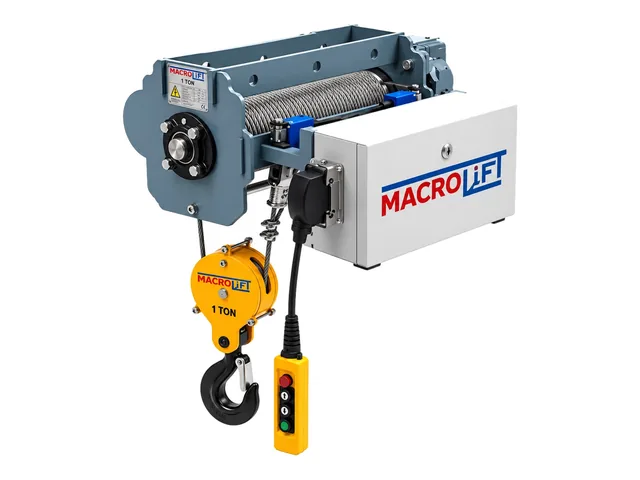
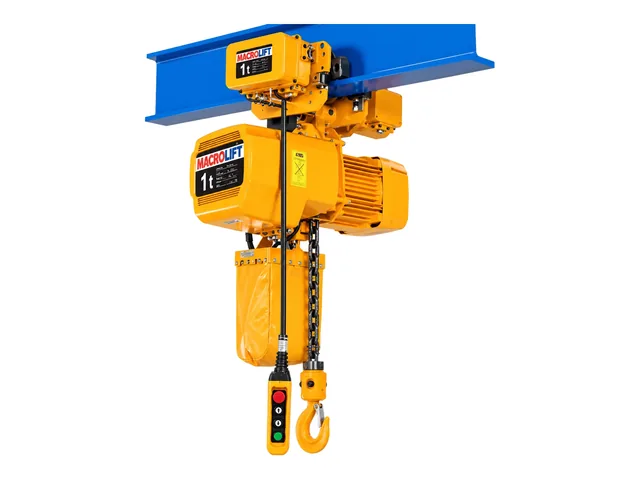
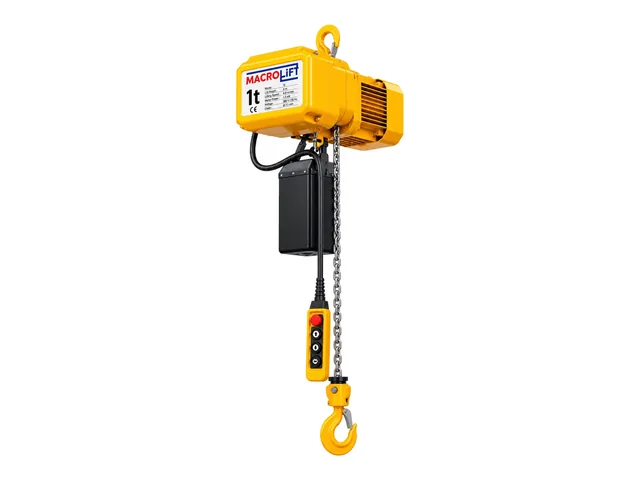
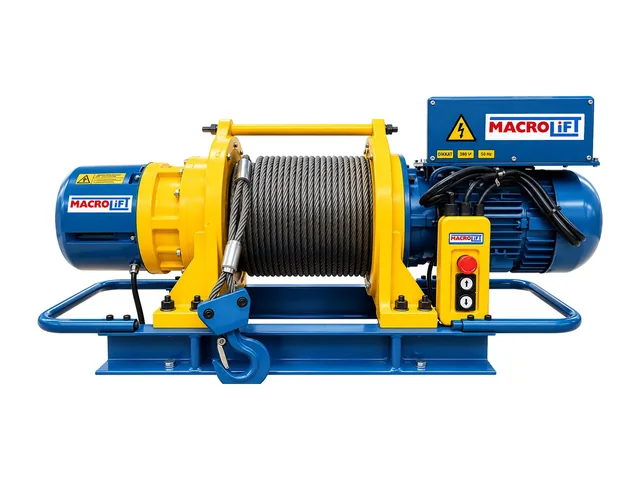
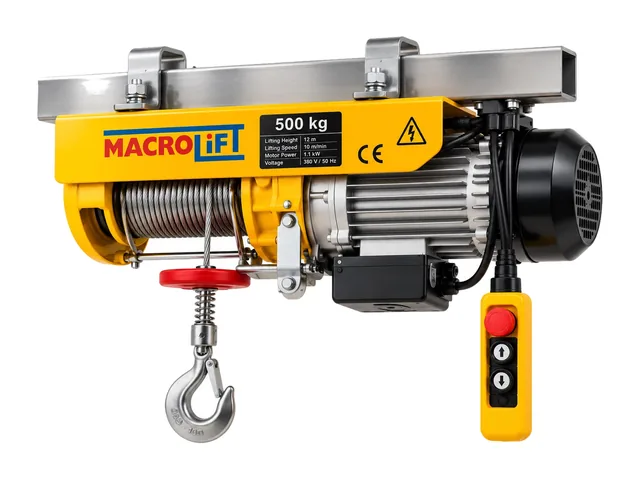
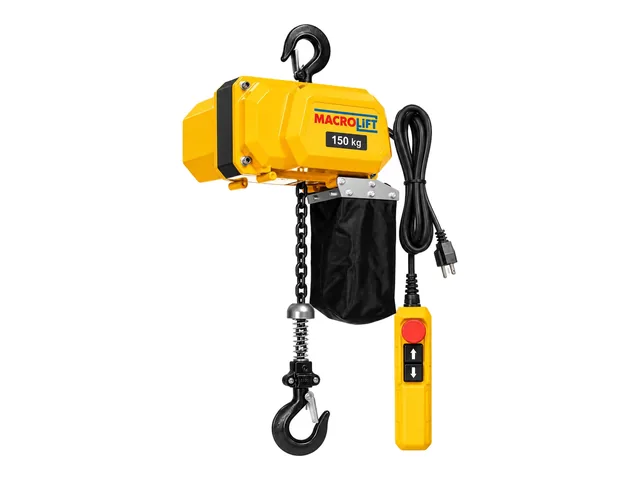
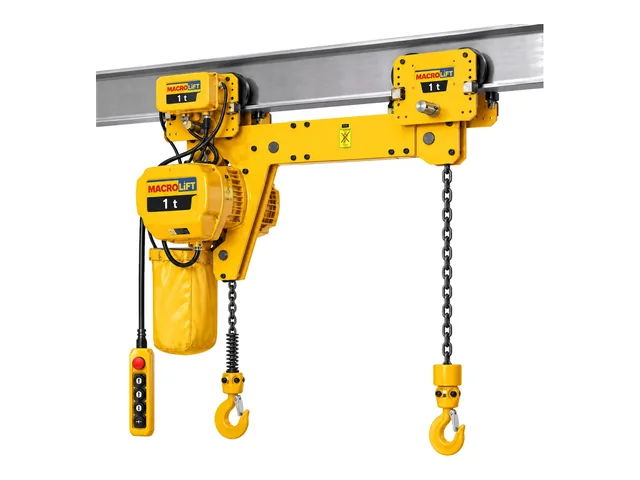
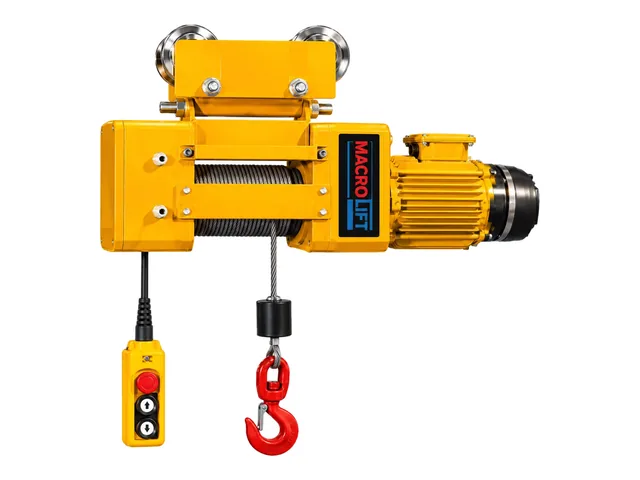
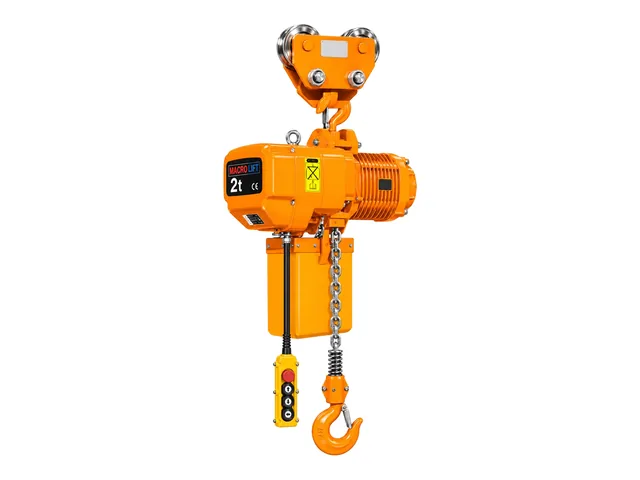
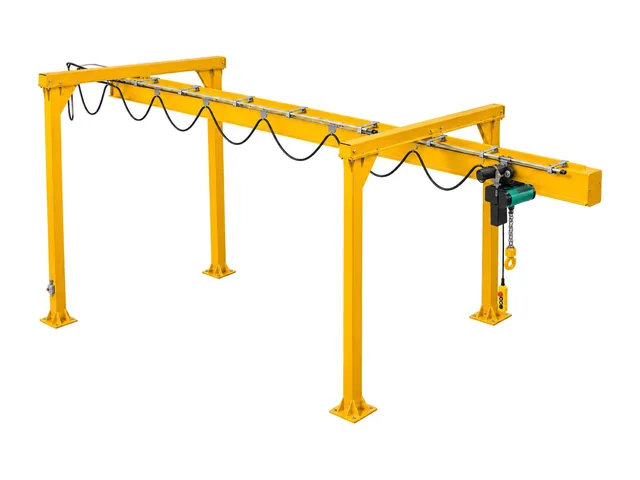
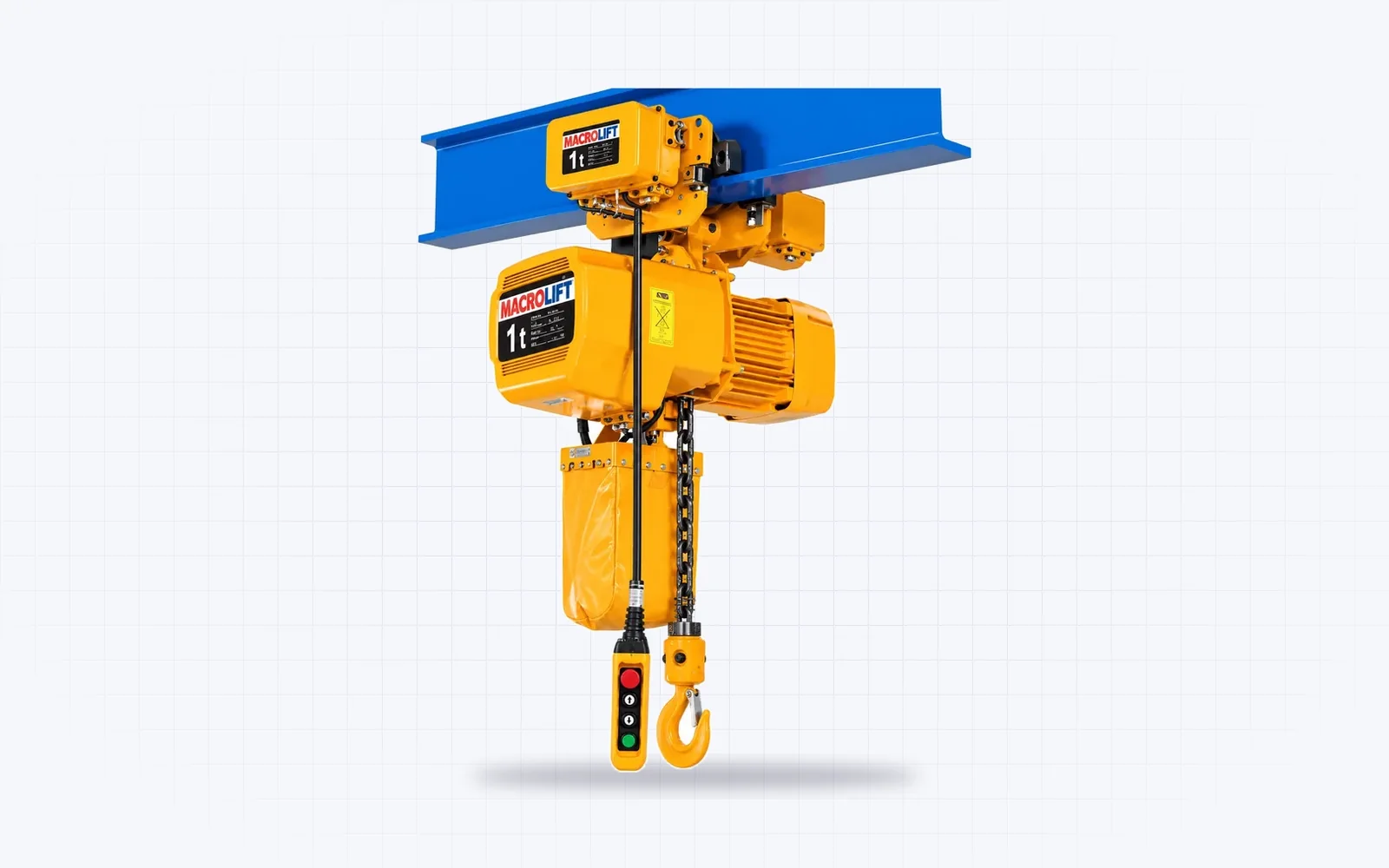
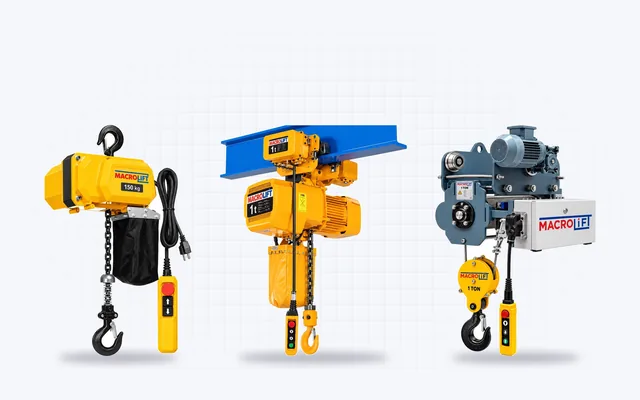
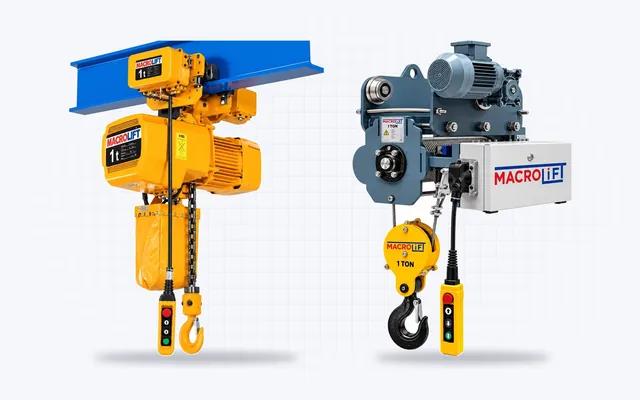
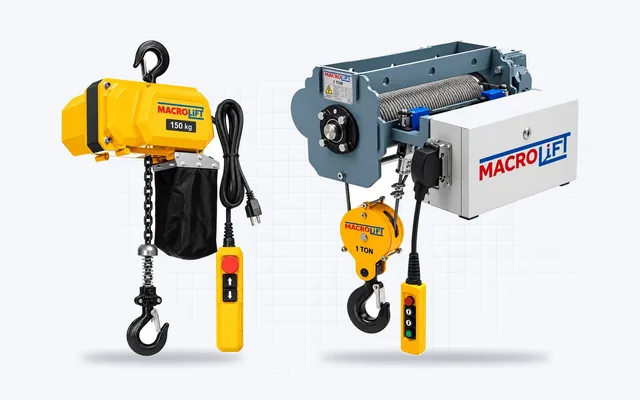
A monorail hoist is a lifting system that runs on a single I-beam hung from the ceiling, from columns or from a steel structure. A trolley travels along the beam and carries a chain hoist or a wire rope hoist. The hoist lifts the load vertically and the trolley moves it along the line of the beam. The word "monorail" simply means a single rail.
In this guide we explain how a monorail hoist works, what parts it is made of, the main types, where it is used and how to choose the right model for your work. Where it helps, we have linked to our more detailed articles on each topic.
How does a monorail hoist work?
The idea is simple. The beam stays fixed, and the trolley and hoist move. The operator makes three movements from the pendant:
- Lifting and lowering: The hoist motor winds in the chain or wire rope to raise the hook and pays it out to lower it. When the motor stops, the brake engages and the load is held safely in the air.
- Travelling along the beam: An electric trolley has its own travel motor and is driven left and right from the pendant. With a manual trolley, the hoist and the load are pushed along by hand.
- Stopping: The emergency stop button on the pendant cuts all movement. Limit switches act at the highest and lowest hook positions, and end stops are fitted at the ends of the beam.
The load always follows the same line. That is why a monorail hoist is the most efficient solution for jobs where the load takes the same route every time: from station to station on a production line, from one workbench to the next, or from a loading bay to the warehouse.
Parts of a monorail hoist
A monorail system is made up of a few main parts. Knowing their names makes things easier when you ask for a price or call for service.
| Part | What does it do? |
|---|
| I-beam | The steel beam the hoist travels back and forth on. NPI, IPE or HEA/HEB sections are used. The size is calculated from the load and the spacing of the hangers. |
| Beam hangers and support structure | Connect the beam to the ceiling, roof trusses, columns or wall brackets. The whole load passes through them into the building. |
| Trolley | The carriage that runs on the beam and carries the hoist. It can be electric (motorised) or manual. The wheel spacing is set to suit the beam flange. |
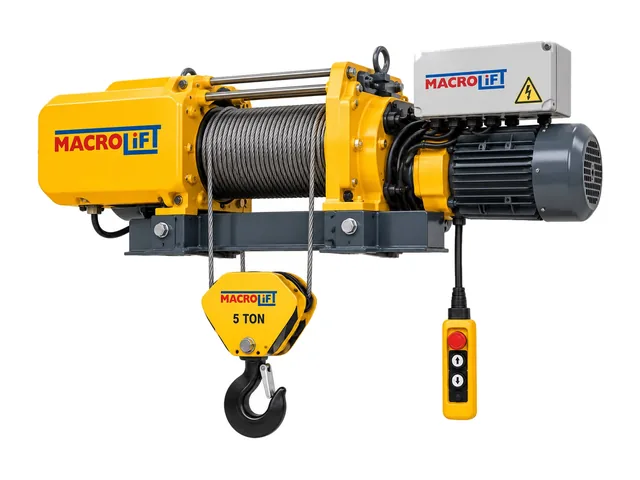
| Hoist body | The main unit that houses the motor, gearbox and brake. It winds the chain or wire rope. |
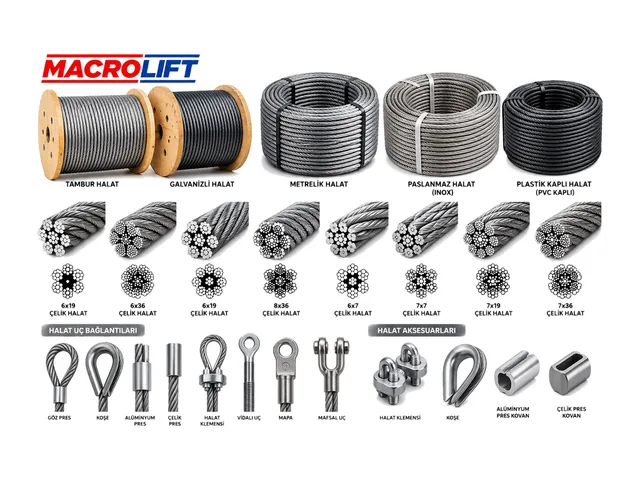
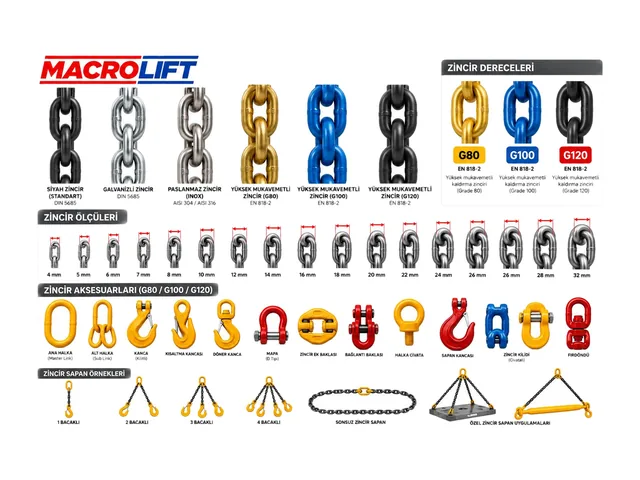
| Chain or wire rope | The part that carries the load. On chain hoists the chain collects in a chain bag. On wire rope hoists the rope winds onto a drum. |
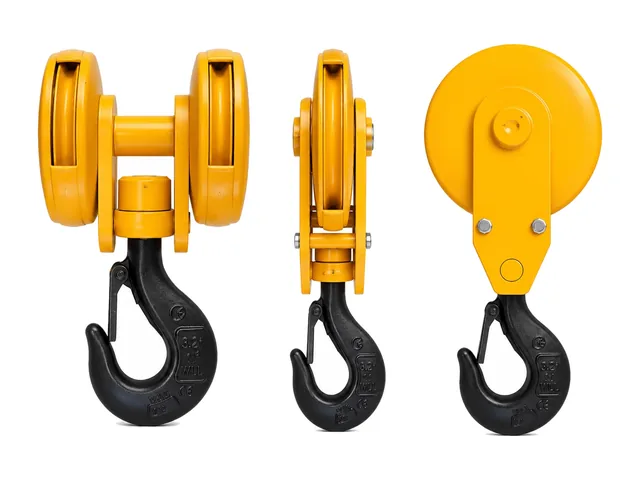
| Hook block | The hook the load hangs from. A safety latch stops the sling slipping off the hook. |
| Pendant | The push-button control box that hangs from a cable. Lifting, lowering, travel and the emergency stop are all on it. A radio remote control can be used instead if you prefer. |
| Limit switches and end stops | Stop the hook going past its highest and lowest points, and stop the trolley running off the end of the beam. |
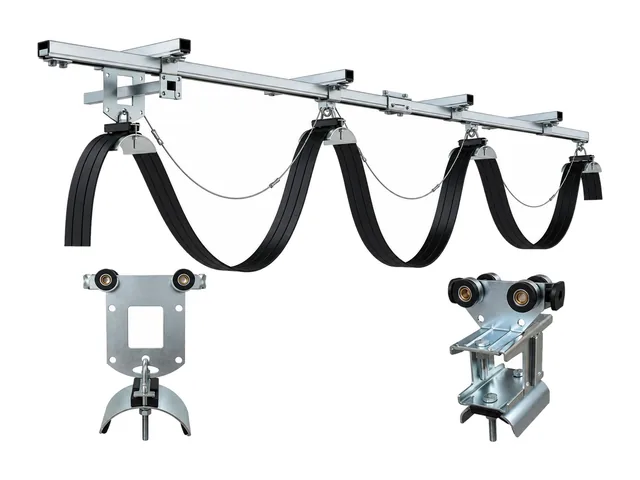
| Power supply line | The cable system that carries power to the hoist as the trolley travels. It is usually a flat cable hung from small trolleys that run in a C-rail (cable festoon systems). |
Types of monorail hoist
Monorail hoists are mainly grouped by their lifting medium (chain or wire rope) and by how the trolley travels.
Monorail chain hoist
The lifting medium is a load chain. The body is compact, takes up little space and is easy to maintain. It is the most popular type for light and medium loads in workshops and on production lines. The hook moves truly vertically, so the load does not drift sideways as it lifts. You can see the models on our monorail chain hoists page, and an example product on the Monorail Electric Chain Hoist 500 kg page.
Monorail wire rope hoist
The lifting medium is a steel wire rope that winds onto a drum. It comes into its own with heavier loads, longer lifting heights and in plants that run all day. The wire rope models are on our monorail wire rope hoists page. For an example, take a look at the technical drawing of the Monorail Wire Rope Hoist 1 t 8 m.
We compare the two in a detailed table in our article chain hoist vs wire rope hoist.
Monorail hoist with manual trolley
Lifting is electric, but the trolley is pushed by hand. It is an economical option when the beam is short, the load is light and the hoist does not travel often. See chain hoists with manual trolley and wire rope hoists with manual trolley.
Light systems with mini hoists
For loads of a few hundred kilograms, mini hoists that run on 220 V can also be hung from a beam or girder. They are practical for small workshops, stores and service shops: mini chain hoists, mini wire rope hoists.
Straight, curved and switched track systems
The beam does not always have to be straight. Curved beams let the load go round corners, and switches let it move from one line to another. Lines like these affect the choice of trolley and the installation, so they are designed for each project. Our ready-made systems are on the monorail crane systems page.
Where are monorail hoists used?
They are useful anywhere a load is moved along a set line. The uses we see most often are:
- Production and assembly lines: Moving parts from station to station and lifting heavy parts onto the workbench.
- Machine and maintenance workshops: Removing and refitting heavy parts such as motors, moulds and gearboxes.
- Warehouses and loading areas: Moving loads taken off lorries from the loading bay into the warehouse.
- Mould shops and foundry areas: Moving moulds between presses.
- Food plants and slaughterhouses: Moving carcasses along the slaughter line. There are also slaughter hoists made for this work.
- Plant rooms and machine rooms: Lifting equipment such as pumps and motors for maintenance.
Advantages and limits
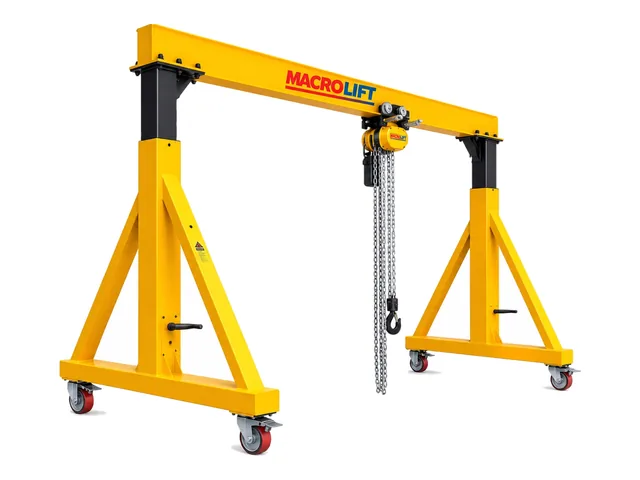
The biggest advantage of a monorail hoist is that it does the job in little space and at low cost. It puts nothing on the floor, cuts down forklift traffic and moves loads without manual effort. Compared with an overhead bridge crane, it needs less steel and a simpler installation, which lowers the investment cost.
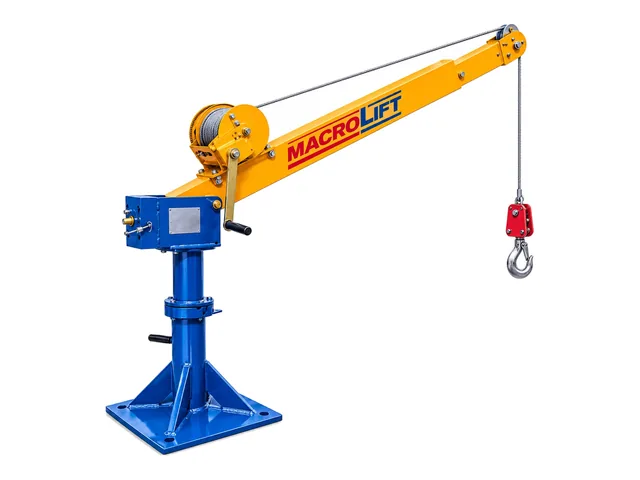
Its limit comes from the same thing: a monorail only covers the line the beam runs along. If you need to take the load to any point in an area, an overhead bridge crane may be the better choice. If you work in a circular area around a fixed point, a jib crane may suit you better. We cover this comparison in detail in our article monorail vs jib vs bridge crane.
How do you choose the right monorail hoist?
To choose a model, it is enough to answer five questions in order.
- How heavy is the heaviest load? Add attachments such as slings and below-the-hook devices to the heaviest part you will lift. Choose the capacity on that basis and leave some margin.
- How far will the hook travel up and down? The lifting height is the distance between the lowest and highest hook positions. The chain or rope length is set by this.
- How long is the beam and where will it hang? The beam length, the suspension points and the load-bearing structure of the building have a direct effect on the installation and the price.
- How fast should it be? A single speed is enough for most jobs. If you need to set loads down with millimetre accuracy, a two-speed model makes the job easier.
- How much will it work each day? The duty class of the hoist is chosen from the daily operating time and the weight of the load. Heavy use calls for a higher class.
You will find how capacity, lifting height and duty class are worked out, with tables, in our article how to choose hoist capacity and lifting height.
What determines the price of a monorail hoist?
There is no single figure for the price of a monorail hoist, because two systems with the same capacity can be very different. The price is set mainly by the capacity, lifting height, trolley type, beam length and installation conditions. Speed, duty class, control type and the power supply line also affect the price. We explain the effect of each one in our article on monorail hoist prices.
Installation, periodic inspection and maintenance
Whether a monorail hoist works safely depends largely on the beam being hung correctly. The beam section, the hanger spacing and the connections must be calculated for the load, and a load test must be carried out after installation. We cover beam selection and the installation steps in our article on monorail beams and installation.
Turkey's Regulation on Health and Safety Requirements for the Use of Work Equipment (İş Ekipmanlarının Kullanımında Sağlık ve Güvenlik Şartları Yönetmeliği) requires hoists to have a periodic inspection by an authorised person at least once a year. On top of that, the operator should take a quick look at the hook, the chain or rope, the brake and the limit switches every day. You will find the checklist in our article on hoist inspection and maintenance, and the operating rules in hoist safety rules.
We also provide installation, maintenance and spare parts for the hoists we sell. Details are on our service and spare parts page.
If you send us the information below, we can quickly come back to you with the right model and a firm price:
- The heaviest load to be lifted (kg or t)
- Lifting height (the distance the hook travels up and down)
- Beam length and where the beam will hang (ceiling, column, existing beam)
- Trolley: electric or manual?
- Daily use: how many hours a day and how many lifts
- Power supply: is 380 V three-phase available?
- If you have one, a photo of the work area or a sketch with dimensions
You can send this information to us on WhatsApp or give us a call. All our contact details are on our contact page.