What is a manual trolley chain hoist?
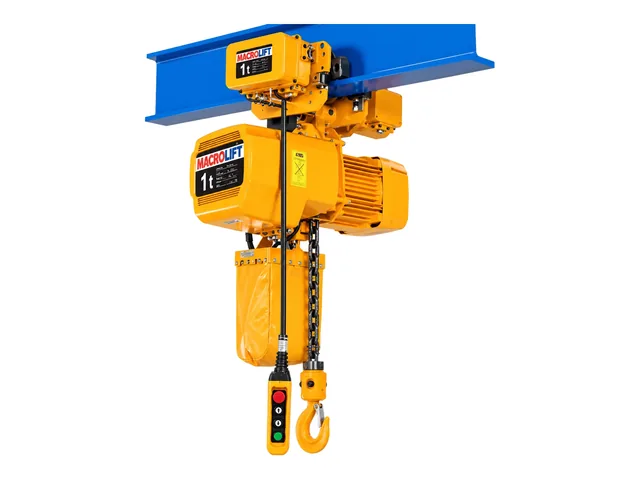
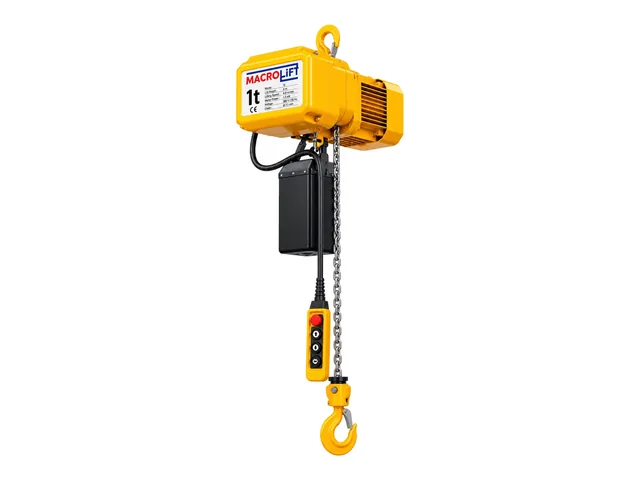
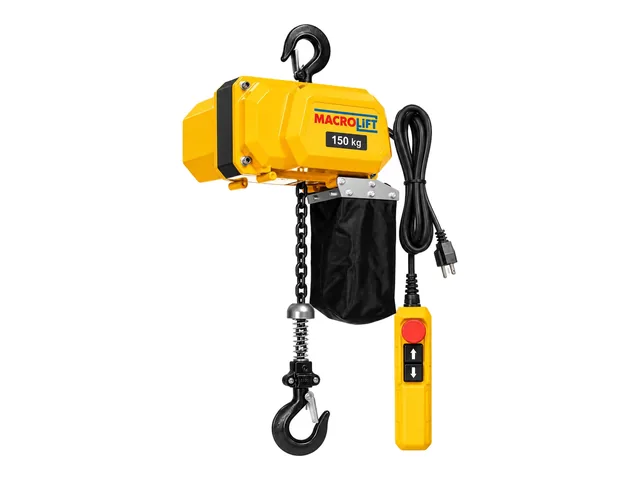
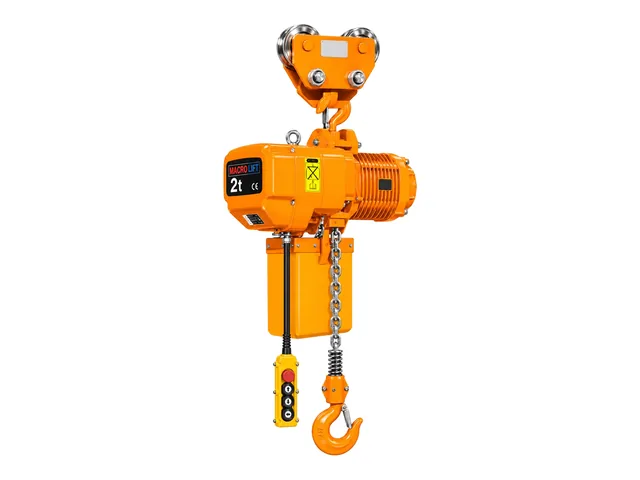
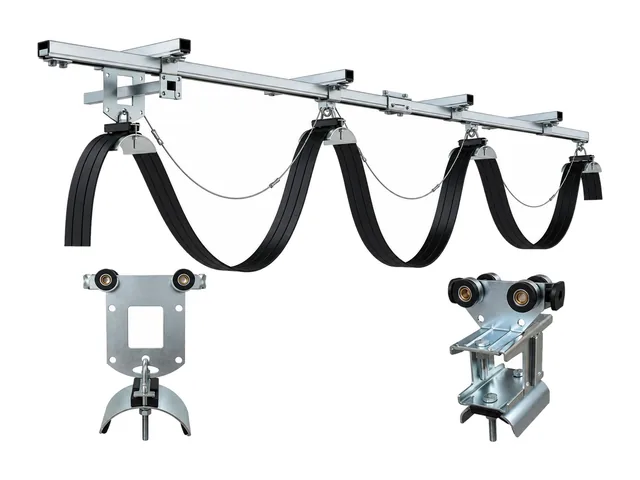
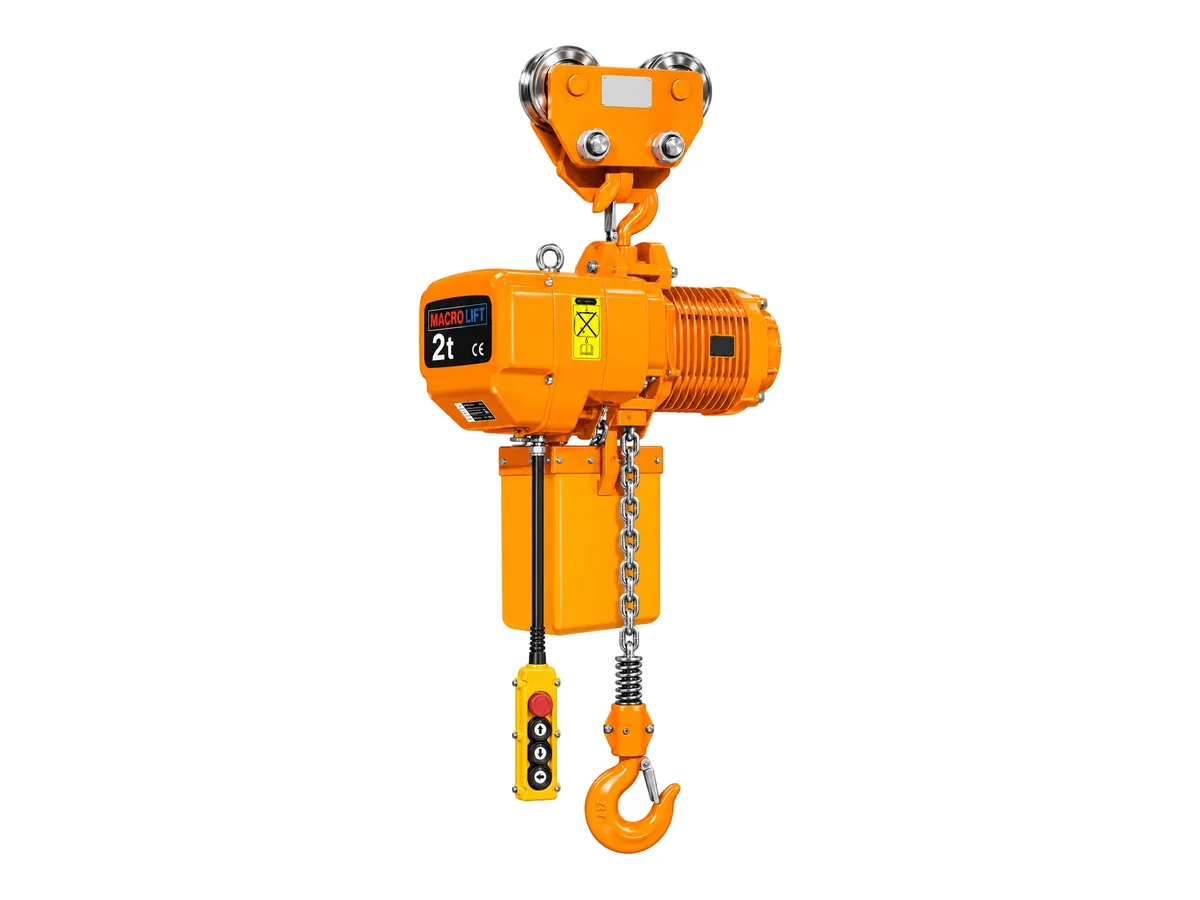
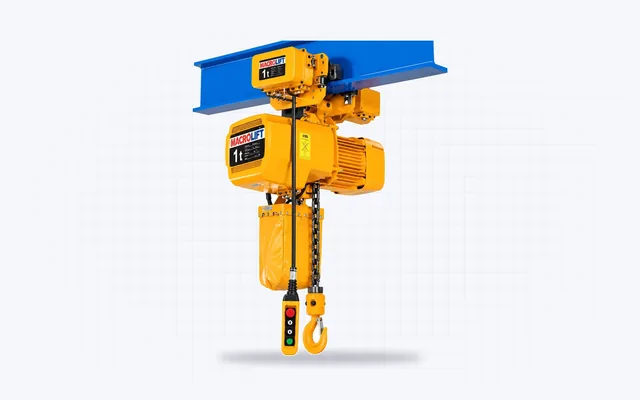
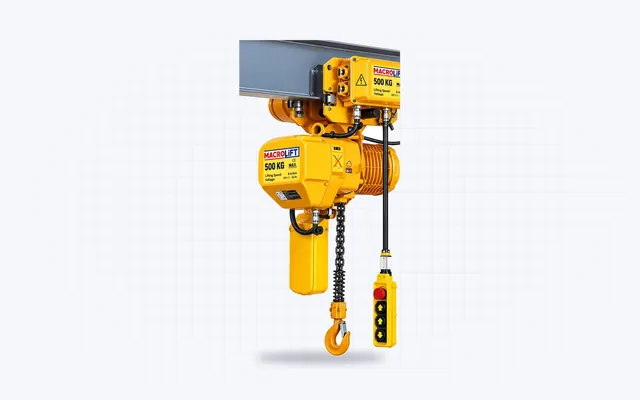
The system has two parts: an electric chain hoist and a manual trolley that runs on its wheels along the bottom flange of the beam. The hoist hangs from the trolley by its suspension hook. Lifting and lowering are done from the push-button pendant, and the operator pushes the load to move it sideways. As the trolley has no motor, the pendant has no travel buttons. The hoist's power cable must be arranged so that it does not snag as the hoist moves along the beam. On longer runs, cable festoon systems are used for this. It is also sold as a push trolley hoist or a plain trolley chain hoist.
Push trolley or geared trolley?
- Push trolley: The hoist and load are moved by pushing them by hand. It is practical for light loads on low beams where the operator can easily reach the load.
- Geared trolley: A hand chain hangs from the side of the trolley, and pulling it drives the trolley through a gear. Pushing gets harder as the load gets heavier or the beam gets higher. In these cases a geared trolley gives more controlled movement.
Where is it used?
- Short runs: Areas where loads are moved a few metres to a bench, a vehicle or a pallet.
- Workshops and maintenance areas: Jobs where dies, motors and machine parts are lifted and moved to one side.
- Stores and loading points: Places where loads are picked up at a door or ramp and set down a short distance away.
How it differs from monorail and fixed models
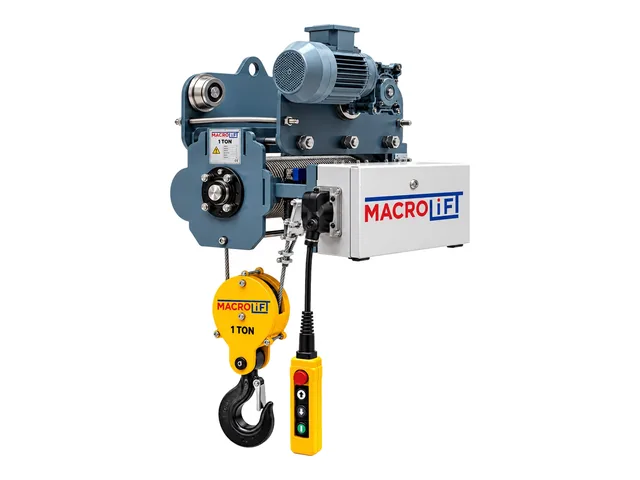
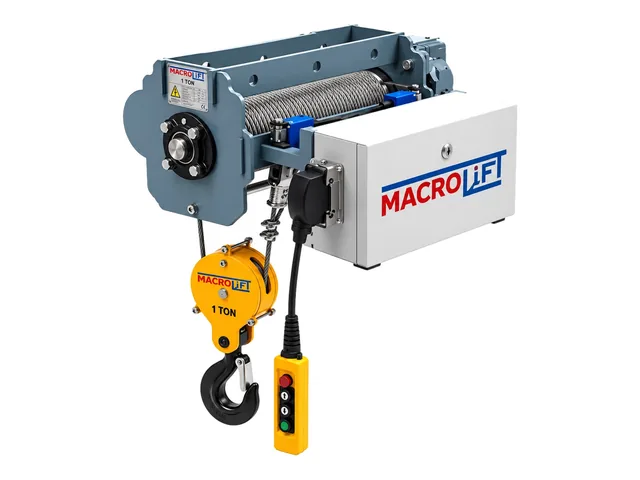
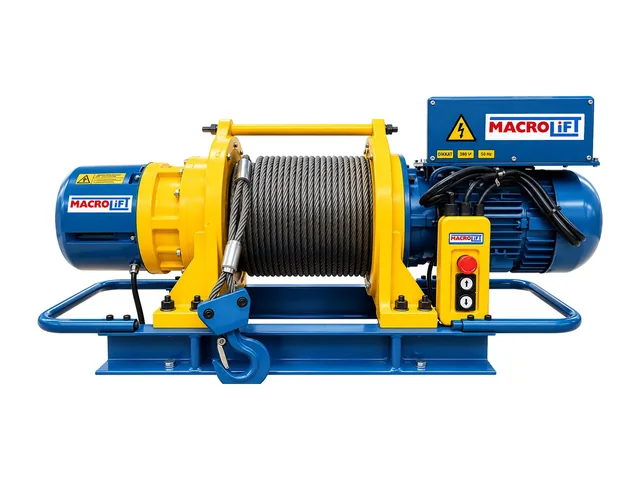
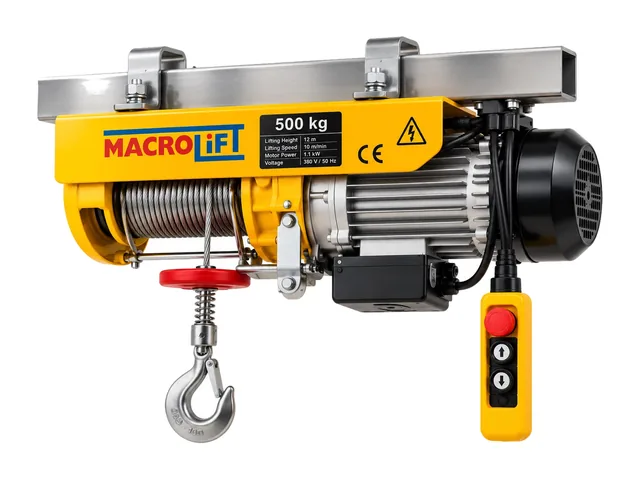
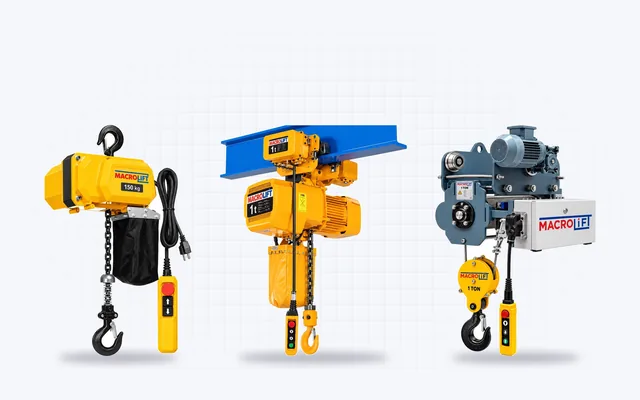
All three types can use the same chain hoist body. The difference is in the sideways movement. A fixed chain hoist works at one point and does not travel at all. A manual trolley chain hoist is moved along the beam by hand. A monorail chain hoist travels on a motorised trolley, with every movement controlled from the pendant. If the beam is long, the load is heavy or the hoist travels often during the day, a monorail hoist with a motorised trolley is both safer and more efficient. For heavy loads and long lifting heights, there are also manual trolley wire rope hoists.
What to check when choosing
- Capacity: Add the weight of slings and attachments to your heaviest load. Both the hoist and the trolley must be rated above that total.
- Beam size: The trolley is adjusted to the beam section (NPI, IPE, HEA/HEB) and its flange width. If you already have a beam, we need these measurements.
- Trolley type: If the beam is high or the load is heavy, choose a geared trolley rather than a push trolley.
- Lifting height: The distance the hook travels up and down sets the chain length.
- End stops: Both ends of the beam need end stops that keep the trolley from running off. For beam and hanger installation, see monorail beam and installation.
Manual trolley chain hoist prices
At the same capacity, a manual trolley model usually costs less than a monorail chain hoist with a motorised trolley. The price depends on the hoist capacity, the lifting height, the trolley type, single or dual speed and whether a beam is needed. The beam, hangers and installation labour have a marked effect on the total cost. Just send us the load weight, the beam length and the lifting height on WhatsApp.
Safe use and service
When moving the load, push the load itself. Do not pull on the pendant cable or the chain. Start and stop slowly and do not let the load swing. No one should be in front of or under the load while it travels. We install and service these hoists from our base in Tuzla. In Turkey, lifting equipment must by law have a periodic inspection at least once a year. For more rules, see hoist safety rules.