How does a jib crane work?
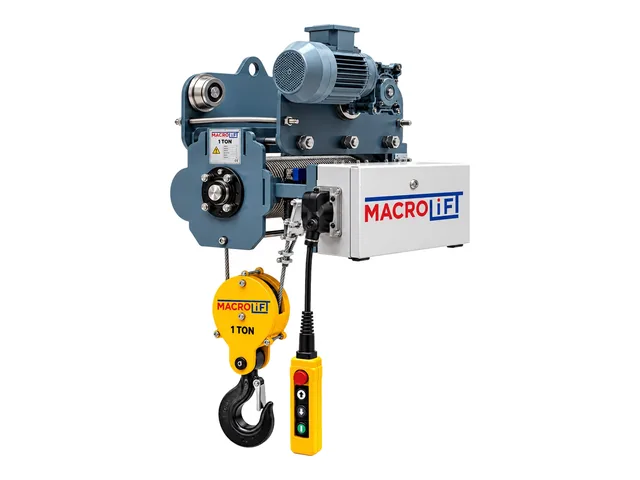
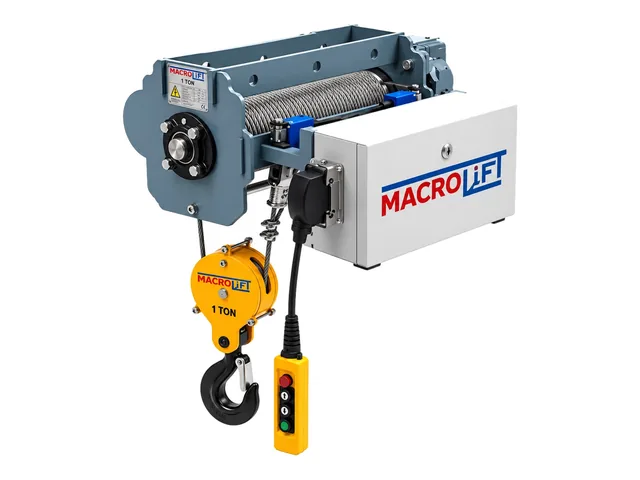
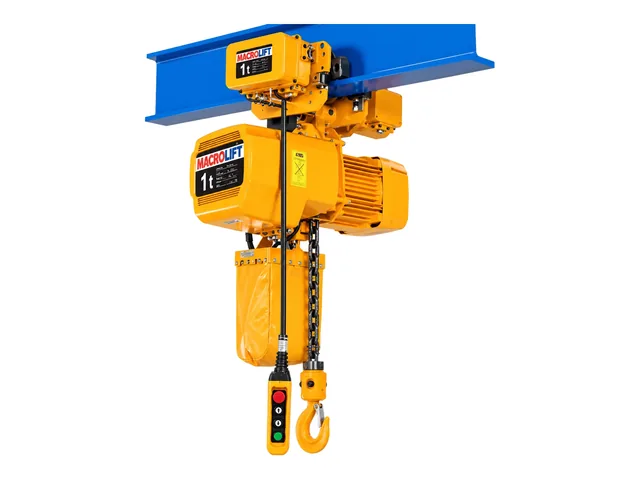
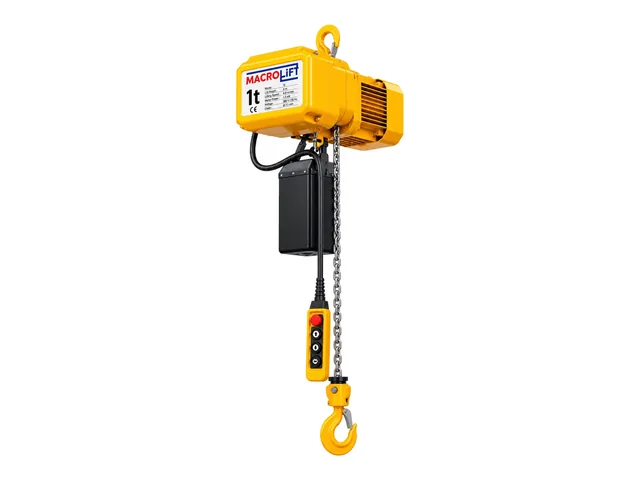
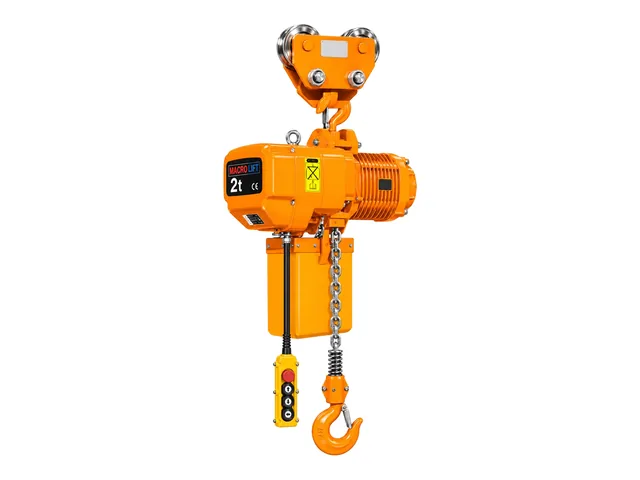
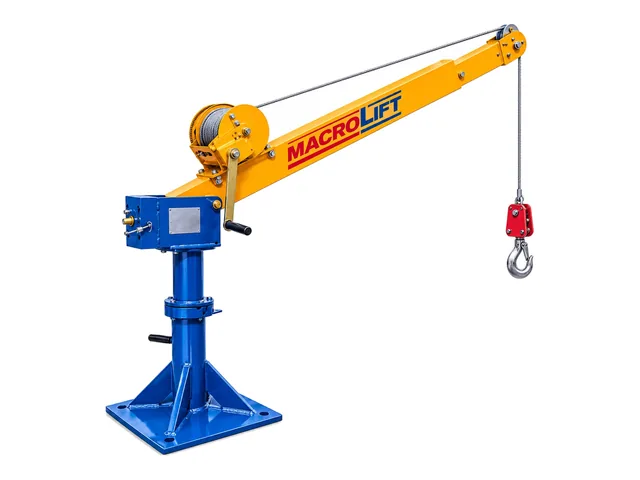
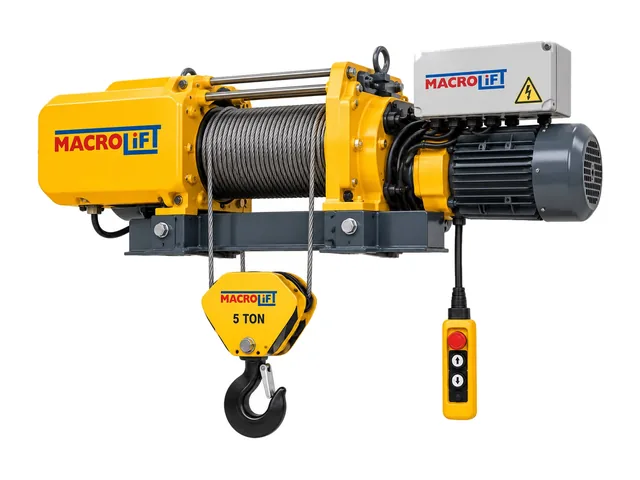
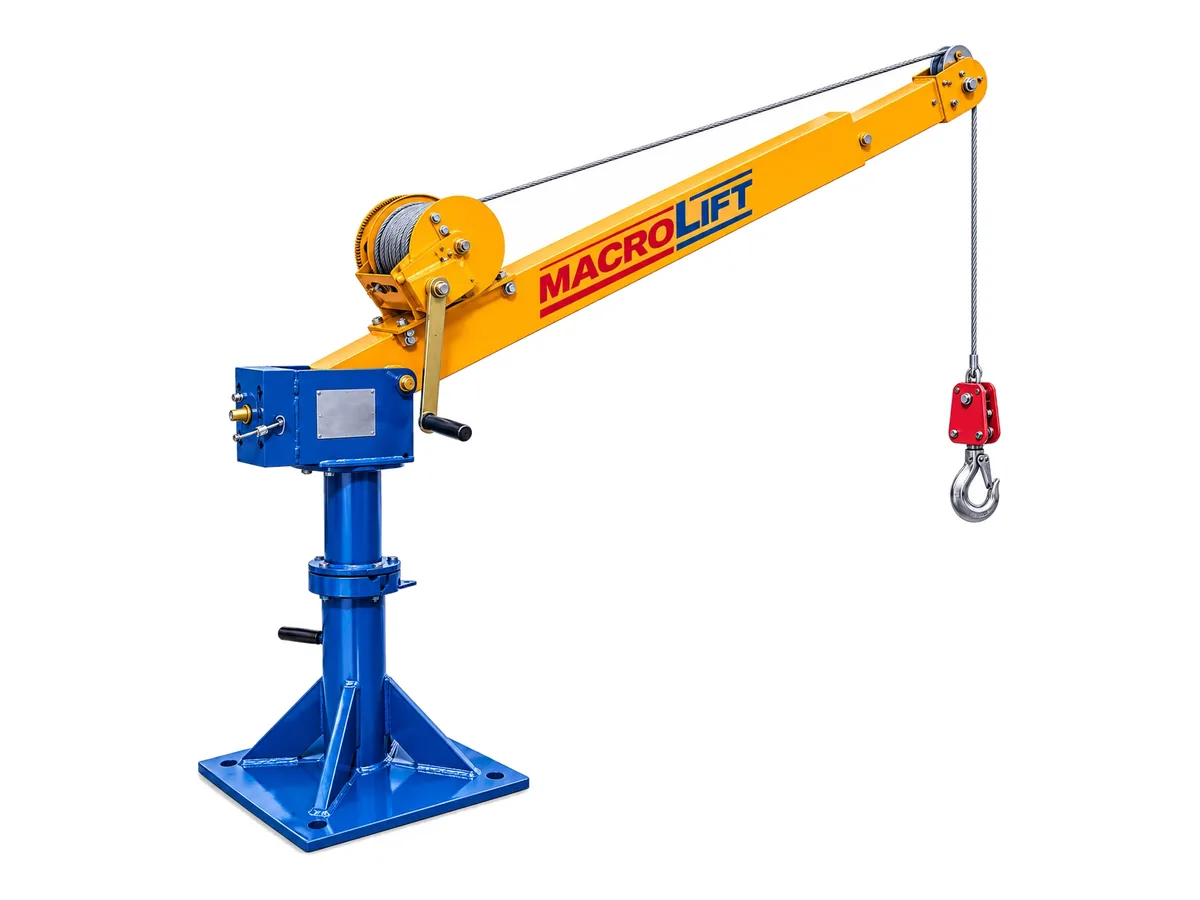
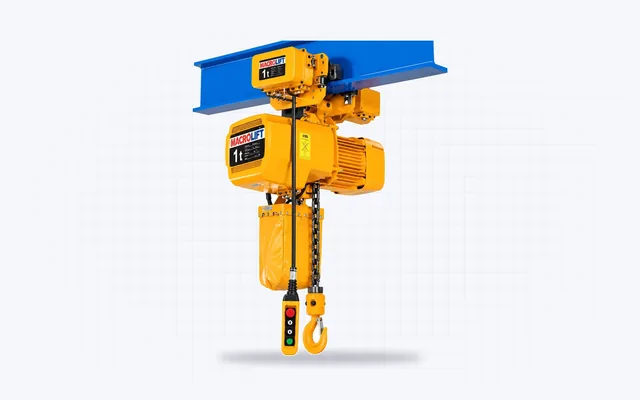
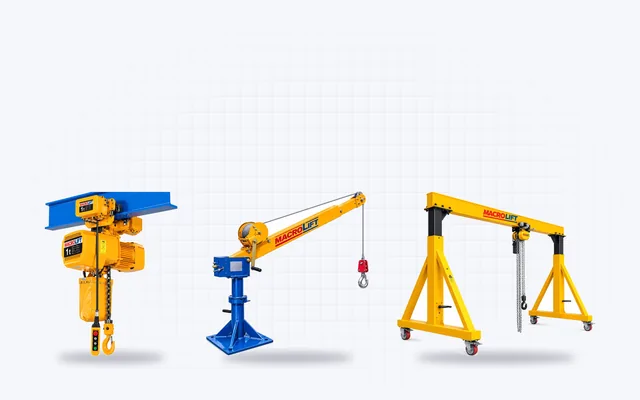
A jib crane has four main parts: the column or wall bracket, the slewing arm, a trolley that travels along the arm and the hoist that lifts the load. An electric chain hoist is used on the arm in most cases. The hoist lifts the load, the trolley moves in and out along the arm, and the arm swings around its mounting point. This lets you bring the load to any point within a circular area. On light models the arm is swung by hand, and large, heavy models can have powered slewing. Jib cranes are also known as slewing jib cranes or swing arm cranes.
Column-mounted and wall-mounted jib cranes
- Column-mounted jib crane: It has its own column, which is anchored to the floor. It puts no load on the building structure and can be installed wherever you need it.
- Wall-mounted jib crane: The arm is fixed to a load-bearing wall or a building column. It takes up no floor space and leaves the area beside the machine clear.
The slewing angle depends on the type and the model. Wall-mounted jib cranes usually swing through about 180°, because the wall is behind them. On column-mounted models 270° is common, and there are also models that turn through 360°. If needed, the slewing range can be narrowed with stops.
Where are they used?
- At machine tools: Loading and unloading heavy parts on CNC machines, lathes and milling machines.
- Presses and mould areas: Changing moulds and feeding parts into the press.
- Assembly and welding stations: Lifting and positioning parts at the station.
- Loading points: Picking up a pallet, crate or machine part and setting it on the workbench.
How is it different from a monorail or gantry crane?
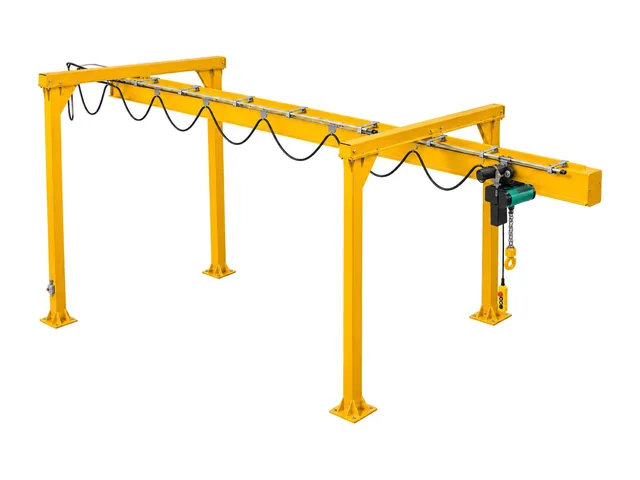
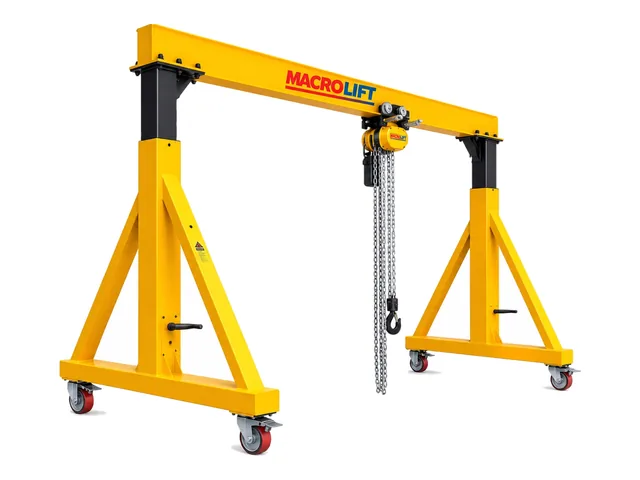
A jib crane works in a limited area around one fixed point. A monorail hoist, on the other hand, carries the load to more distant points along a beam hung from the ceiling or columns. If the load moves from station to station, monorail crane systems may suit you better. If the lifting point changes often or the floor cannot be anchored, a gantry crane on wheels may be the better choice. We compare these systems in a table in our article monorail vs jib vs bridge crane.
What to look for when choosing a jib crane
- Capacity: Add the weight of slings and attachments to the heaviest load. More details: how to choose hoist capacity.
- Arm length: The distance from the slewing centre to the furthest point of the load. It sets the area the crane can reach.
- Height under the arm: It must let the load pass over the machine, and the arm must not hit the ceiling or other cranes.
- Slewing angle: It must let the arm cover the whole working area.
- Mounting point: Is the floor suitable for a column-mounted model, or the wall or building column for a wall-mounted one?
- Hoist and power: The type of hoist on the arm and the power supply on site. Industrial hoists need 400 V three phase power.
Jib crane prices
The main factors in the price are the capacity, arm length, column height, slewing angle, whether the arm is swung by hand or by motor, whether it is column-mounted or wall-mounted, and the hoist used on the arm. The foundation and anchoring work is also part of the total cost. Just send us the load weight, the arm length you need and a photo of the installation spot on WhatsApp.
Foundation, anchoring and installation
Because a jib crane carries the load at the end of its arm, it puts a large overturning force on the column and its mounting. Column-mounted jib cranes are anchored either to a reinforced concrete foundation built to the manufacturer's dimensions, or to a concrete floor whose thickness and strength have been confirmed as sufficient. The anchor points must be away from cracks, joints and slab edges. A crane on newly poured concrete is not used at full load until the concrete has cured enough. For wall-mounted models, a structural check must confirm that the wall or column can carry this load. Anchoring by guesswork creates a real risk of the crane tipping over.
We install and service jib cranes from our base in Tuzla, Istanbul. After installation and before first use, an authorised person carries out an inspection and load test. After that, Turkish law requires a periodic inspection at least once a year. The anchor bolts and slewing stops are among the points checked. Details: hoist inspection and maintenance.