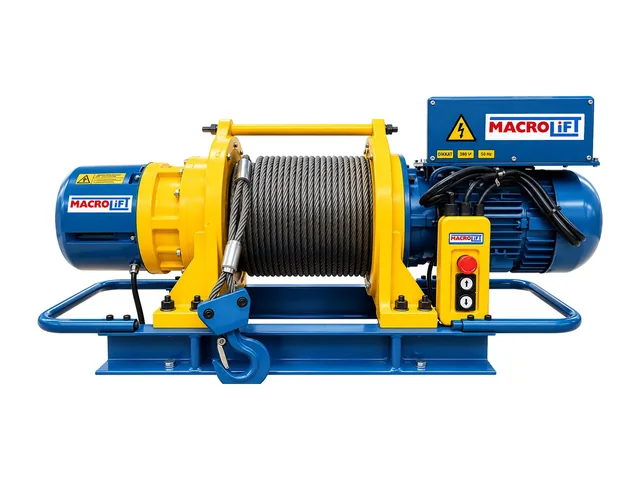
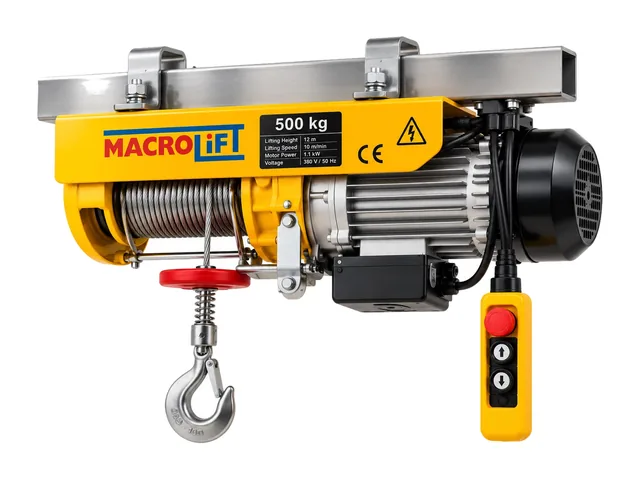
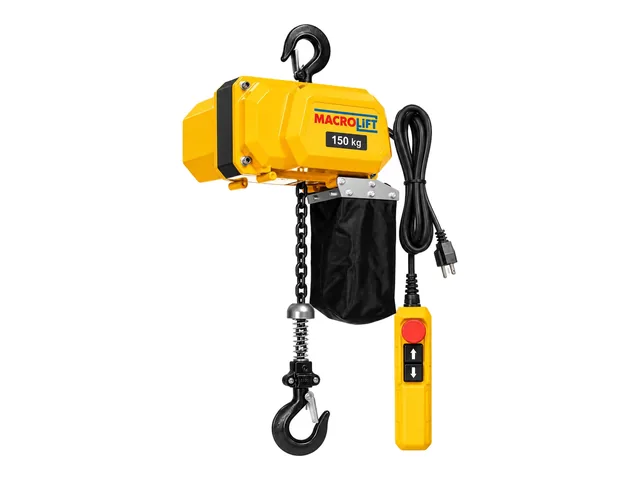
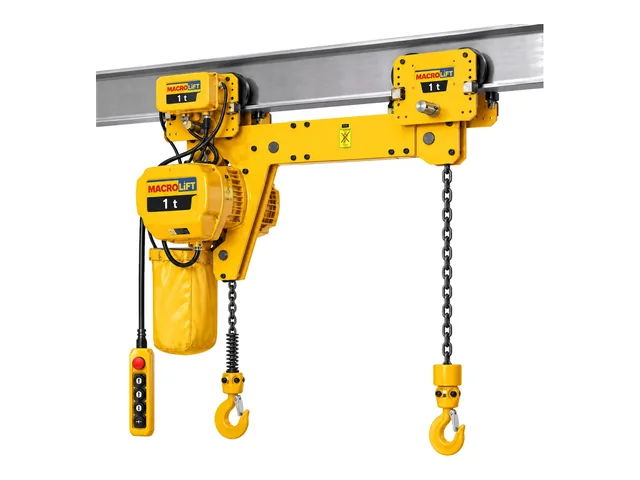
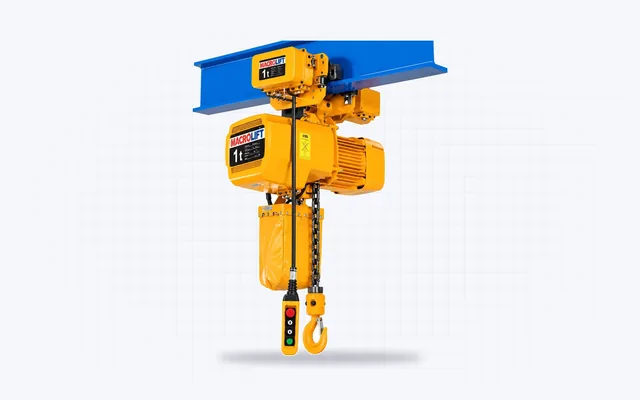
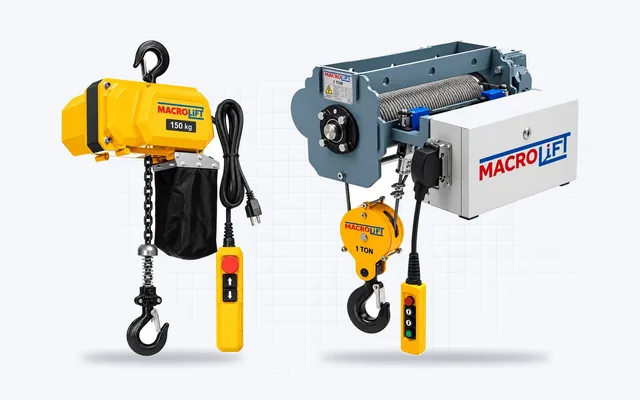
Monorail hoist prices depend on the lifting capacity, the lifting height, whether the trolley is electric or manual, the beam length and the installation conditions. So if you see a single figure online along the lines of "a 1 tonne monorail hoist costs this much", it is most likely the price of the hoist body alone. The beam, hangers, power supply line and installation are usually not included in that figure.
Below we list the eight factors that set the price, starting with the one that has the biggest effect. At the end we explain what information you need to give us to get an accurate quote that you can compare with others.
1. Lifting capacity
The biggest factor in the price is how many kilograms the hoist will lift. As the capacity goes up, the motor power, the chain or rope thickness, the gearbox and the trolley all get bigger. The difference between 500 kg and 2 t is not just in the figure. It is in every part of the hoist.
A common mistake here is choosing a capacity that is too high or too low. A hoist that is too small works at its limit all the time and wears out quickly. A hoist that is bigger than needed costs more for no reason, and it also needs a heavier beam and support structure. Set the capacity by adding the weight of slings and attachments to your heaviest load. The calculation is explained in detail in our article how to choose hoist capacity.
2. Chain or wire rope?
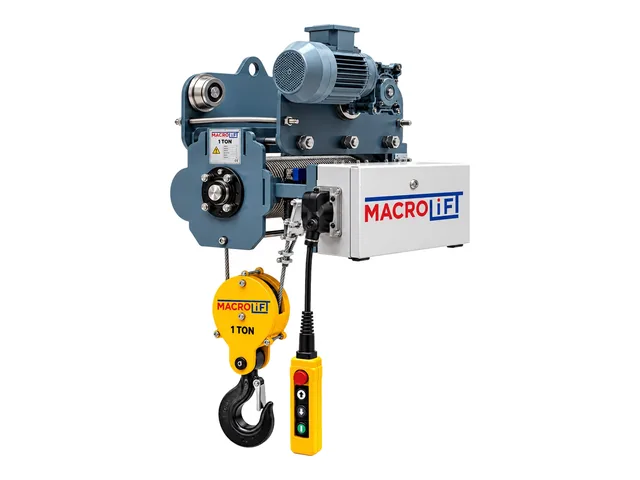
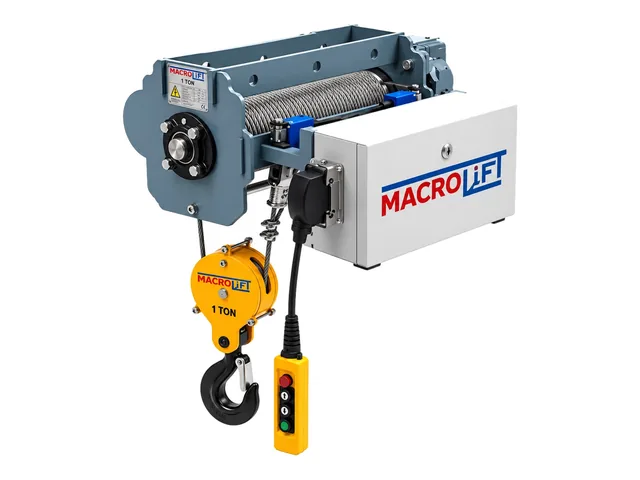
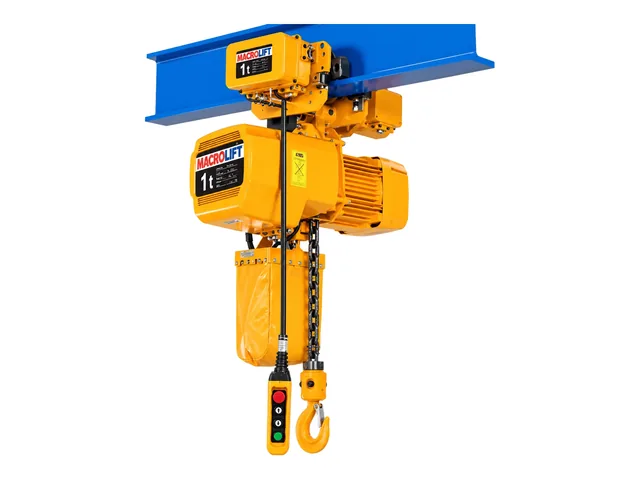
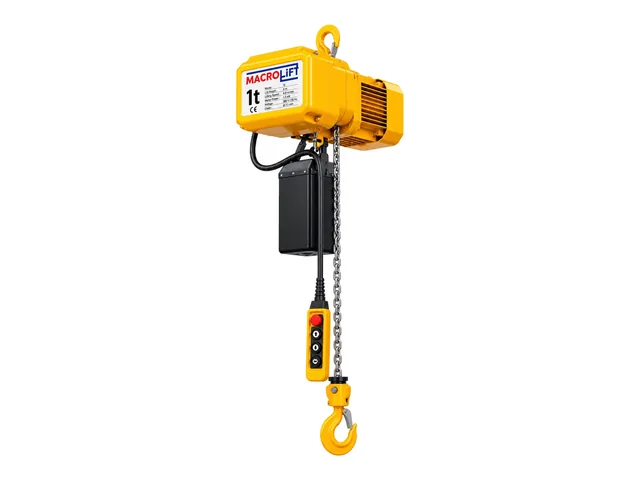
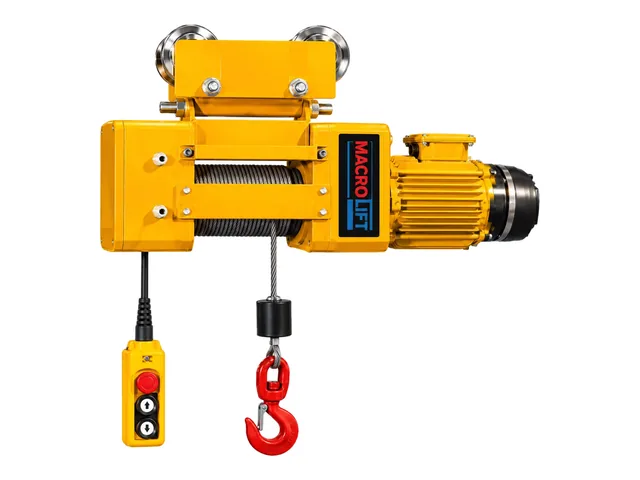
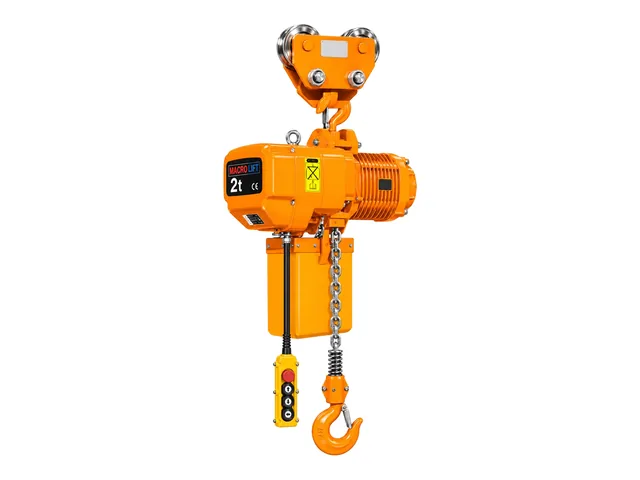
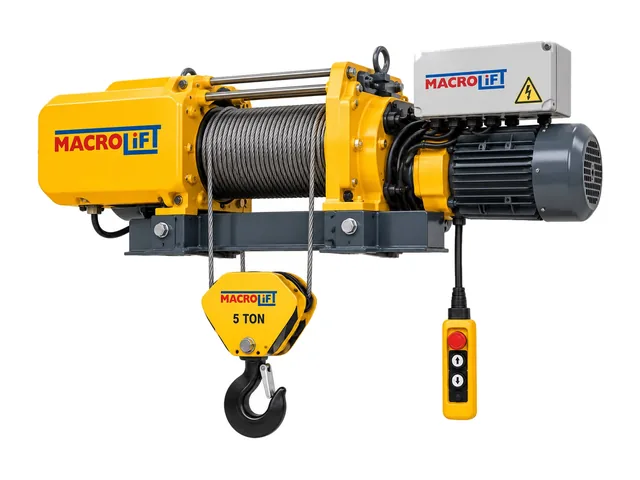
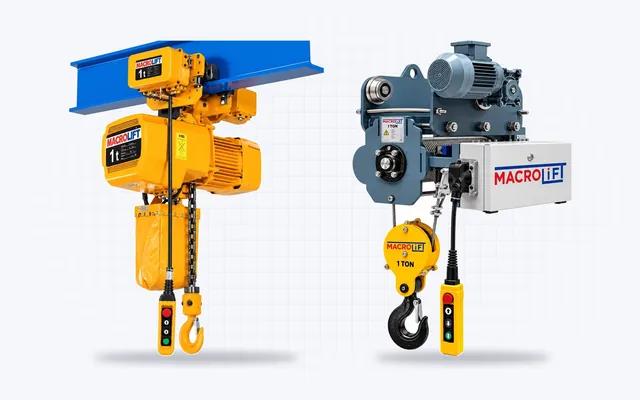
At the same capacity, a monorail chain hoist usually costs less than a monorail wire rope hoist. Wire rope hoists come into their own with heavier loads, longer lifting heights and intensive use, but they have a larger body and a drum. We compare which one suits you in our article chain hoist vs wire rope hoist.
3. Lifting height
The further the hook has to travel, the longer the chain or rope has to be. On chain hoists the chain bag gets bigger, and on wire rope hoists a longer drum may be needed. The difference between a 6 m and a 12 m lifting height shows clearly in the price, especially on chain hoists.
4. Trolley type: electric or manual
An electric trolley has its own travel motor, braked wheels and extra buttons on the pendant. With a manual trolley, the hoist and the load are pushed by hand. If the beam is short, the load is light and the hoist does not travel often, a manual trolley model takes pressure off the budget. On long lines and with heavy loads, an electric trolley is needed for both safety and efficiency.
5. Beam length and beam section
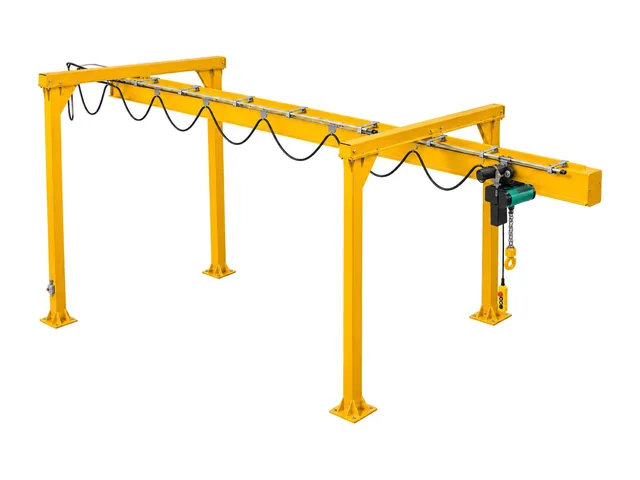
The second biggest cost item in a monorail system is the beam. A longer beam needs more steel, more suspension points and a longer power supply line. The beam section also gets bigger with the load and the hanger spacing. Curved beams and switches cost more than a straight line, because they need extra fabrication. Details: monorail beams and installation.
6. Installation conditions
The same hoist can have very different installation costs in two different buildings. The main questions that affect the price are:
- Can the beam hang from an existing girder or roof truss, or are new columns and brackets needed?
- How high is the installation, and is scaffolding or a platform needed?
- Can the work area be cleared during installation, or will the work be done while production carries on?
- Is the site out of town?
That is why, to give an installed price, we need to see the site or at least ask for photos and measurements.
7. Speed and duty class
Single-speed hoists are enough for most jobs and cost less. For work where the load has to be set down precisely (fitting moulds, assembly), two-speed or variable-speed models are preferred. These cost a little more.
The duty class also affects the price. A workshop hoist used a few times a day and a line hoist that runs for two shifts should not be in the same class. A higher class means a tougher motor, brake and gears.
8. Control, power supply line and extra equipment
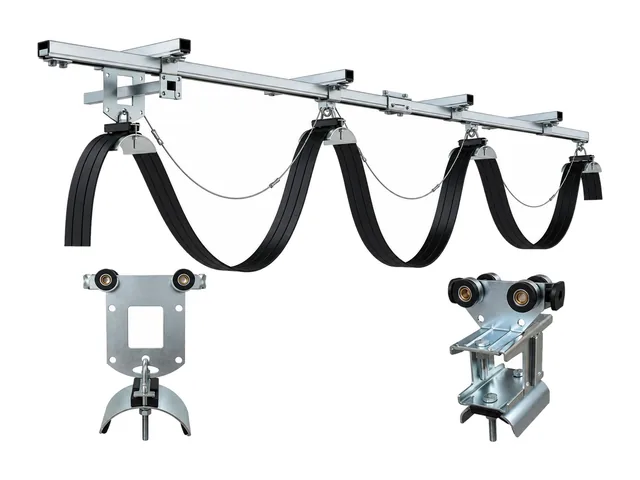
Equipment such as a radio remote control instead of the standard hanging pendant, overload protection, a speed control unit (inverter), extra limit switches and a warning light adds to the price. The cable festoon system that carries power along the trolley's route is also priced together with the beam length.
Summary: how much does each factor matter?
| Factor | Effect on price | When does it matter most? |
|---|
| Capacity | Very high | Always |
| Chain or wire rope | High | Heavy loads, long lifting heights, intensive use |
| Beam length and section | High | Long lines, curved beams and switches |
| Installation conditions | Medium to high | When a new support structure is needed, high ceilings |
| Lifting height | Medium | Above 8 m |
| Trolley type | Medium | When an electric trolley is chosen |
| Speed and duty class | Medium | Precision work and shift work |
| Control and extra equipment | Low to medium | Radio remote control, inverter, overload protection |
What should you check when comparing quotes?
If you have prices from more than one company, check these points. Otherwise you may end up comparing quotes that are not alike:
- What is included in the price? Are the hoist, trolley, beam, hangers, power supply line, installation and first inspection listed separately?
- Is the lifting height the same? One company may have quoted 6 m and another 9 m.
- Are the speed and duty class stated? If not, ask.
- Motor and brake brand, protection class (IP): are they stated?
- Service and spare parts: who will supply them, and how quickly?
A quote that looks cheap can turn out expensive once the beam and installation are added later. A quote that lists every item separately is always the sounder choice.
- The heaviest load to be lifted
- Lifting height
- Beam length and where the beam will hang
- Electric or manual trolley?
- Daily operating time
- If you have one, a photo of the work area
Send this information to us on WhatsApp and we will come back to you with the right model and a price with each item listed separately. To look at the models, see our monorail chain hoists and monorail wire rope hoists pages. For general information, see our guide what is a monorail hoist?