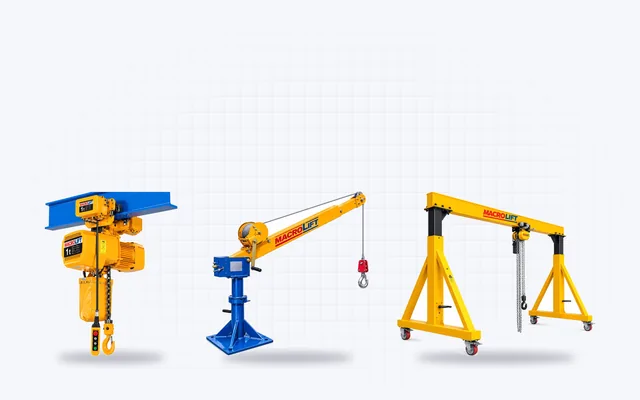
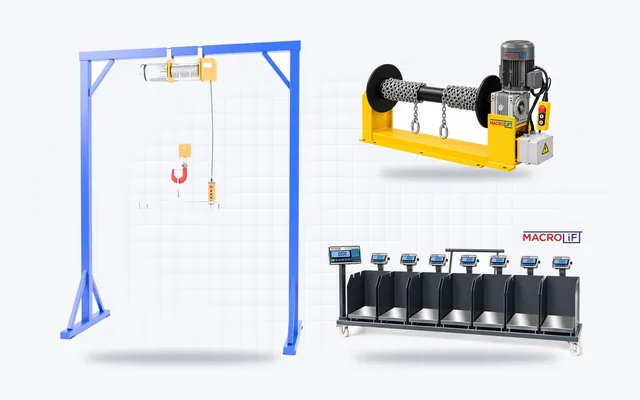
How does a gantry crane work?
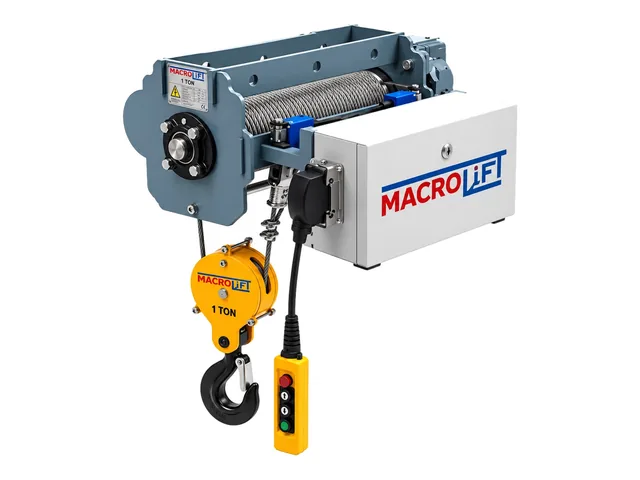
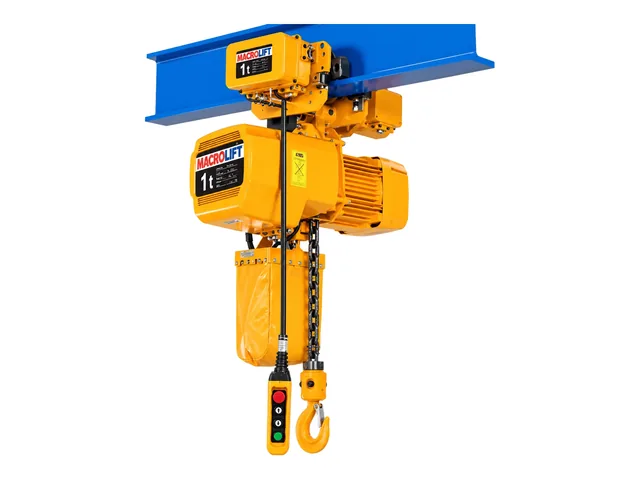
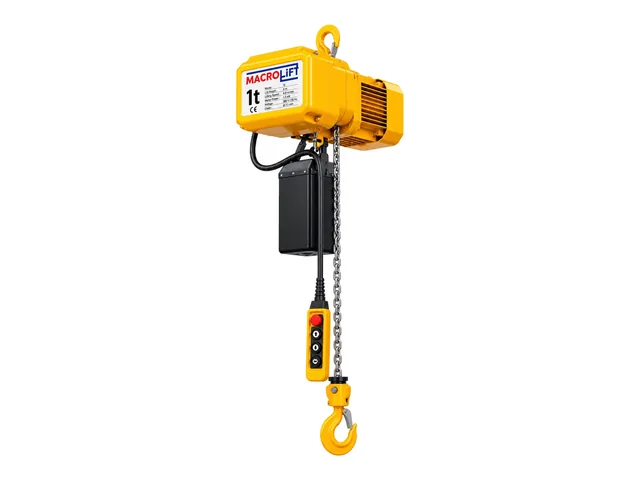
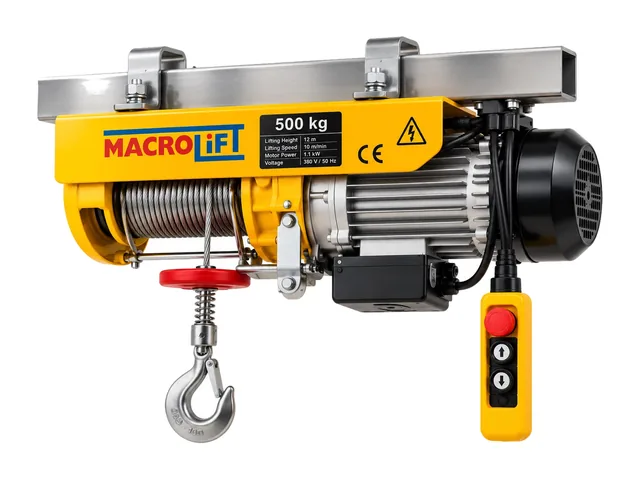
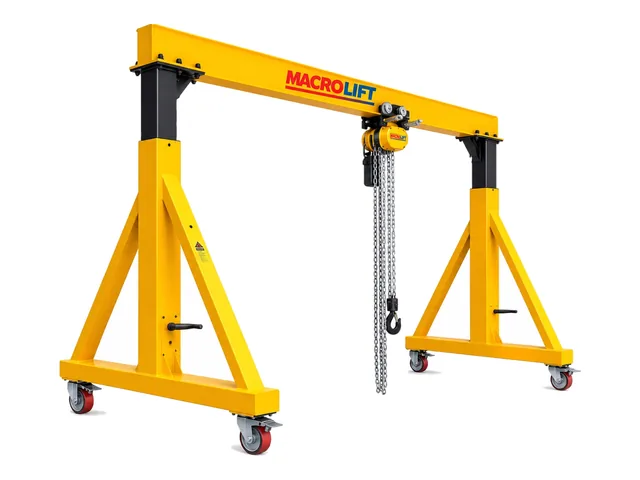
A gantry crane is made up of two A-shaped legs, an I-beam carried by the legs and a hoist with a trolley that travels along the beam. The hoist lifts the load and the trolley moves along the beam. On models with wheels, the frame is pushed by hand to the working point, the wheel brakes are locked and then the lift is made. On some models the beam height and the span between the legs can be adjusted, and the frame can be taken apart and set up somewhere else. These cranes are also called portable gantry cranes, mobile gantry cranes or rolling gantry cranes.
Gantry types
- Manual gantry crane: A frame on wheels, pushed by hand, for light and medium loads. In the workshop it is moved from job to job for work such as machine maintenance and removing parts.
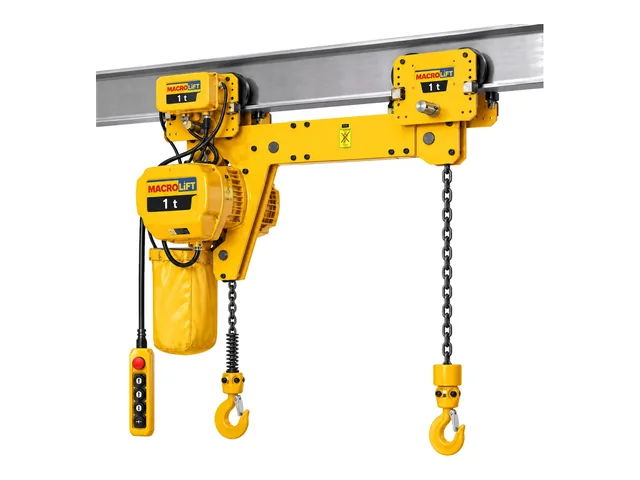
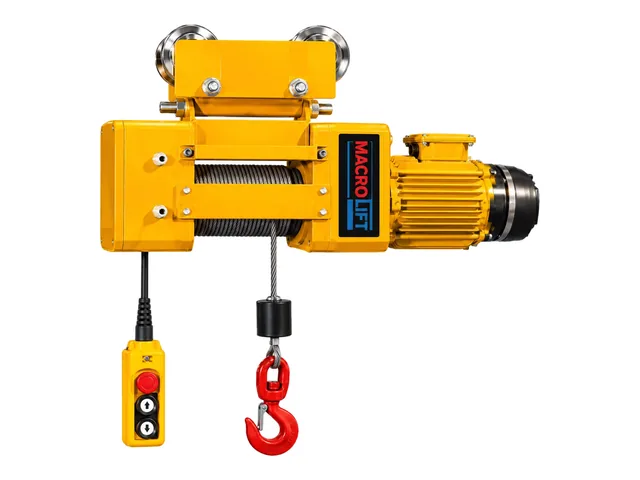
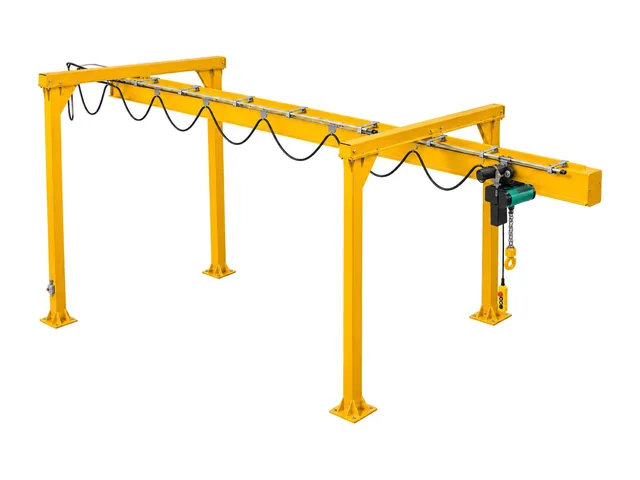
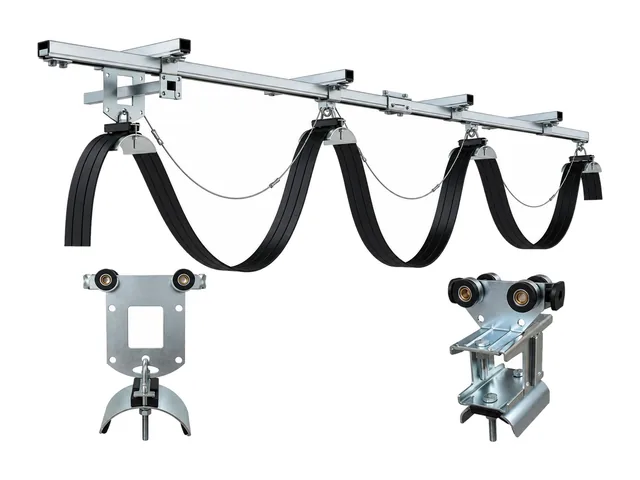
- Monorail gantry system: The frame with legs carries a fixed lifting line, usually with a hoist on a motorised trolley. It is used to set up a permanent line without putting load on the ceiling. Details: monorail crane systems.
Where are they used?
- Machine maintenance: Removing and refitting heavy parts such as motors, gearboxes and moulds.
- Buildings where the ceiling cannot be used: Rented buildings, or halls whose roof cannot take extra load.
- Stores and loading areas: Taking a load off a vehicle and setting it on the floor or on a pallet.
- Temporary set-ups: Jobs such as slaughter areas set up for Eid. There are also slaughter hoists made for this work.
How is it different from a jib crane or monorail hoist?
A gantry crane puts no load at all on the building and can be moved when needed. A jib crane, by contrast, is fixed to a column or wall and swings around one point. A monorail hoist runs along a beam hung from the ceiling or columns. If you always lift at the same machine, a jib crane is more efficient. If the load follows the same line every time, a monorail is. For a comparison table, see monorail vs jib vs bridge and gantry crane.
What to look for when choosing a gantry crane
- Capacity: Add the weight of slings and attachments to the heaviest load. The hoist on the beam must also suit the gantry's capacity.
- Hook height: Allow for the hoist and the sling below the beam height. Models with adjustable height can suit different jobs.
- Span: The distance between the legs must be wide enough for the machine or vehicle that goes under it.
- Passage sizes: If the frame will be moved around the workshop, measure the door and passage heights too.
- Floor and wheels: The wheels must suit the floor and have brakes.
Safe use
- Use the gantry on a level, hard floor with no slope. Asphalt and soft ground are not suitable because the wheels can sink in.
- Lock the wheel brakes before lifting a load.
- Many manufacturers do not allow a gantry to be moved while it is loaded. Even on models where the manual allows it, the load is kept close to the floor, you push the frame and not the load, and the gantry is never moved on a slope.
- Never push or pull the gantry with a forklift or a vehicle.
- Do not adjust the height or span while there is a load on the gantry. Do not lift unless the adjustment pins are in place.
- No one should stand under the load.
Like other lifting equipment, gantry cranes must have a periodic inspection at least once a year. For the general rules, see our article on hoist safety rules.
Gantry crane prices
The main factors in the price are the capacity, the span, whether the height is fixed or adjustable, the wheel and brake type, and the hoist used on the beam. For monorail gantry systems, the line length and installation labour are added to the price. We install and service gantry cranes from our base in Tuzla, Istanbul. Just send us the load weight and the height and span you need on WhatsApp.