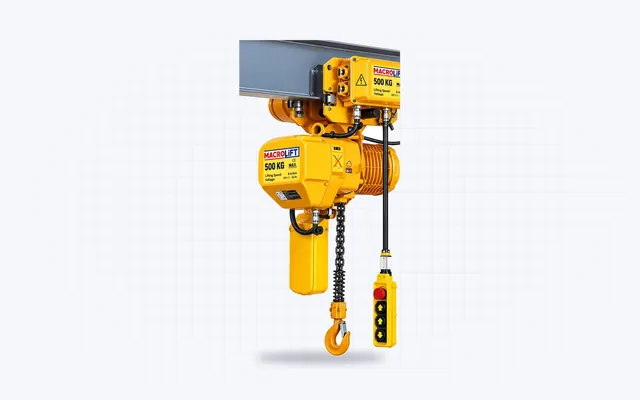
How does a fixed chain hoist work?
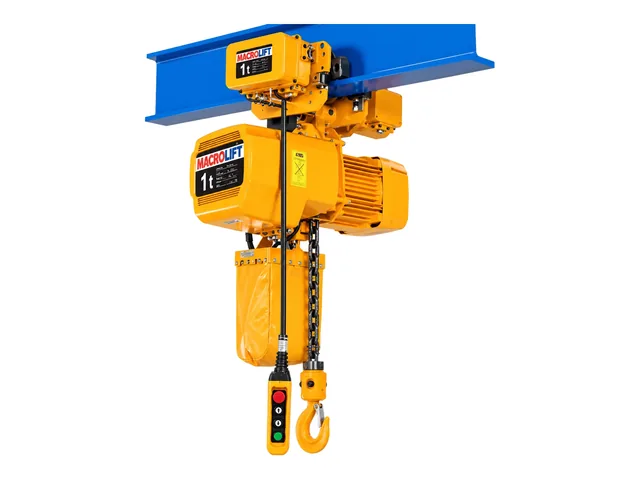
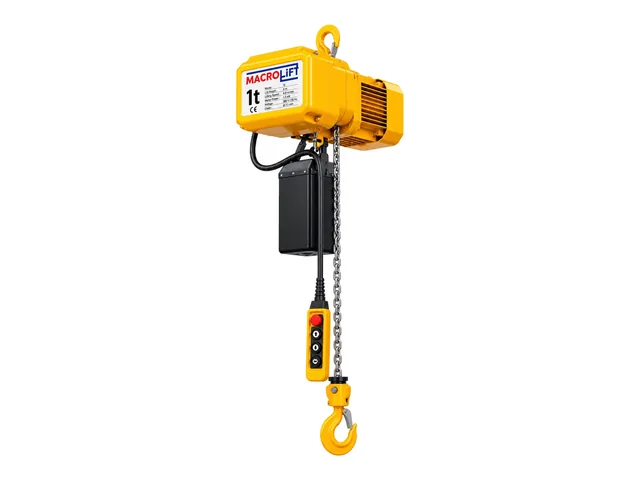
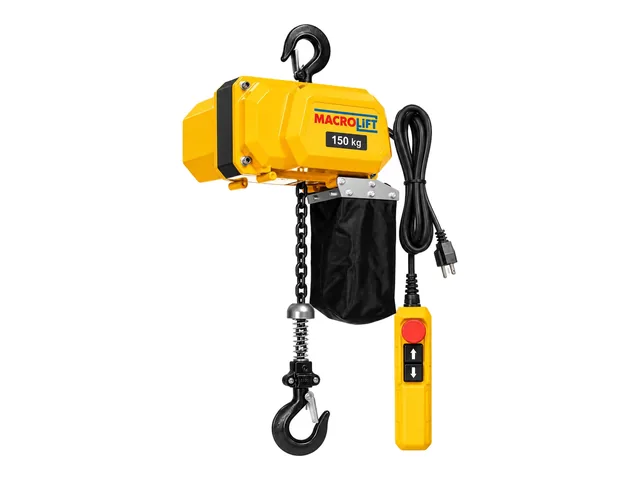
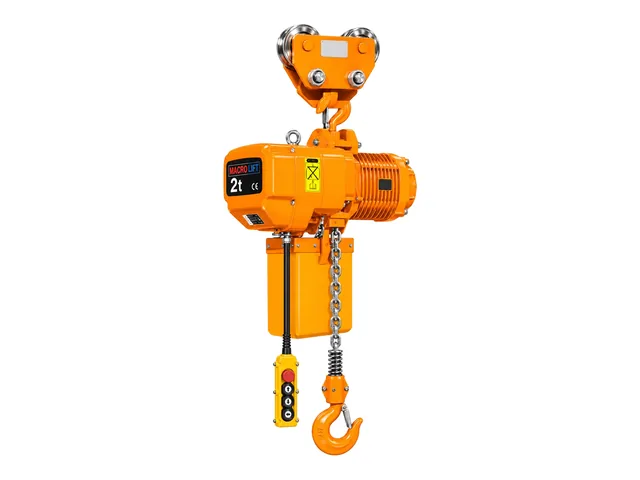
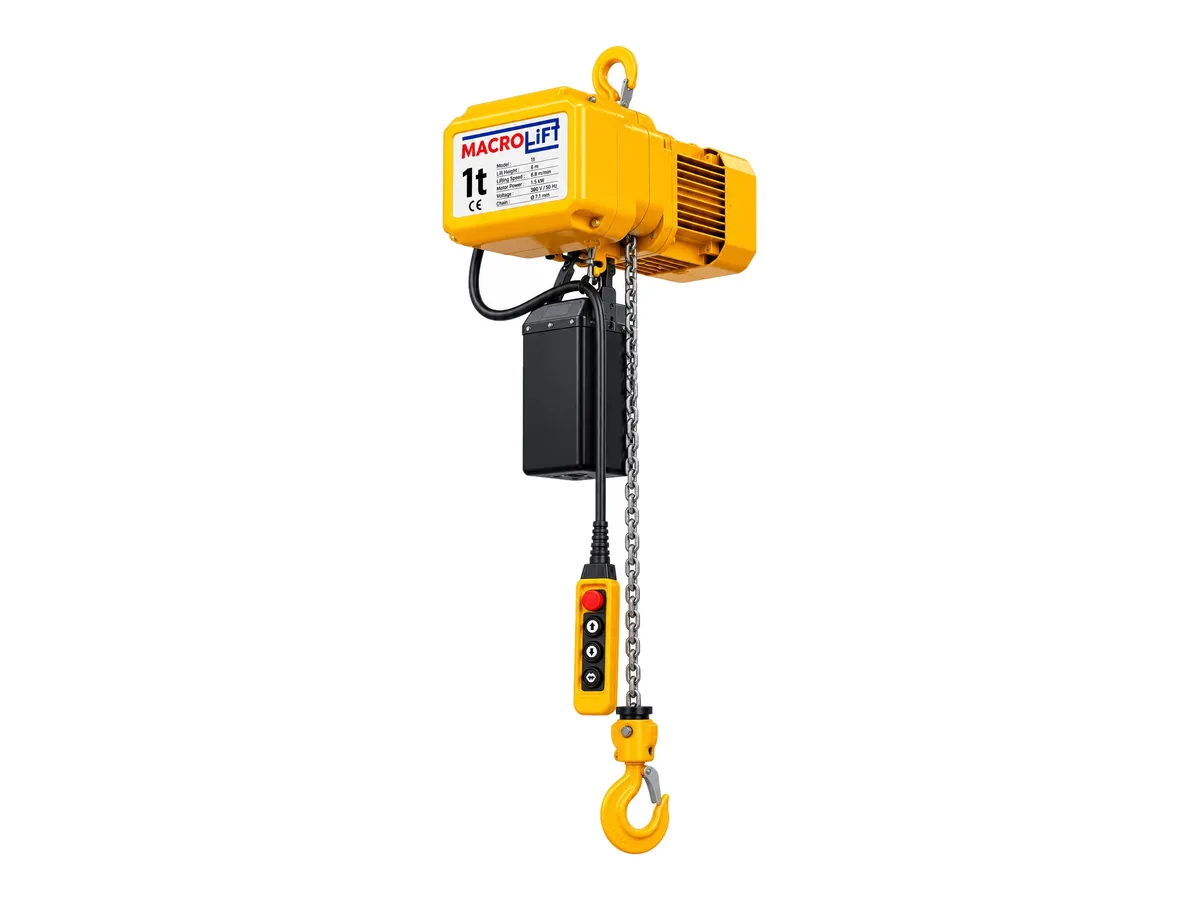
The hoist body holds an electric motor, a gearbox, a brake and a chain sprocket. The motor turns the sprocket, and the sprocket pulls the load chain to raise the hook. The slack chain collects in the chain bag under the body. The operator uses a push-button pendant for two movements: lifting and lowering. When the motor stops, the brake comes on and holds the load in the air. Upper and lower limit switches stop the hook at its highest and lowest points. This type is also sold as a hook-suspended or stationary electric chain hoist.
Where is it used?
- Die and machine maintenance: Areas where dies, motors or gearboxes are always removed and refitted at the same spot.
- Assembly stations: Fixed workstations where parts are lifted above the bench and set in place.
- Pits, shafts and mezzanines: Places where loads are lowered to or raised from another level.
- Stores and service areas: Points where heavy crates and parts are lifted straight up from a vehicle or a bench.
How it differs from similar chain hoists
Chain hoists are mainly told apart by how they are mounted and whether they move sideways.
- Fixed: Hangs from one point and only lifts and lowers.
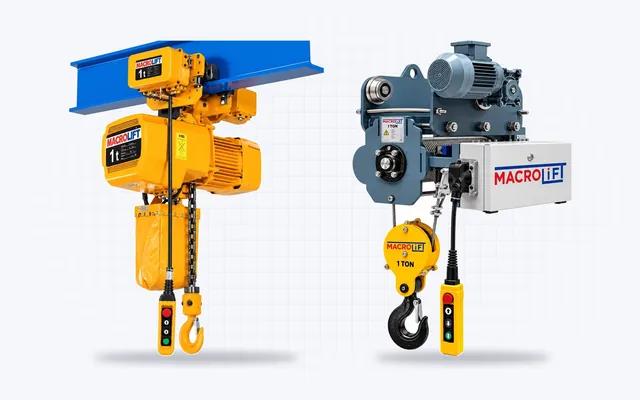
- Manual trolley chain hoist: The hoist hangs from an unpowered trolley on an I-beam. The load is pushed along by hand.
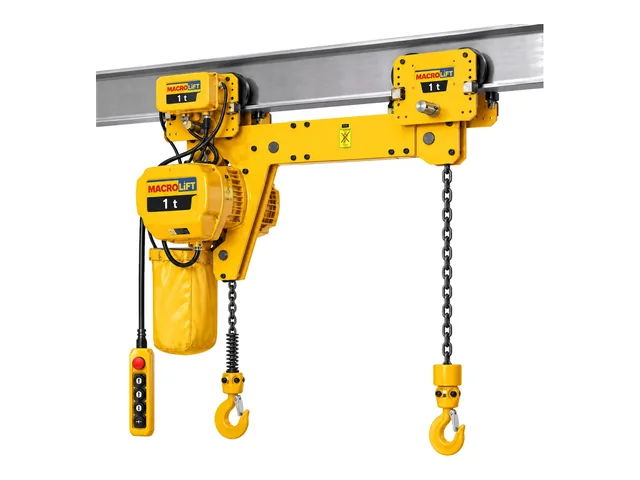
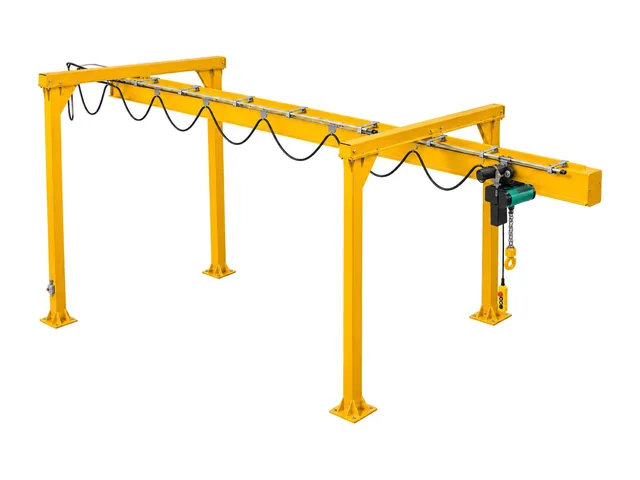
- Monorail chain hoist: Travels along the beam on a motorised trolley. Every movement is controlled from the pendant.
- Mini chain hoist: A small-capacity model for light work that runs on 230 V single phase.
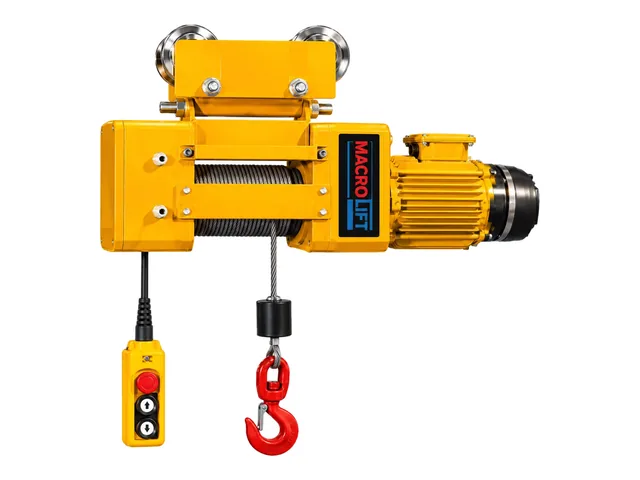
If the load has to be carried along a line, the hoist needs a beam, in other words a monorail hoist. For heavy loads and long lifting heights, fixed wire rope hoists are the better fit.
What to check when choosing
- Capacity: Add the weight of slings and attachments to your heaviest load and choose a capacity above that total. For details, see how to choose hoist capacity.
- Lifting height: Measure from the lowest point the hook must reach to the highest point it must rise to. This sets the chain length and the size of the chain bag.
- Suspension point: The hook, beam or structure must easily carry the weight of the hoist and the load. If you are not sure, have an engineer check it.
- Speed: If you need to set loads down precisely, choose a dual-speed model. The slow speed makes it easier to position dies and parts.
- Power supply: Industrial models run on 400 V three phase. If your site only has 230 V single phase, mini models can be an option for light work.
Fixed chain hoist prices
The main factors that set the price are capacity, lifting height, single or dual speed and protection class. If an extra beam, a beam clamp or a steel structure is needed to hang the hoist, that adds to the cost. Just send us the load weight, the lifting height and a photo of where the hoist will hang on WhatsApp.
Installation, inspection and service
We install and service the fixed chain hoists we sell from our base in Tuzla. At the start of every shift, the operator should briefly check the hook, the safety latch, the chain, the brake and the limit switches. The chain is cleaned and lubricated regularly. When stretch and wear go past the manufacturer's limit, it is replaced with a load chain that suits the hoist model. In Turkey, lifting equipment must by law have a periodic inspection at least once a year. For details, see hoist inspection and maintenance.