What is hoist chain?
The name hoist chain is used for two different products. The first is the load chain that runs inside a chain hoist. The second is lifting chain used to attach the load to the hoist hook, and the chain slings made from it. Both differ from ordinary chain: they are made to a set grade for lifting, and the load they can carry is set by the manufacturer. For steel wire ropes that wind onto the drum of a wire rope hoist, see our wire ropes page.
Hoist load chain and sling chain are not the same
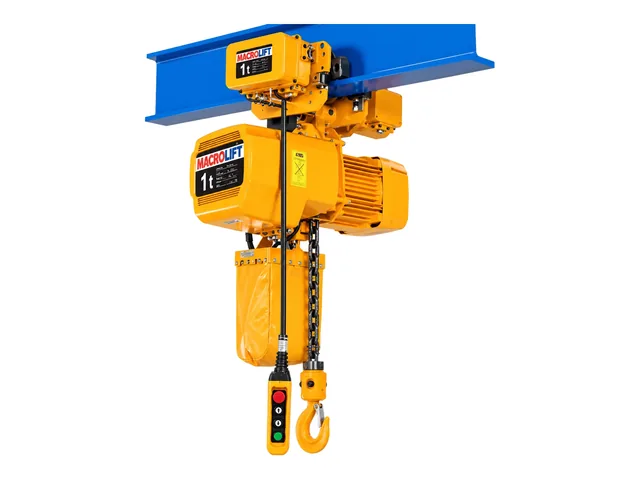
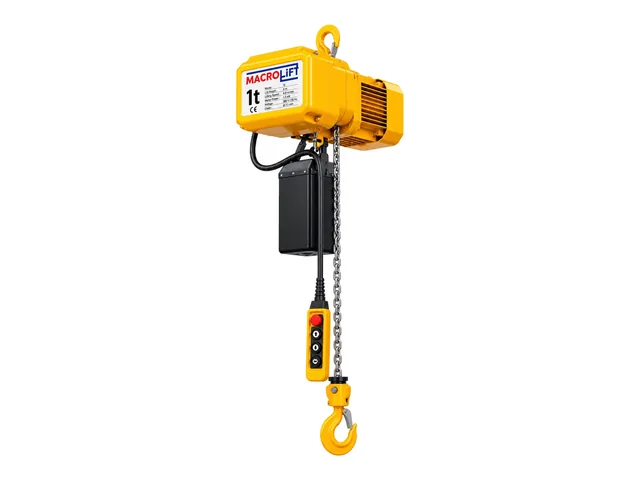
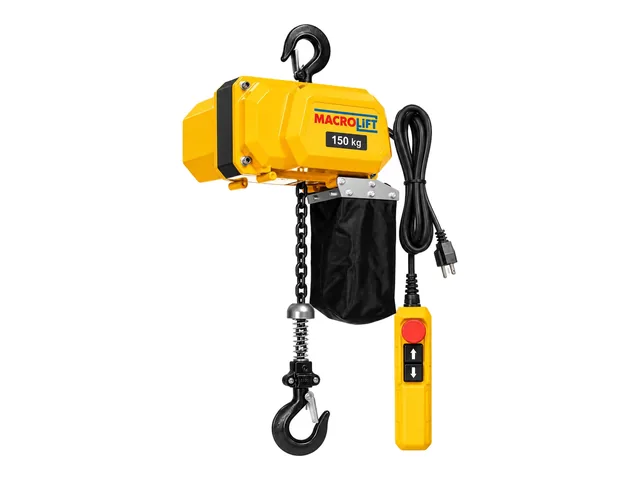
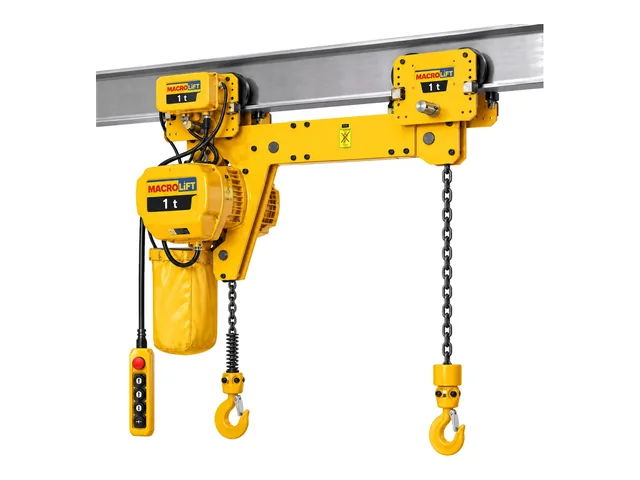
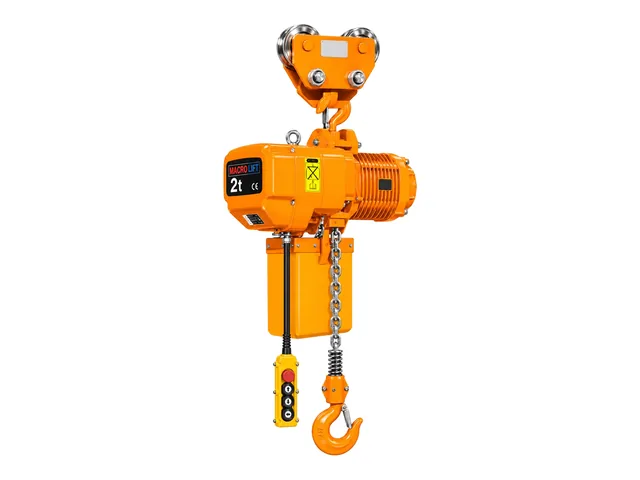
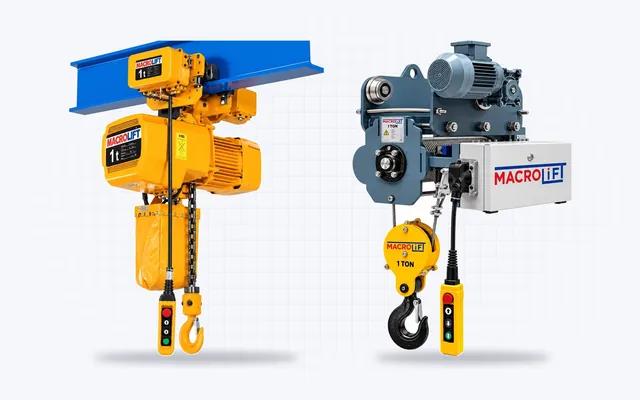
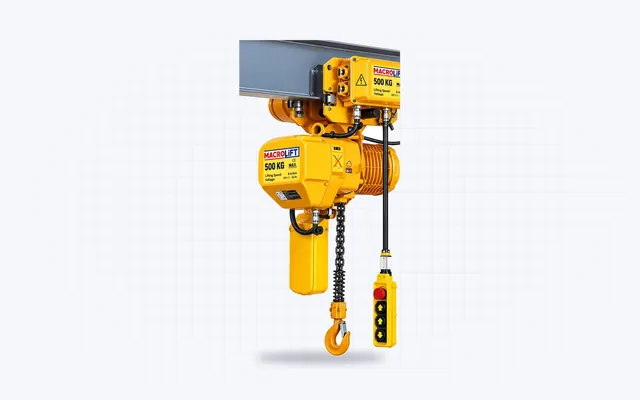
The load chain of a chain hoist is a special fine-tolerance, hardened chain sized to the hoist's chain sprocket. In Europe, hoist load chain is covered by EN 818-7 and sling chain by EN 818-2. The wire diameter and link pitch of the load chain must sit exactly in the pockets of the sprocket. That is why a load chain is never replaced with ordinary chain or sling chain. Replacement chain is chosen by hoist model and chain size (for example 6.3 x 19.1 mm). You can see where the load chain sits in our electric chain hoist guide, and example hoists on our monorail chain hoists page.
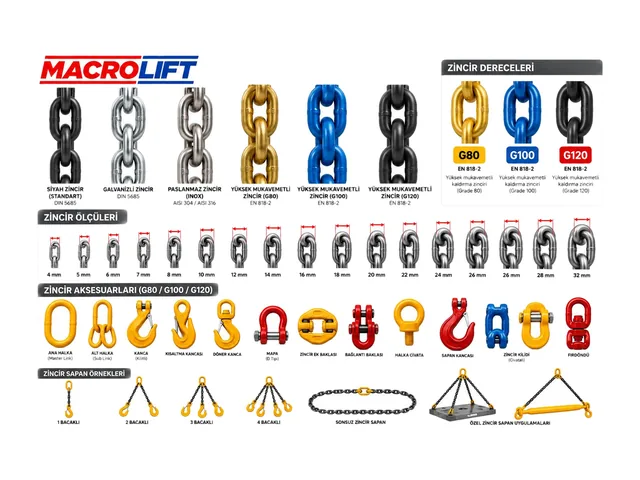
Chain grades: G80, G100, galvanised and stainless
- G80: The most common alloy steel grade for lifting chain and chain slings. The number refers to the breaking strength of the chain (800 N/mm²).
- G100: A higher-strength grade (1000 N/mm²). At the same size it carries about 25% more load than G80, so a lighter sling can do the same job.
- Galvanised chain: Zinc coated and resistant to rust. It is mostly used for lashing, securing and outdoor work. G80 and G100 chains are not galvanised. If a galvanised chain is to be used for lifting, you need the working load limit the manufacturer gives for lifting.
- Stainless chain: For food, chemical, marine and damp environments. At the same size, its capacity is usually lower than that of G80 chain.
Types of chain sling
A chain sling is made up of one or more chain legs joined to a master link, with hooks at the ends of the legs. Chain slings are usually made with a breaking strength of at least four times their working load limit.
- Single leg: Loads with a single lifting point and straight vertical lifts.
- Two leg: Long loads and parts lifted from two points.
- Three and four leg: Loads such as crates, dies and machines lifted from three or four points.
The wider the angle of the legs from the vertical, the greater the force on each leg. This angle should not go above 60 degrees, which is 120 degrees between two legs. For details, see hoist safety rules.
Chain fittings
- Master link: The top link of the sling that goes on the hoist hook.
- Connecting link: Joins the chain to the master link and the hooks without welding.
- Hooks: Hooks with a safety latch, self-locking hooks and shortening hooks for adjusting the leg length.
- Shackles and lifting points: A lifting point, such as an eye bolt or a weld-on lifting eye, is fitted to the load. A shackle connects the sling to it.
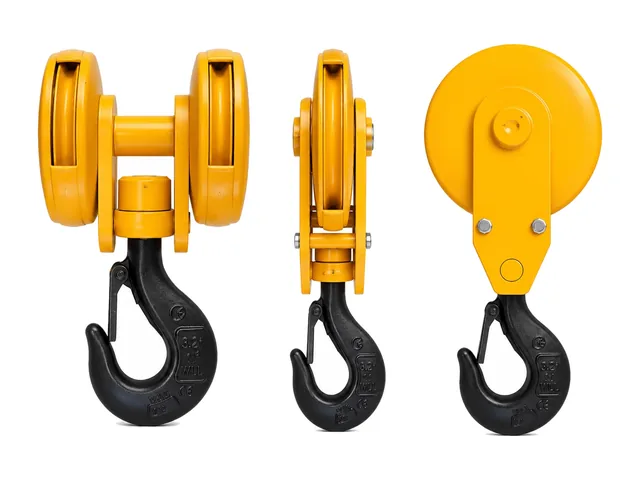
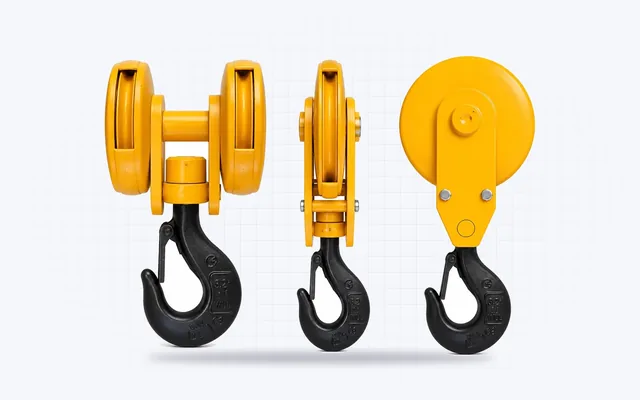
A sling is only as strong as its weakest part. The grade and size of the chain and fittings must match. For the hoist's own hook, see our crane hooks page.
What to send us, and pricing
For a chain sling, we need the load weight, the number of lifting points, the leg length and the type of hook. The price depends on the chain grade and size, the number of legs, the leg length and the type of fittings. For replacement load chain, we need the hoist model and chain size. Just send us these details on WhatsApp.
Inspection and when to discard
Hoist chain and chain slings are checked visually before every use. A sling is taken out of service if the links show stretch, wear, nicks, cracks or bending, or signs of heat or chemical damage, or if a hook has opened or the tag cannot be read. Chain is never repaired by welding or joined to another chain. G80 and G100 chains are not used in acidic environments, as the steel can become brittle without any visible sign. Slings must also be examined in detail by a competent person at regular intervals. See hoist inspection and maintenance.