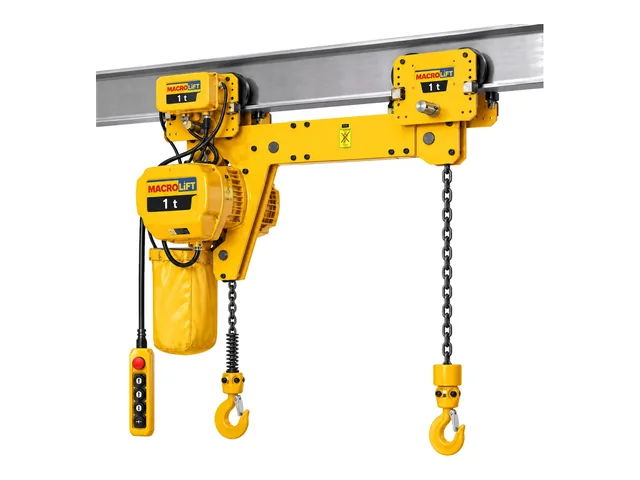
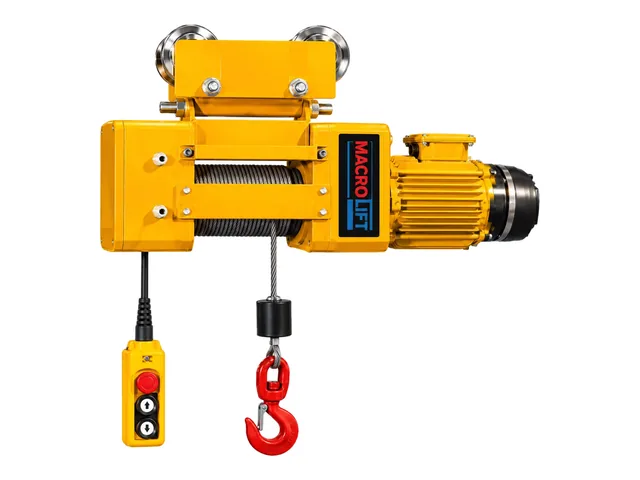
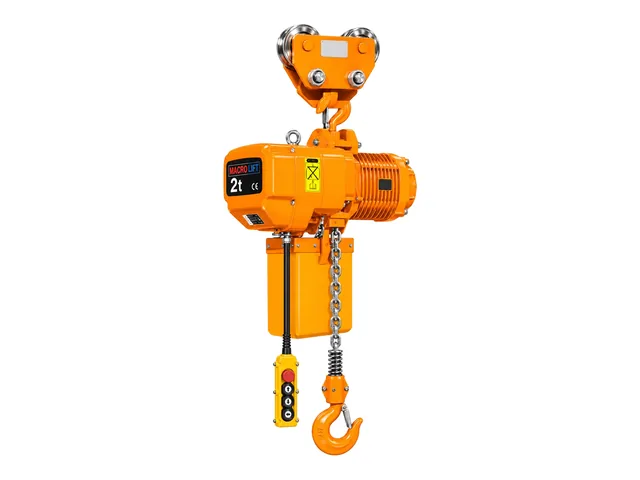
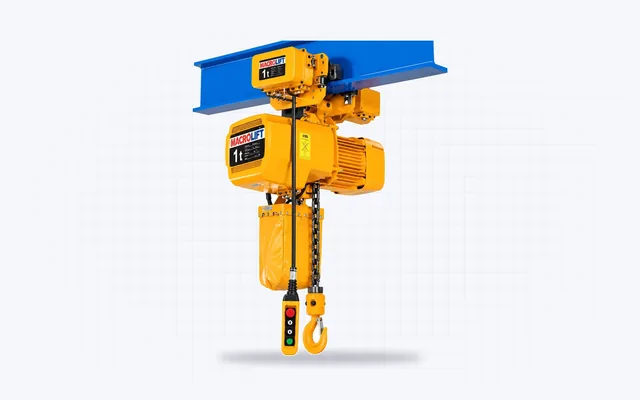
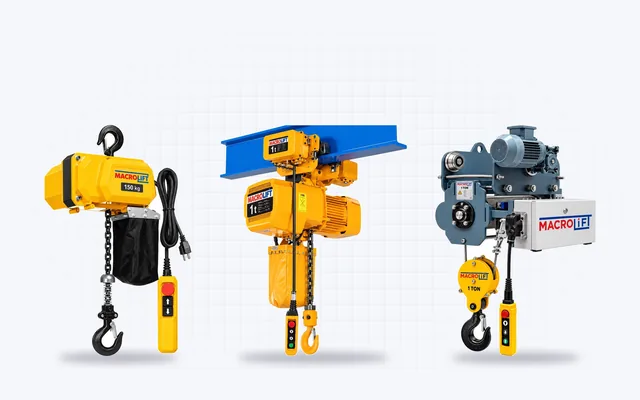
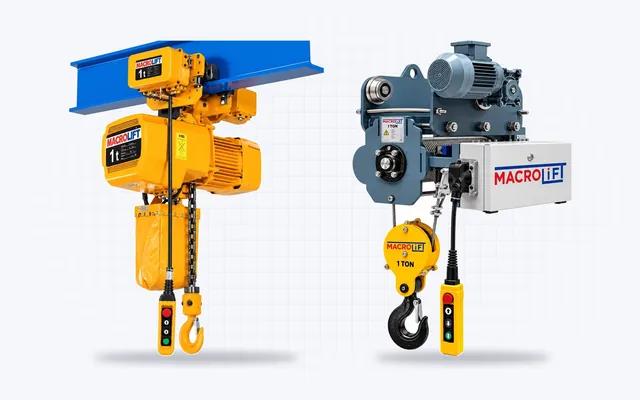
A monorail hoist works safely only if the monorail beam is chosen and hung correctly. The beam matters as much as the hoist. It carries the full weight of the hoist and the load, and passes that weight to the building through its hangers. In this article we explain how the beam profile is chosen, where and how the beam is hung, curved runs, the power supply and the installation steps.
Which profiles are used for monorail beams?
A monorail beam is a steel I-beam, and the trolley wheels run on its bottom flange. The most common profiles are:
| Profile | Feature | Typical use |
|---|
| NPI (INP) | The inner faces of the flanges are tapered | Classic monorail runs, light and medium loads |
| IPE | Light profile with parallel flanges | Short spans and light loads |
| HEA / HEB | Rigid profile with wide, thick flanges | Heavy loads and runs with long distances between hangers |
The profile of the trolley wheels must suit the flange type of the beam. Using wheels made for parallel flanges on a beam with tapered flanges wears out both the wheels and the beam early.
Flange width and trolley fit
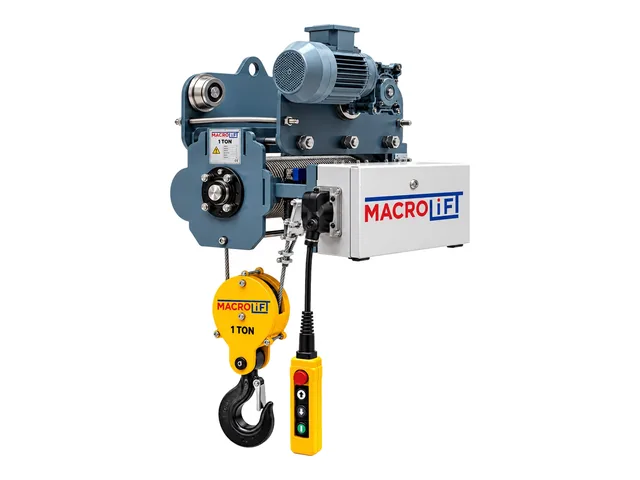
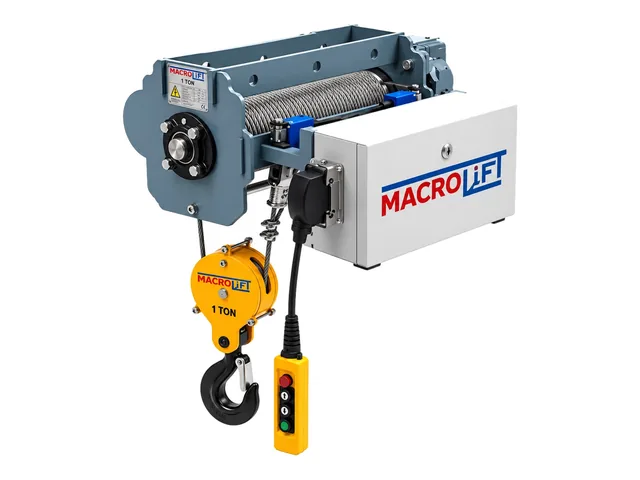
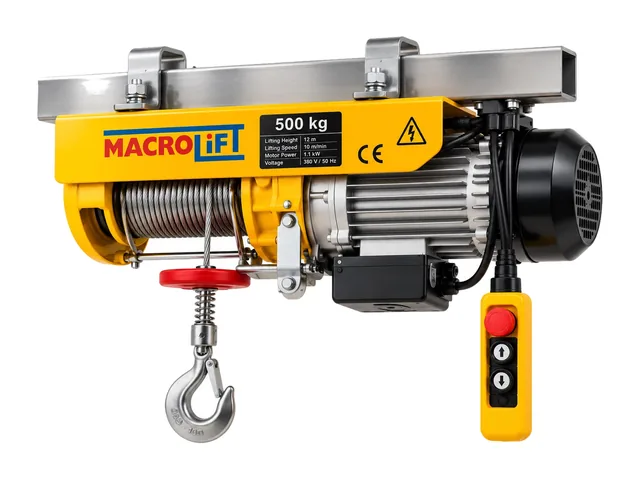
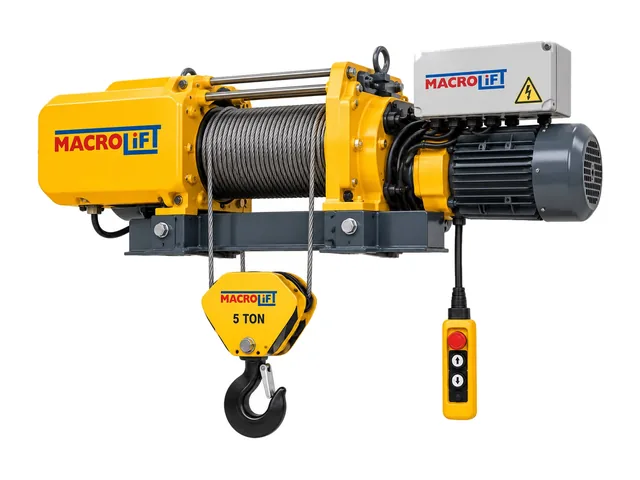
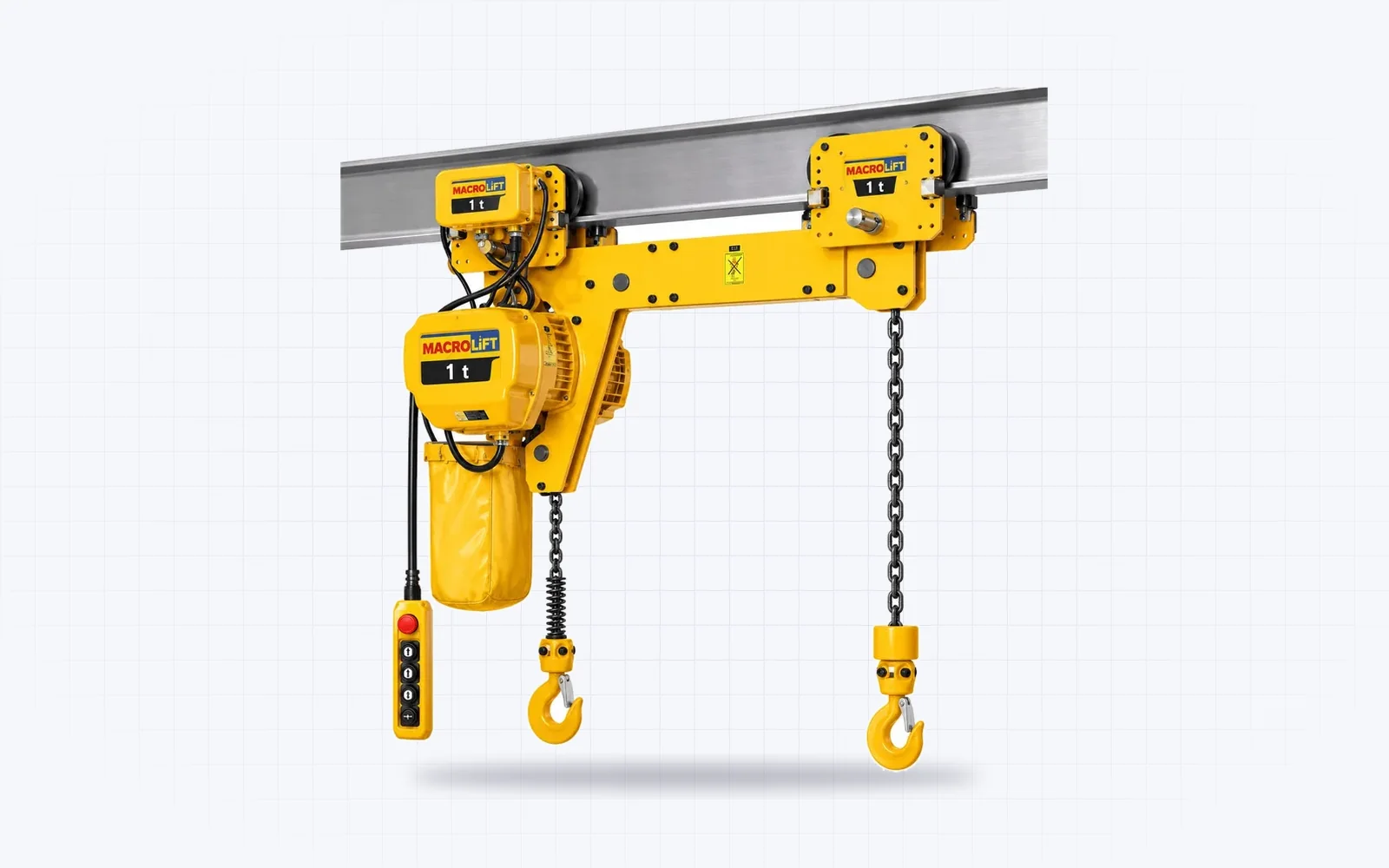
Every trolley fits a certain range of flange widths. For example, our 1 t 8 m monorail wire rope hoist fits I-beams with a flange width of 80-250 mm. The trolley's wheel spacing is adjusted to the beam flange during installation. If you are thinking of hanging a hoist from an existing beam, measure the flange width and thickness and send them to us.
How is the beam size chosen?
The profile size is chosen by calculation, not by guesswork. The calculation uses these values:
- The hoist capacity and the hoist's own weight
- The distance between suspension points (the span)
- The permitted deflection, meaning how far the beam may bend under load
- Dynamic effects during lifting and stopping
- Cantilevers at the beam ends (the parts that extend past the last hanger)
The longer the distance between hangers, the larger the profile needs to be. Sometimes adding more hangers is cheaper than using a bigger profile. Getting this balance right is part of the design work. For heavy loads and long spans in particular, the structural calculation must be done by an engineer.
Where is the beam hung?
The beam can be hung in different ways, depending on the building structure:
- Ceiling girders and roof trusses: This is the most common method in steel buildings. The beam is fixed to the existing girders with clamped or bolted hangers. You must always check whether the existing structure can carry the extra load.
- Columns and brackets: If the ceiling is not suitable, the beam sits on brackets fixed to the columns, or on new columns.
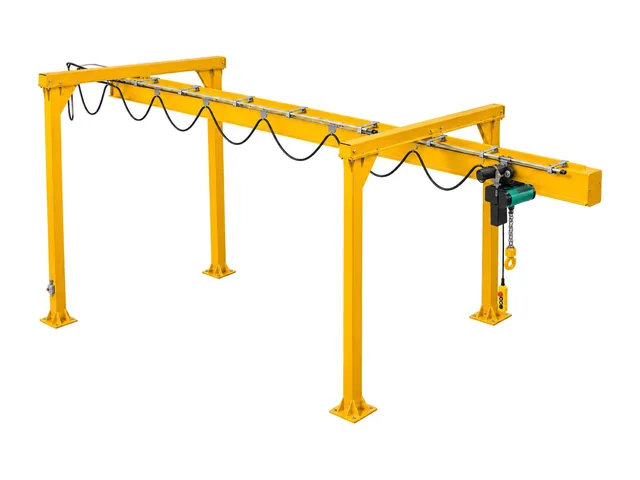
- Freestanding steel structure: If you do not want to put any load on the building, or if you will work outdoors, the beam is hung from its own support structure.
- Concrete ceiling: This is possible with suitable anchors, but the anchor type and the load capacity of the concrete must be confirmed by structural calculation.
Hanging a beam on a rough guess such as "this girder will take it" is the most common and the most dangerous mistake with monorail systems.
Beam ends: end stops are a must
End stops (buffers) are fitted at both ends of the beam to stop the trolley running off. Electric trolleys can also have travel limit switches that cut the movement as the trolley nears the end of the beam. Without end stops, a mistake at the pendant or a trolley that rolls can let the hoist fall off the beam.
Curved beams and switches
If you need to carry the load around a corner, the beam can be made with a curve. The curve radius must be larger than the smallest radius the trolley can take, so on curved runs the trolley is chosen with this in mind from the start. Switches can be used to move from one line to another, and turntables or sliding transfer sections to pass the load into another area. These systems are designed for each project. You can see examples on our monorail crane systems page.
Power supply: how does power reach the hoist?
As the trolley travels along the beam, a system is needed to carry power to the hoist. There are two common methods:
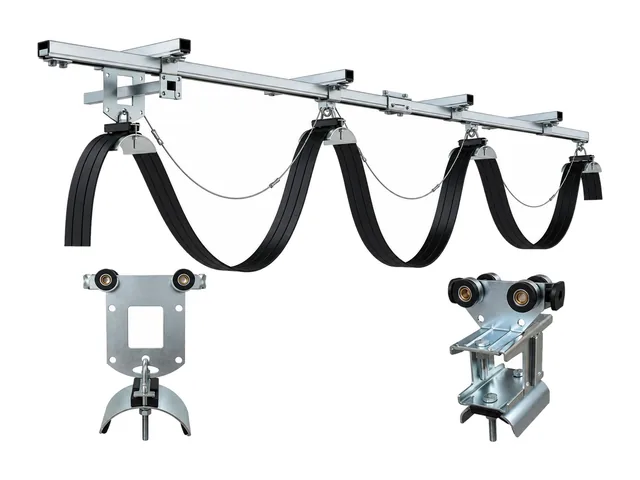
- Cable festoon system: A C-rail is fitted beside or below the beam, and flat cable hangs from small trolleys that slide along it. As the hoist travels, the cable opens out and folds up like an accordion. It is economical and practical for short and medium runs. See cable festoon systems.
- Enclosed conductor rail: An enclosed conductor rail runs along the beam, and the trolley picks up power through a carbon brush (current collector). It is preferred on long runs.
Monorail hoist installation step by step
- Site survey and measurements: We identify the beam route, the suspension points, the ceiling height, any obstacles and the power connection point.
- Calculation and design: The beam profile, hanger spacing and connection details are calculated. Any curves and switches are drawn up.
- Fabrication: The beam is cut, the splice plates and hanger holes are prepared and, if needed, the beam is curved. Then the beam is painted.
- Fitting the hangers: The hangers are fixed to the ceiling, the columns or the structure according to the measurements.
- Hanging and levelling the beam: The beam is fixed to the hangers and levelled. A sloping beam makes the trolley roll on its own. At the joints, the bottom flanges must be at the same level, or the wheels will catch.
- Trolley and hoist: The trolley is fitted to the beam, the wheel spacing is adjusted and the hoist is attached to the trolley. End stops are fitted at the beam ends.
- Power and controls: The power line is installed, the pendant is connected, and the lifting and travel limits are set.
- Testing and handover: Trial runs are made without load and with load. Then an authorised person carries out the pre-use inspection and load test. For hoists, the static test load is usually 1.25 times the rated load and the dynamic test load 1.1 times. The system is handed over with the inspection report.
Inspecting the hoist after installation and before first use is also required by Turkey's Regulation on Health and Safety Requirements for the Use of Work Equipment (İş Ekipmanlarının Kullanımında Sağlık ve Güvenlik Şartları Yönetmeliği). After that, inspections are repeated at least once a year. See hoist inspection and maintenance for the details.
How does beam length affect the price?
A longer beam needs more steel, more hangers, a longer power line and more installation labour. Curves and switches also need extra fabrication. We explain how each of these affects the price in our article on monorail hoist prices.
For the monorail hoists we sell, we also make the beam and hangers and carry out the installation. Send us a sketch of your beam route and a few photos on WhatsApp, and we can work out a suitable system and an installed price for you. For general information see our guide what is a monorail hoist?