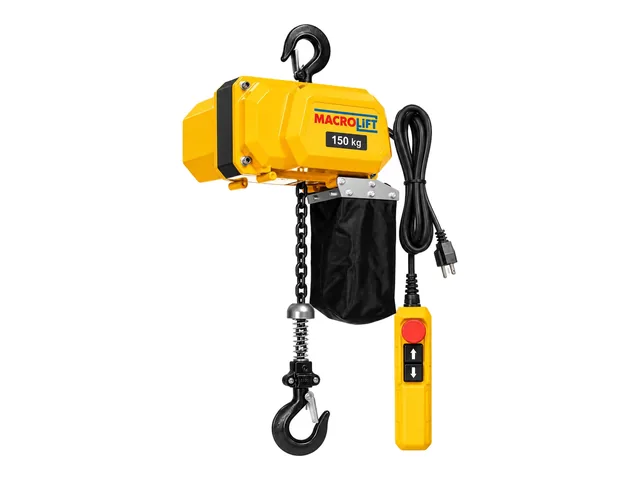
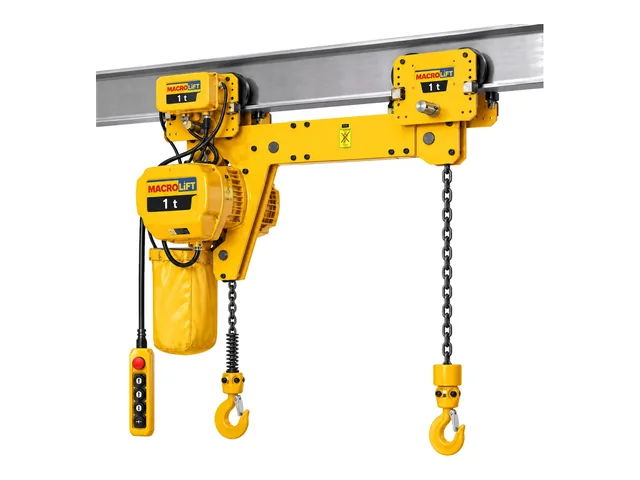
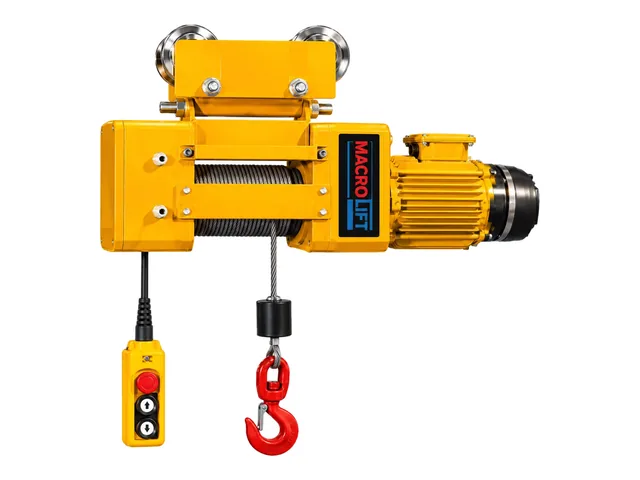
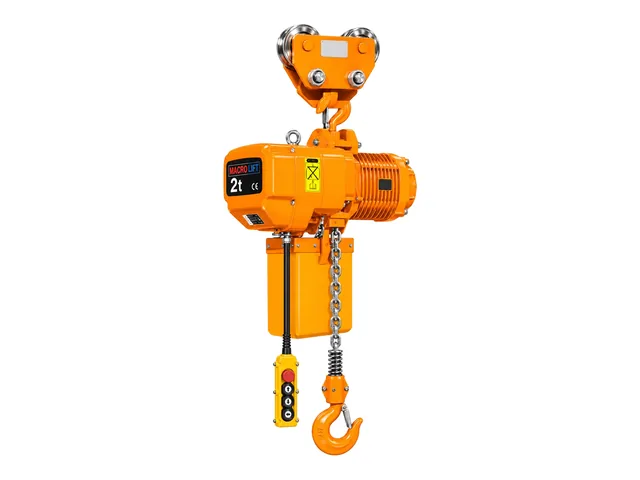
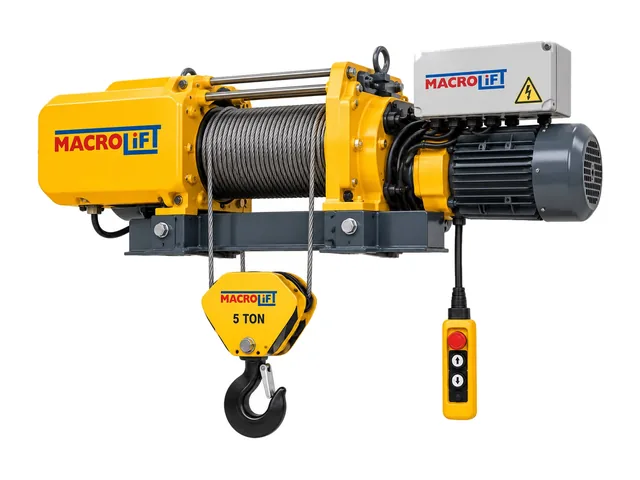
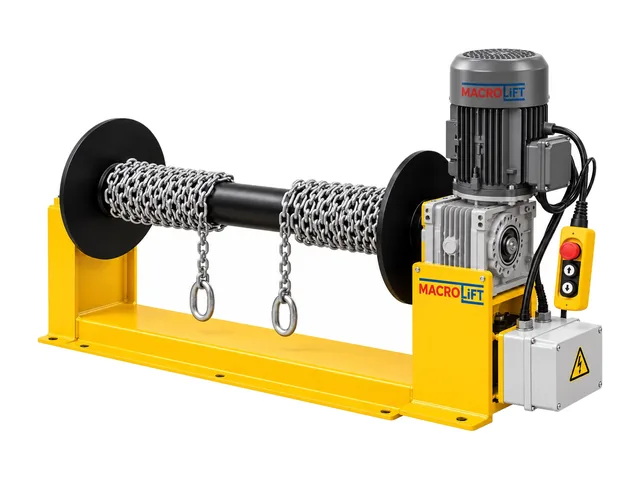
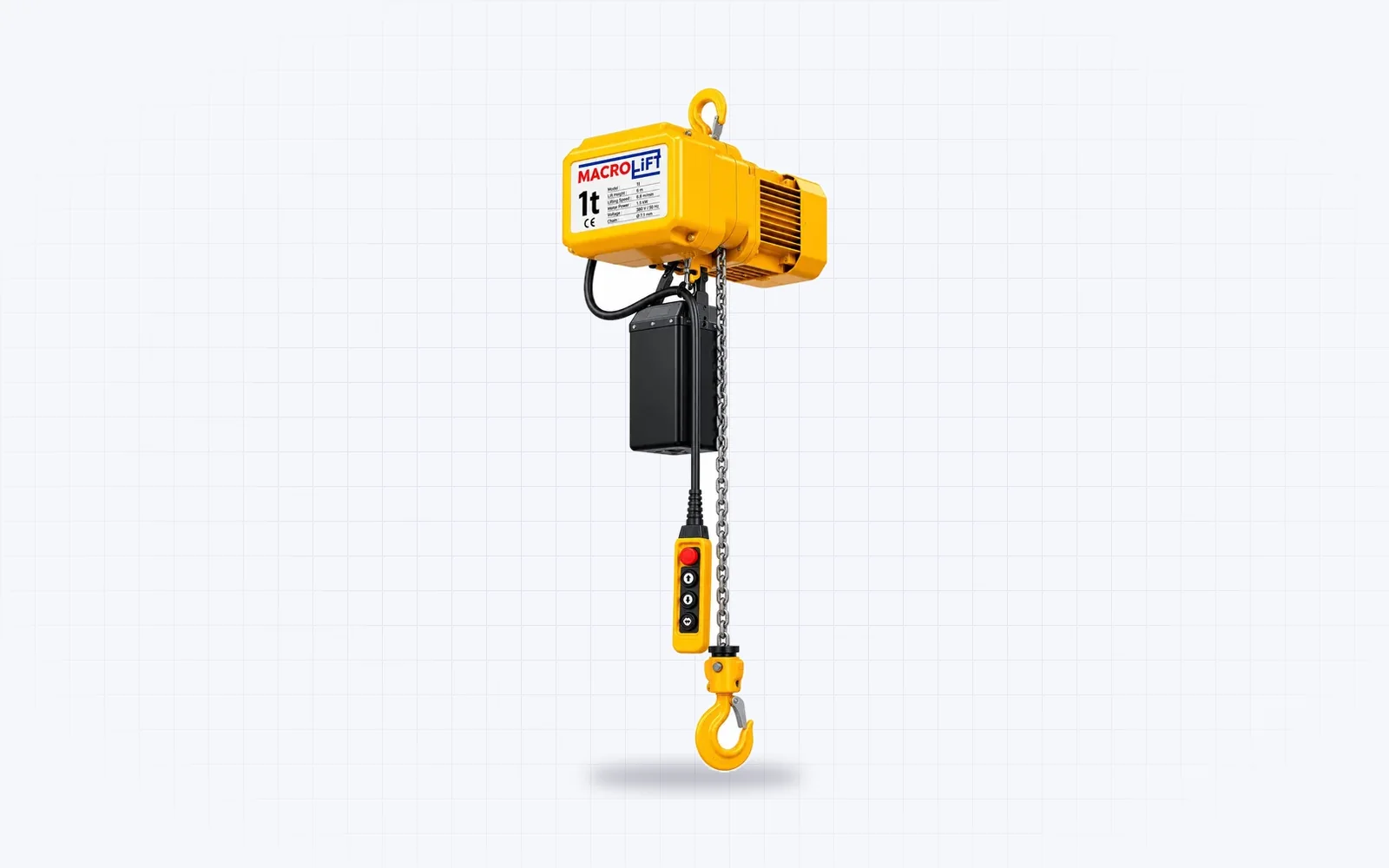
Hoist safety comes from a correctly chosen, regularly inspected hoist being used by trained people who follow the right rules. Most hoist accidents are not caused by the hoist itself but by a badly attached load, an overloaded hoist or someone standing under the load. The 12 rules below apply to monorail, fixed and chain hoists alike. You can also use them as a list to hang next to the pendant.
12 rules for using a hoist
- Only trained and authorised people should use the hoist. Anyone who picks up the pendant must know how the hoist works, where the emergency stop is and what these rules say. The employer is required to give the necessary training to employees who will use work equipment.
- Check the hoist at the start of every shift. Hook and safety latch, chain or wire rope, brake, limit switches, pendant and emergency stop. You will find the checklist in our article on hoist periodic inspection and maintenance.
- Never exceed the value on the capacity label. The weight of lifting gear such as slings, chains and lifting beams counts as part of the load. If you do not know how much the load weighs, do not guess. Find out.
- Attach the load correctly. The load should sit in the bottom of the hook, not on its tip, and the safety latch must be closed. Slings must be protected from sharp edges and the load must hang evenly.
- Lift a few centimetres first, then stop. Check the balance of the load, the connections and whether the brake holds. If everything is fine, carry on lifting.
- Lift the load straight up and do not pull it sideways. A hoist is made to lift a load from directly below it. Pulling a load at an angle, dragging it along the floor or using the hoist to free a stuck load strains the chain, the rope and the mechanism.
- Do not stand under the load and do not move the load over people. No one should be on the travel path. If necessary, tape off the area.
- Do not carry people with the hoist. Riding on the hook, the load or baskets is strictly forbidden. Load hoists are not designed to carry people.
- Avoid sudden, jerky movements. Tapping the button on and off makes the load swing and heats up the motor. Lift, travel and lower the load with smooth movements. If the load swings, stop and wait for it to settle.
- Do not use the limit switch as a way to stop the hoist. The upper and lower limit switches are safety devices. Running the hook into the limit to stop it every time wears out the switch and can one day stop it working.
- Do not leave a load hanging and walk away. When the job is done or you take a break, lower the load to the ground. A suspended load is dangerous and also puts needless strain on the brake and the mechanism.
- Stop the hoist when you notice a problem. If the load is slipping, if there is an unusual noise, smell or vibration, or if the pendant works the wrong way round, do not use the hoist. Hang an "out of order, do not use" tag on the pendant and tell the person in charge.
How does the sling angle affect the load?
When you lift a load with a two-leg sling, the force on each leg increases as the angle between the legs gets wider. The load weighs the same, but the sling legs are under more strain:
| Angle between the legs | Force on each leg |
|---|
| 0° (both legs vertical and parallel) | Half the load |
| 60° | About 58% of the load |
| 90° | About 71% of the load |
| 120° | The full load |
So at an angle of 120 degrees, each leg is under as much strain as if it were carrying the whole load on its own. This is why the angle between the sling legs should generally not go above 120 degrees and, where possible, should be kept below 90 degrees. If the angle is wide, use a longer sling or a lifting beam.
Visibility and the signaller
The operator must always be able to see the load and its path. Where the view is blocked, or on long runs, a signaller should guide the load, and the operator and the signaller must know the same hand signals. On monorail lines, the operator needs to walk with the load at a safe distance while it travels.
When the job is finished
- Lower the load to the ground and remove the slings.
- Raise the hook to a height where it will not hit anyone on the head.
- Park the monorail hoist at a point where it does not block paths or passageways.
- Leave the pendant hanging. Do not drop it on the floor and do not pull it by its cable.
- Report every problem you noticed during the shift.
Safety starts with choosing the hoist
A hoist with too little capacity for the job, or one with too low a duty class, will be overworked even when the rules are followed. For the right capacity and class, see how to choose hoist capacity. For hanging the beam correctly, see monorail beam and installation.
A worn chain, wire rope or hook has a direct effect on safety. Replacement crane hooks, hoist chains and wire ropes are kept in stock. For maintenance and breakdowns, you can reach us through our service and spare parts page.