Electric Chain Hoist: Where It Is Used and How to Choose One
By: Macrolift4 min read
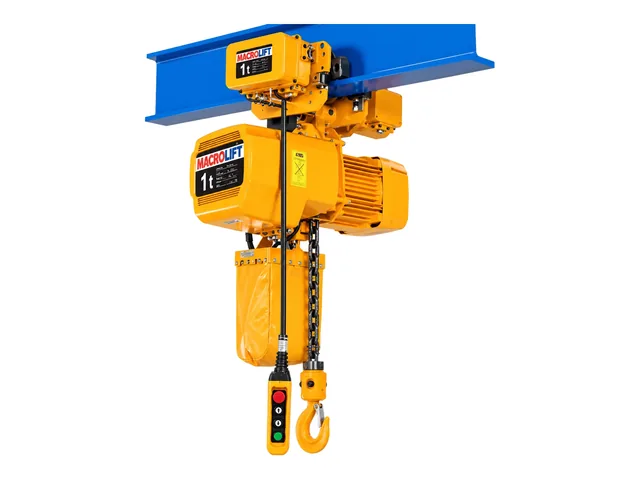
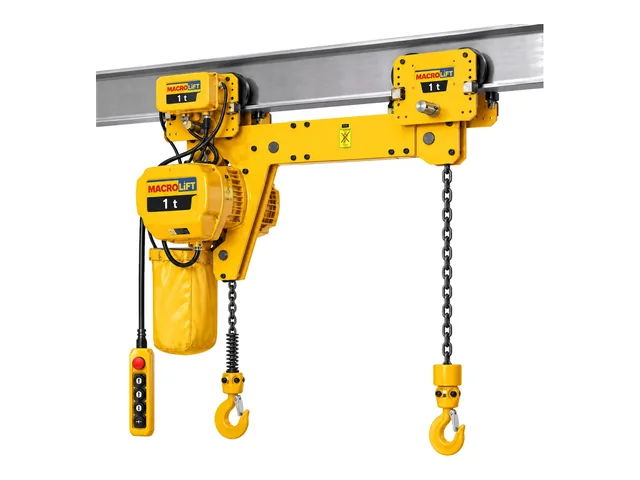
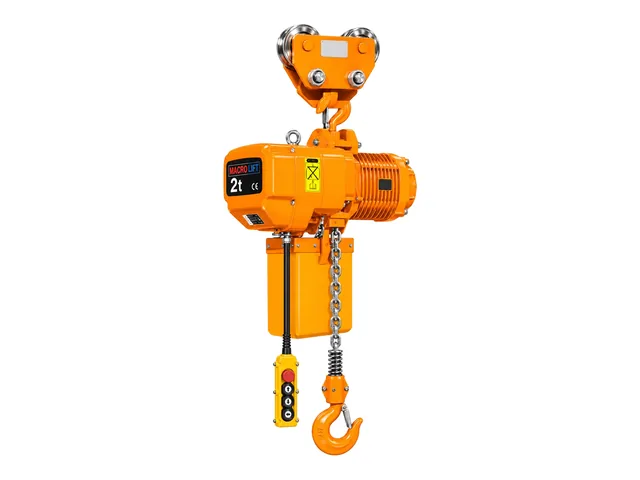
An electric chain hoist is a lifting machine that raises and lowers a load with a chain mechanism driven by an electric motor. Its compact body, simple maintenance and reasonable price make it the most widely used type of hoist in workshops, production lines and warehouses. It can hang from a fixed point, be fitted to a hand-pushed trolley or travel along a beam on a motorised trolley.
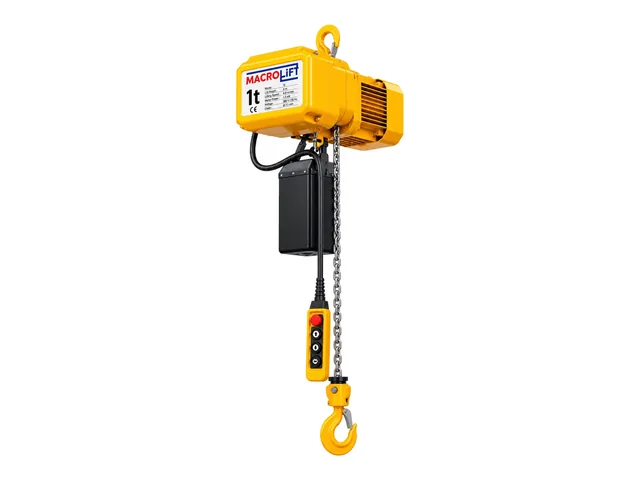
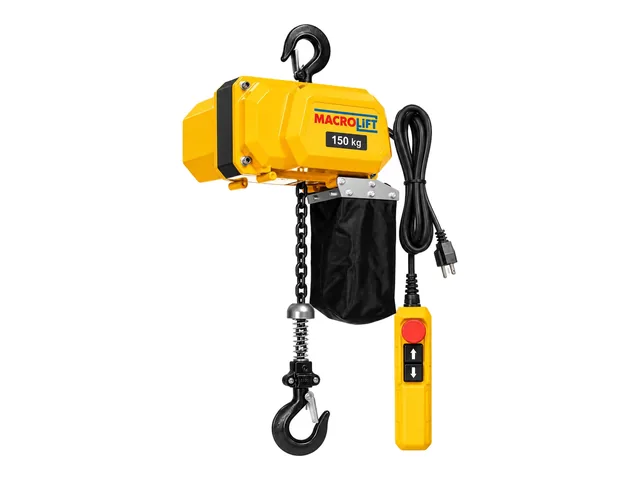
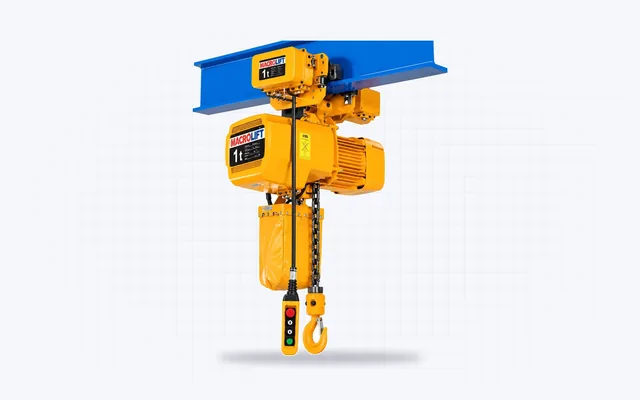
Parts of an electric chain hoist
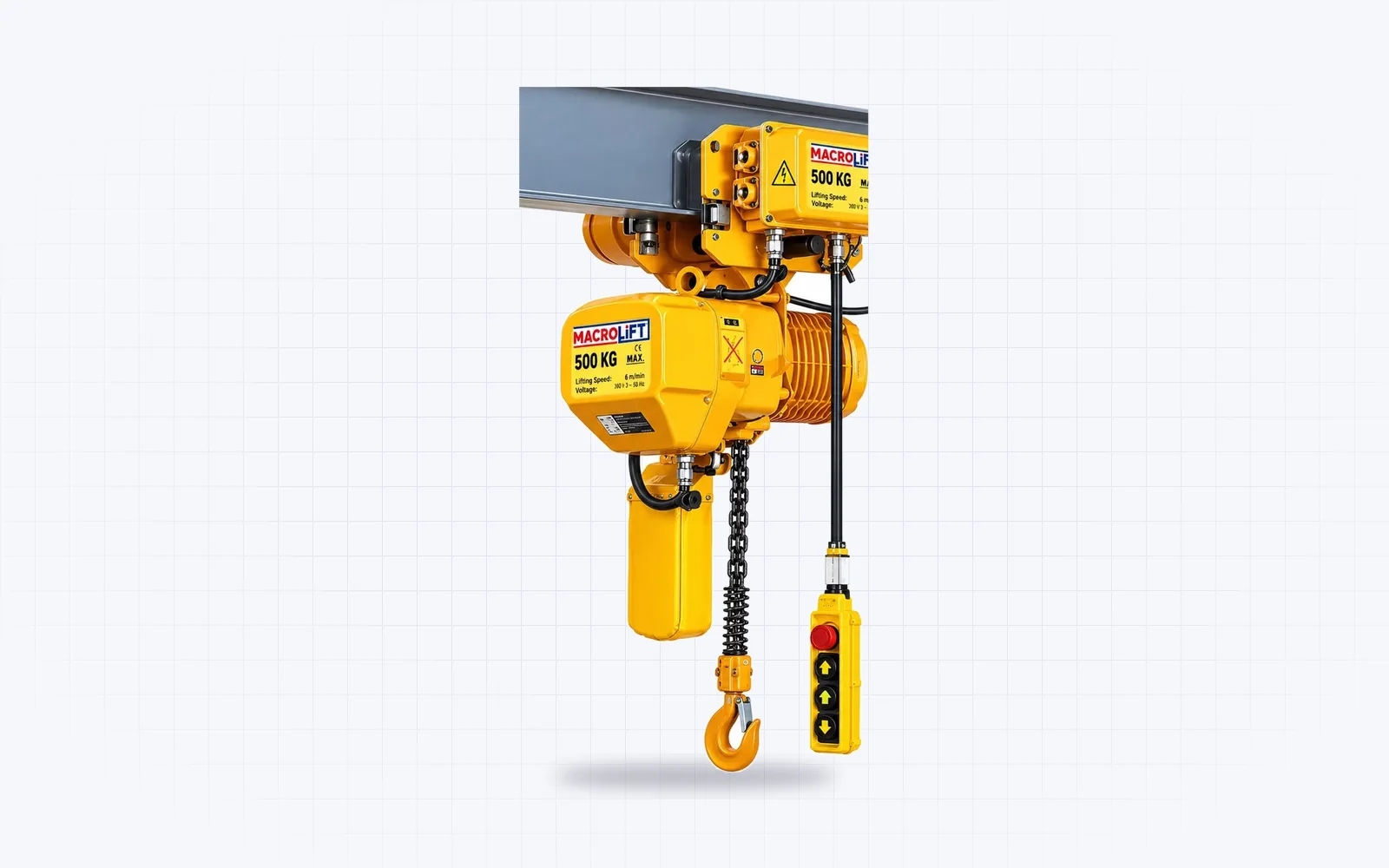
Hoist motor: The electric motor that drives the mechanism. Most models use a brake motor.
Gearbox: Brings down the high motor speed and turns it into lifting force.
Chain sprocket: Grips the load chain and pulls it.
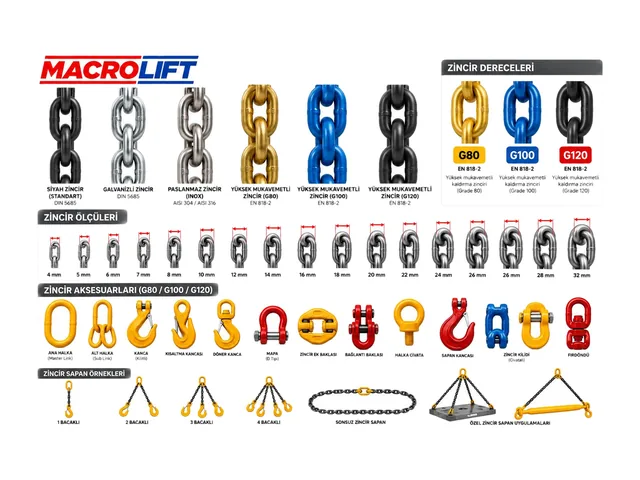
Load chain: A special hardened chain calibrated for the hoist model. It cannot be swapped for an ordinary chain.
Chain bag: Collects the slack chain.
Brake: Holds the load in the air when the motor stops.
Limit switches: Stop the hook at its highest and lowest points.
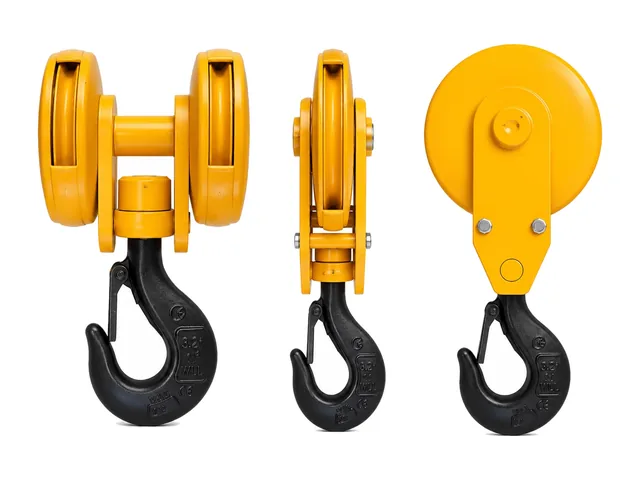
Hook: A load hook with a safety latch.
Pendant: Buttons for lifting, lowering and travel where fitted, plus an emergency stop.
Mounting types
Type
How does it work?
When is it the right choice?
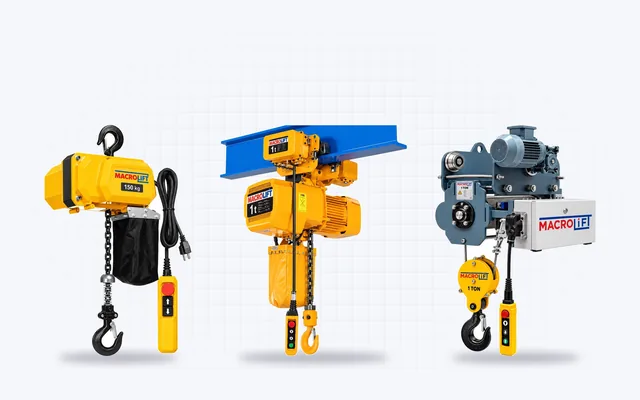
Fixed chain hoist
Fixed to the ceiling, a girder or a steel structure by its hook or suspension bracket. It only moves up and down.
When the load is always lifted at the same point: die changes, maintenance points, pits
Manual trolley chain hoist
Fitted to a trolley on an I-beam. The load is moved by pushing it by hand.
Short runs and light loads, when the hoist does not travel often
Monorail chain hoist
Travels along the beam on a motorised trolley. Every movement is controlled from the pendant.
What do the figures on the rating plate mean? An example model
You will see the same headings in every quotation and catalogue. Below we explain them using the figures for our Monorail Electric Chain Hoist 500 kg:
Specification
Example
What does it tell you?
Lifting capacity
500 kg
The heaviest load the hoist can lift safely. The weight of slings and attachments counts towards it.
Lifting height
6 m
The distance between the lowest and highest points of the hook. It sets the chain length.
Lifting speed
6.8 m/min
How many metres the hook rises per minute.
Hoist motor
0.75 kW
The motor power of the lifting mechanism.
Travel speed
11 m/min
The speed of the motorised trolley along the beam.
Power supply
380 V, 3-phase, 50 Hz
The electrical supply the hoist connects to. Your site needs a three-phase supply.
Chain
6.3 x 19.1 mm
The wire diameter and link pitch of the chain. Replacement chain is ordered to this size.
Protection class
IP54
The level of protection against dust and splashing water.
Six things to check when choosing
Capacity: Work out your heaviest load including slings and attachments, and leave a margin. For details, see how to choose hoist capacity.
Lifting height: Measure from the lowest point the hook must reach to the highest point it must rise to. Too much chain makes the chain bag bigger, and too little chain will not do the job.
Speed: For work that needs precise positioning, dual-speed models (fast and slow) make it easier to seat dies or parts.
Workload: How many hours a day and how many times an hour will the hoist run? Heavy use calls for a higher duty class.
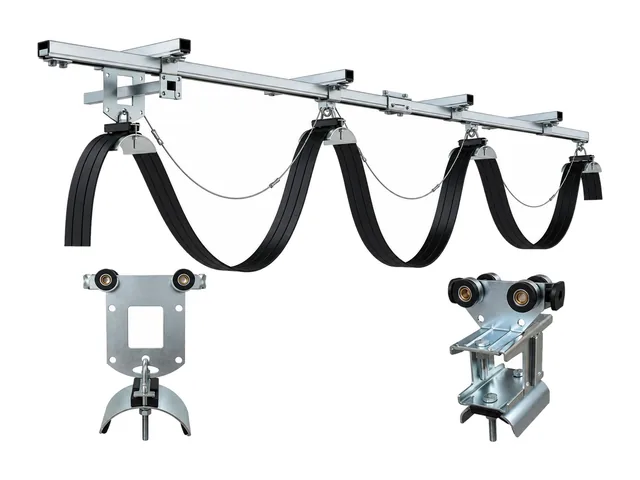
Power supply: The supply at your site must match what the hoist needs. Monorail models also need a power supply line along the beam. See cable festoon systems.
Environment: If the hoist will work in dust, in damp conditions or outdoors, pay attention to the protection class and a rain cover.
Chain or wire rope?
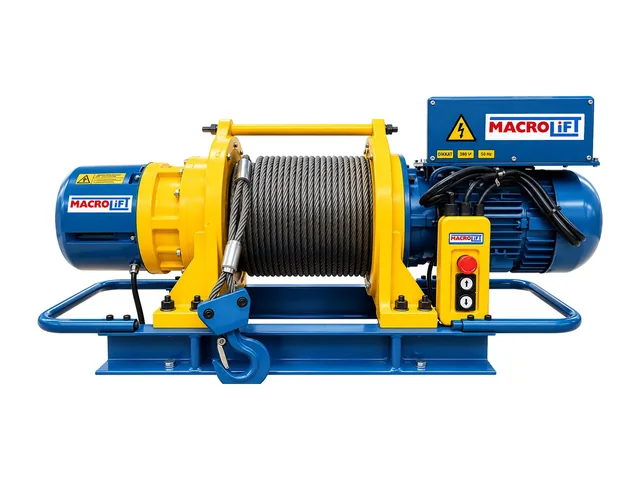
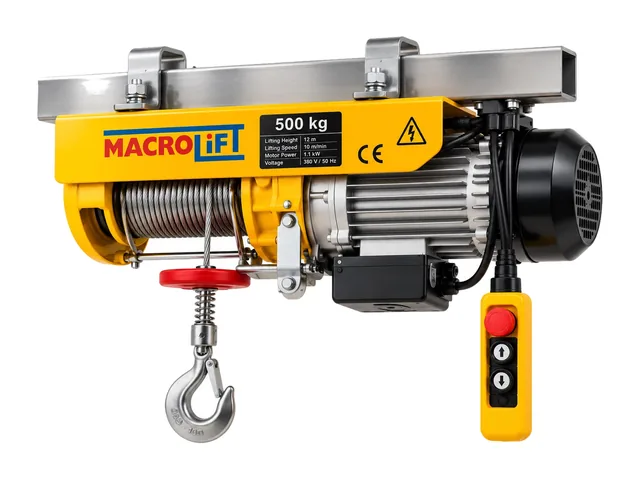
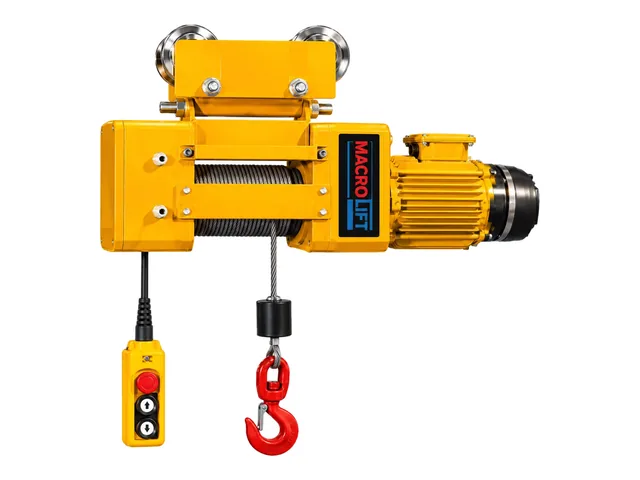
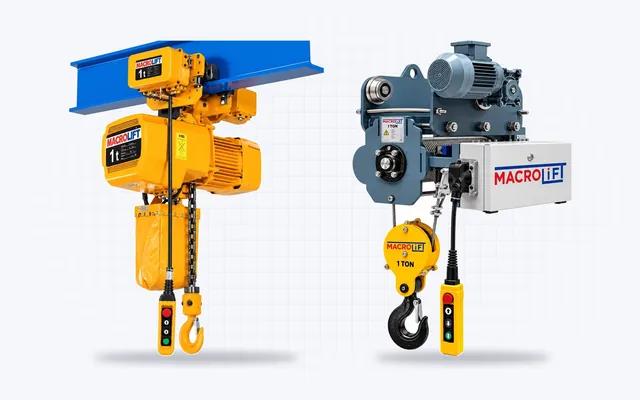
For light and medium loads with short to medium lifting heights, a chain hoist is usually enough and costs less. As the load gets heavier, the lifting height gets longer or the hoist has to work all day, a wire rope hoist becomes the better choice. We compare the two types side by side in a table in chain hoist vs wire rope hoist.
Chain hoist maintenance
Maintaining an electric chain hoist is simple, but it should not be neglected. The chain should be cleaned and lubricated regularly and measured for elongation and wear. The brake air gap, the limit switches and the pendant cable should also be checked. When the load chain wears, it is replaced with a chain of the same size that suits the hoist model. Replacement hoist chains are kept in stock. For the legal inspection intervals and a daily checklist, see our article on hoist periodic inspection and maintenance.
If you are not sure which model suits your work, send us your load, the lifting height and a photo of where the hoist will hang on WhatsApp. We will work out the right model and price with you.
Frequently asked questions
Where are electric chain hoists used?+
They are used for light and medium-duty work such as lifting parts onto workbenches in workshops, moving loads between stations on assembly lines, loading in warehouses and lifting machines and dies at maintenance points.
Does an electric chain hoist work on 220 V?+
Some small-capacity models run on single-phase 220 V. Most industrial models need a 380 V three-phase supply. Tell us what supply you have at your site before you ask for a quote.
What does the chain bag on a chain hoist do?+
It collects the slack chain as the hook rises. This stops the chain hanging down and catching on something or hitting the operator.
Can the chain on a chain hoist be replaced with any chain?+
No. The load chain is a special hardened chain made in the size and quality that fits the chain sprocket of the hoist. Only use a load chain that suits the hoist model.
What is the difference between a fixed chain hoist and a monorail chain hoist?+
A fixed hoist hangs from a single point and only moves up and down. A monorail chain hoist travels along a beam on a motorised trolley and carries the load along the line.
What is a dual-speed chain hoist for?+
The fast speed saves time and the slow speed lets you set the load in place precisely. It is useful for work with dies, machine parts or fragile loads.
Why can two monorail hoists with the same capacity have very different prices? We explain the eight factors that set the price and how to get the right quote.