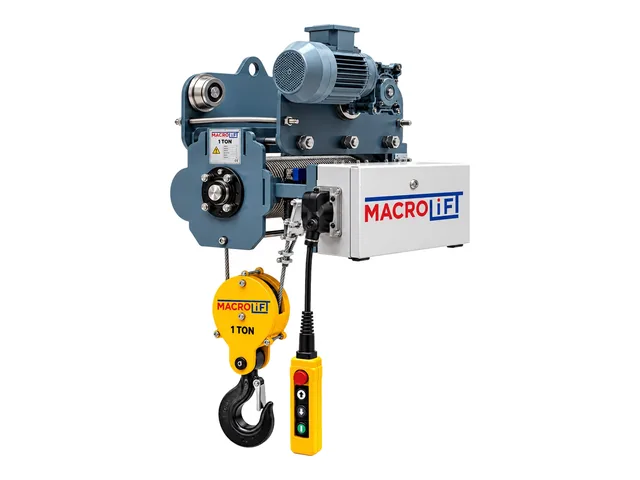
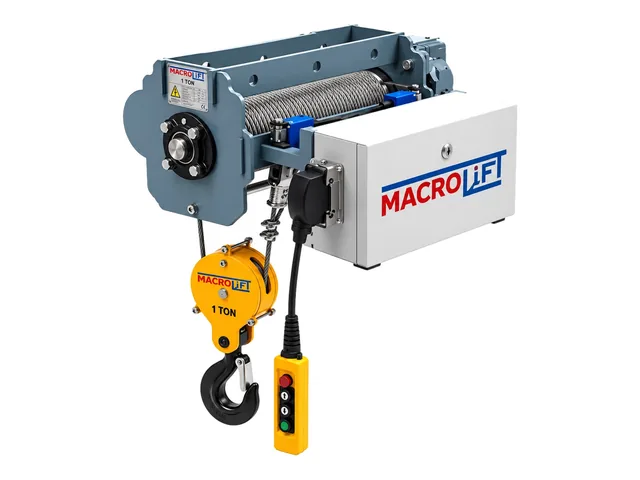
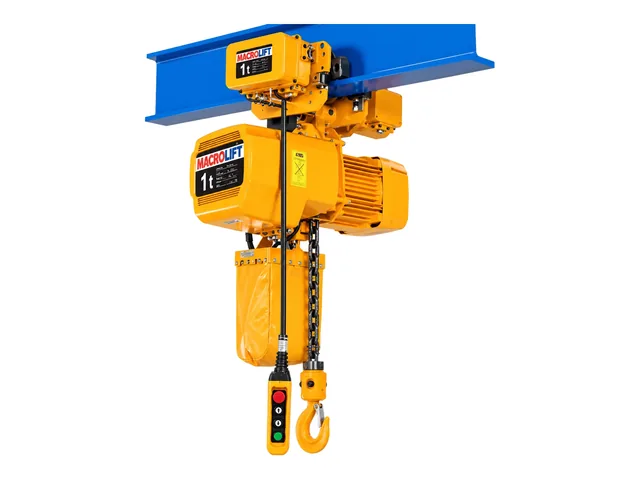
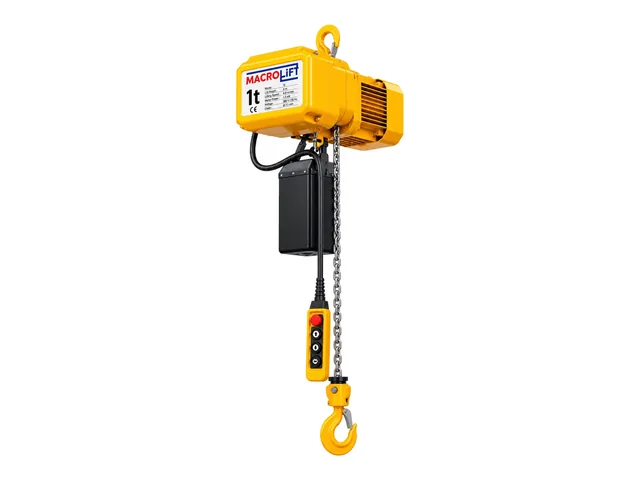
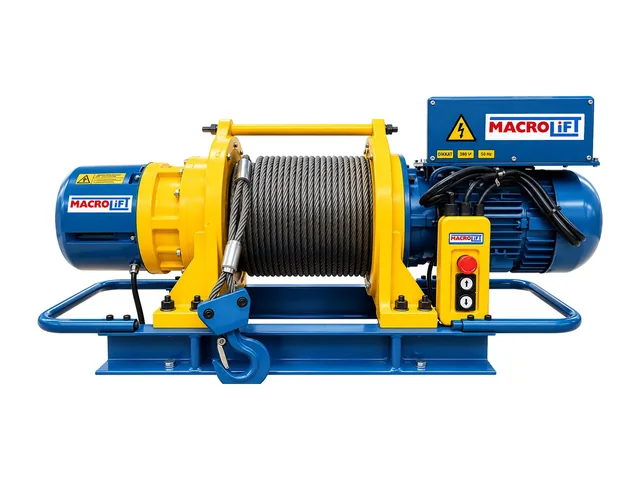
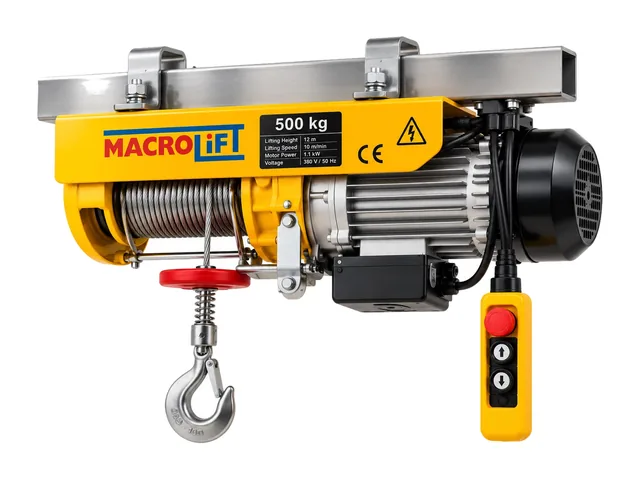
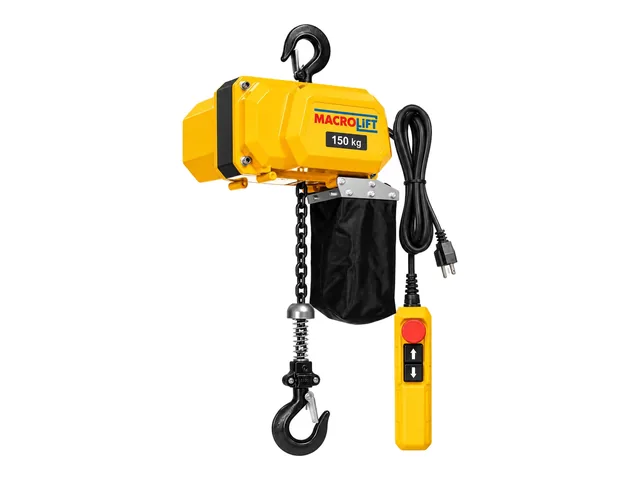
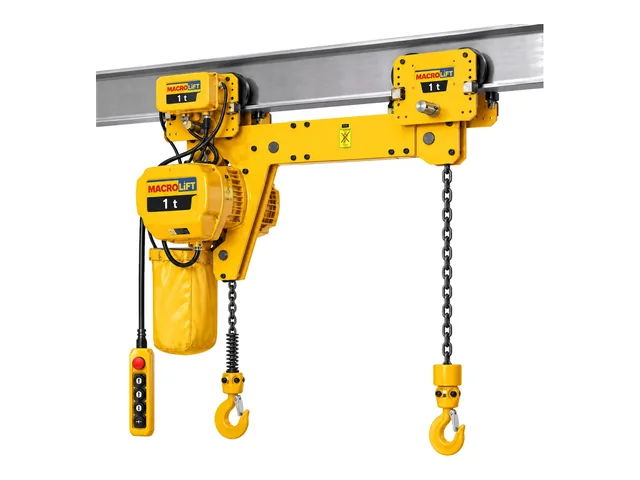
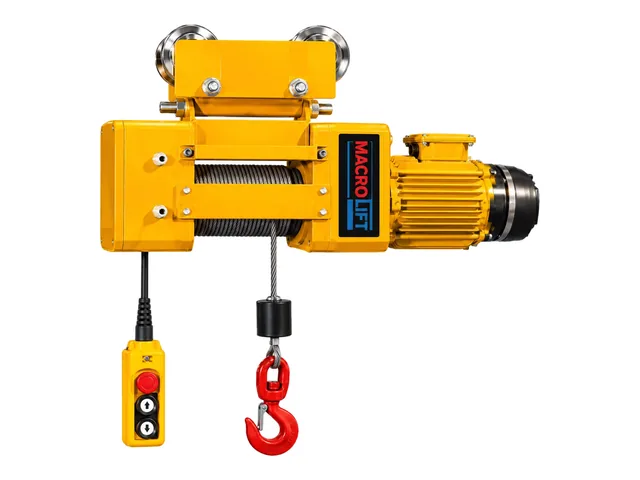
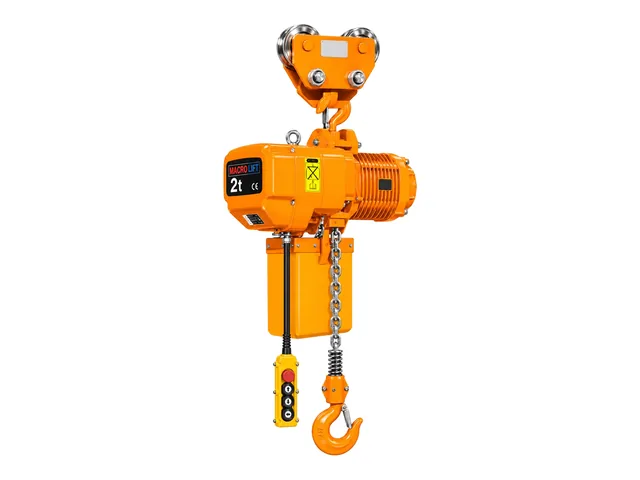
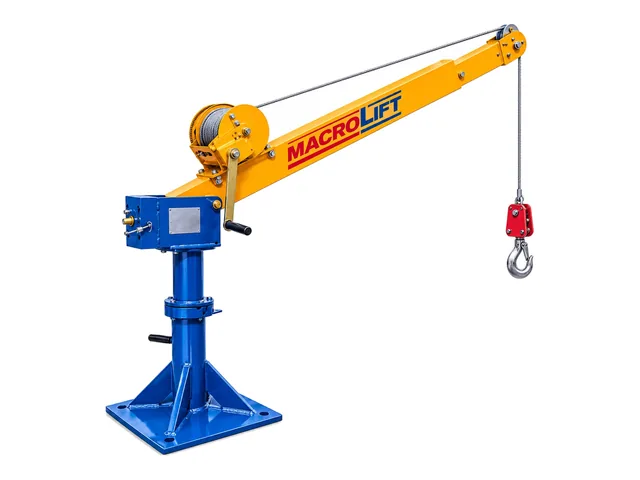
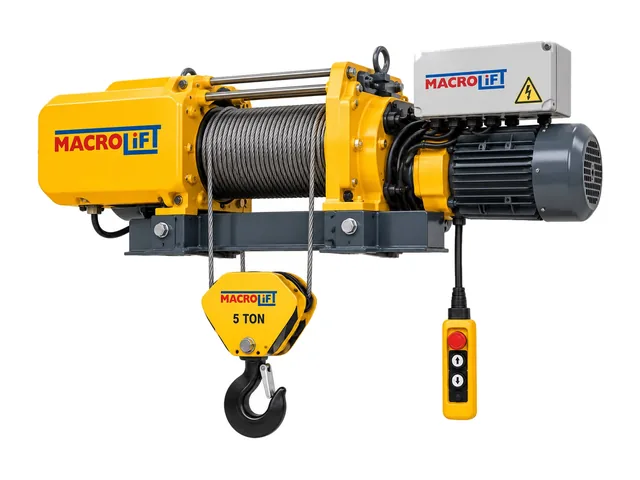
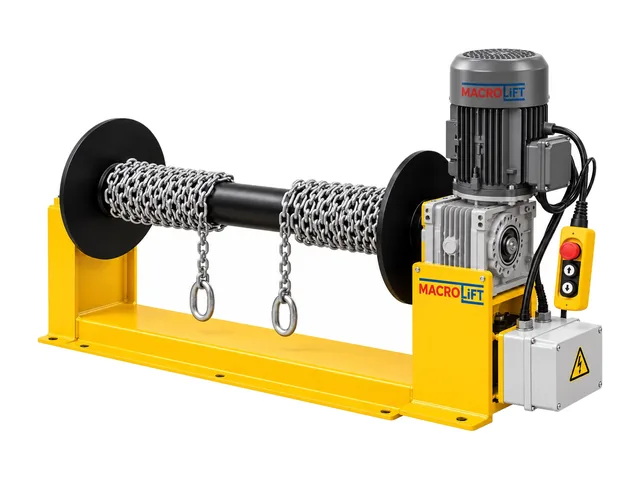
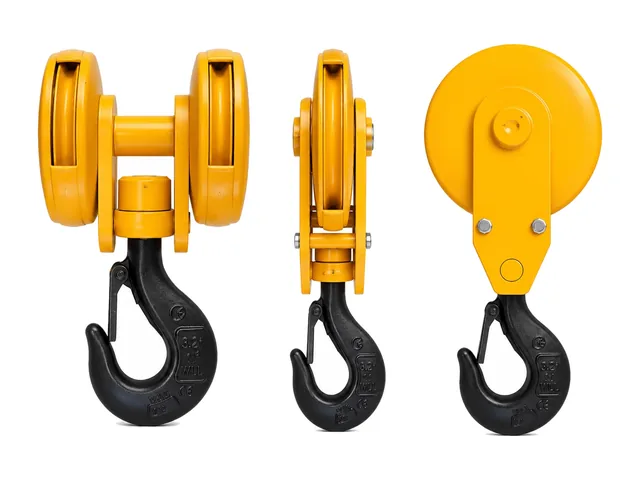
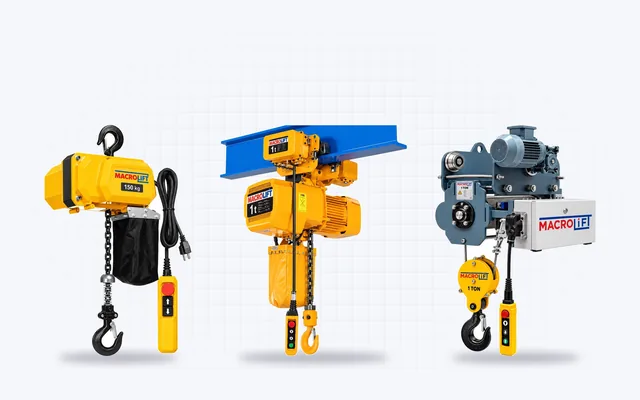
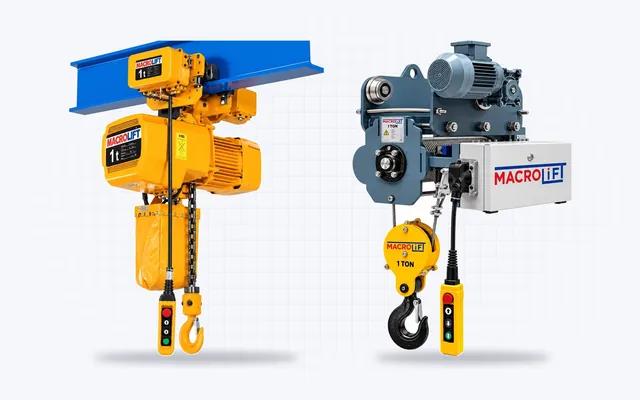
A slaughter hoist is lifting equipment that suspends a slaughtered animal so that skinning, removing the offal and cutting can be done standing up, cleanly and quickly. To choose the right hoist, look at the weight of the animal, the structure of the slaughter area, the number of animals to be slaughtered per day and how the area will be cleaned.
This article is written for slaughterhouses, municipalities, farms and butchers, and for the associations and foundations that organise Qurban, the sacrifice of animals during Eid al-Adha.
Why use a hoist?
- Hygiene: A suspended animal does not touch the ground, so the meat does not come into contact with soil or a dirty floor.
- Speed: Skinning and cutting are much faster when the animal is suspended. More animals can be slaughtered in the same time.
- Worker health: Lifting a heavy animal by hand and working bent over on the floor lead to lower and upper back injuries.
- Workflow: Slaughter, skinning, cutting and weighing move forward in sequence.
Capacity: large or small livestock?
After slaughter, the animal is usually lifted whole, so the capacity should be chosen with the live weight of the animal in mind. A light hoist is enough for small livestock, while large livestock needs a much higher capacity. Always leave a margin for large animals and for heavier animals you may slaughter in future.
| Slaughter | What to look out for |
|---|
| Small livestock (sheep, goats) | A light capacity is enough. If several animals will hang at the same time, the number of hangers and the length of the beam become important. |
| Large livestock (calves, cattle) | Capacity is chosen for the largest animal. Because the animal is long, the lifting height and the ceiling or gantry height must suit it too. |
| Both | Capacity is chosen for large livestock. A dual-speed model for precise lifting also makes the work easier with small livestock. |
We cover capacity selection in general in our article on how to choose hoist capacity.
Lifting height
When a large animal is suspended, its head must be completely off the ground, with enough space underneath to work and for the blood to drain. So when you calculate the lifting height, the hanging length of the animal, the length of the hanger and hook, and the clearance to leave above the floor are all taken into account together. If your ceiling is low, tell us at the start so we can suggest a model or installation to suit it.
Installation types
| Installation | How? | Who is it for? |
|---|
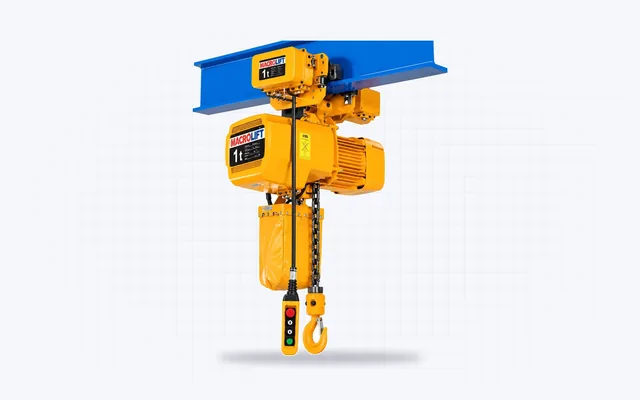
| Fixed installation | The hoist hangs permanently from the slaughterhouse ceiling or a steel structure. | Slaughterhouses that work all year round |
| Rail line | The hoist travels along a beam. The animal is moved from the slaughter point to the skinning and cutting points. | Sites that slaughter a large number of animals per day |
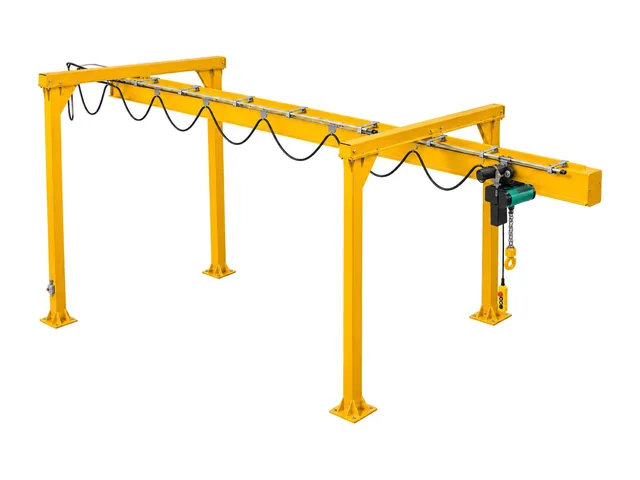
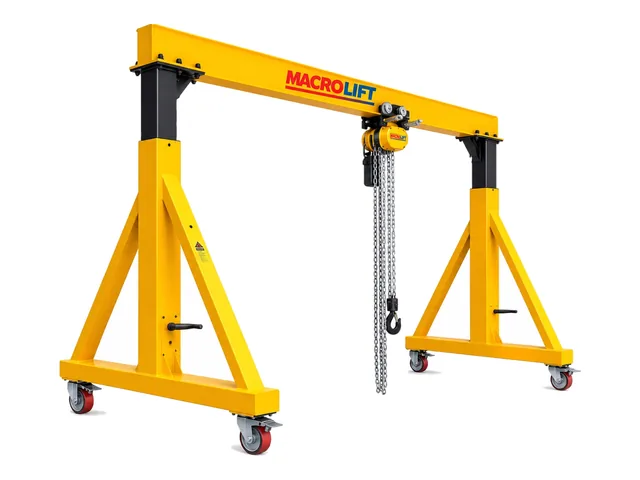
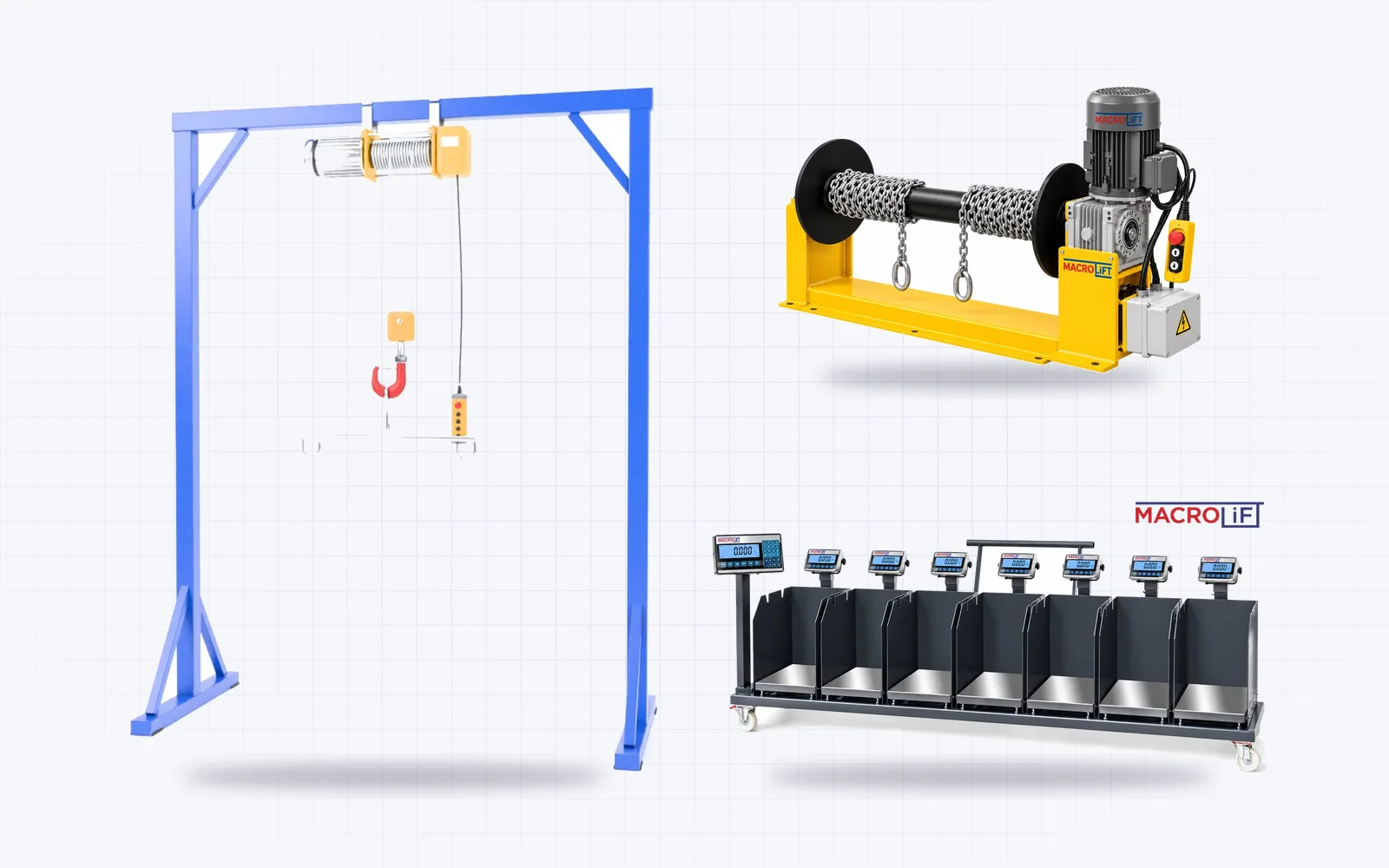
| Gantry type | Works on a frame that stands on the floor. It can be set up, taken down and moved. | Temporary slaughter areas set up for Eid, municipalities and organisers |
For temporary slaughter areas, gantry cranes are often the most practical solution because they do not need a building or a ceiling.
Hygiene and environment
Slaughter areas are washed often. Water, blood and moisture have a direct effect on the life of the hoist. When choosing, pay attention to the following:
- A suitable protection class against dust and splashing water
- Rust-resistant hooks, hangers and fittings
- Pendant and electrical connections protected from water
- A rain cover for the hoist if it will work outdoors
- Surfaces that are easy to clean and do not trap dirt
Power supply
Depending on the model, electric slaughter hoists need a single-phase or three-phase supply. For temporary slaughter areas, plan the power supply in advance. If you will run on a generator, make sure the generator has enough power for the hoist motor. Because the work is done on a wet floor, the electrical installation must be protected by a residual current device (RCD) and earthed.
Equipment that completes the slaughterhouse
- Hide puller: Pulls the hide off the suspended animal mechanically. This shortens skinning time and helps the hide come off undamaged.
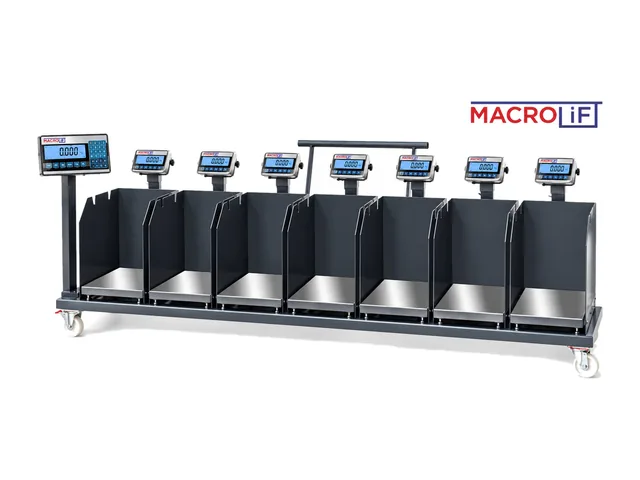
- Share scale: A stand with several weighing pans side by side. When large livestock is sacrificed for Qurban, it is used to divide the meat into equal shares quickly.
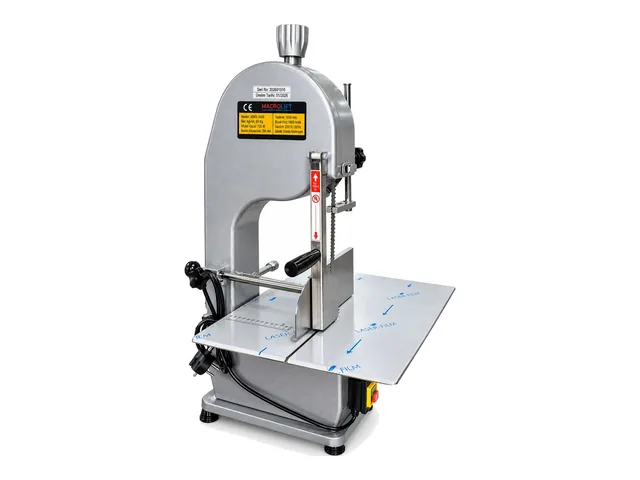
- Bone saw: Cuts up the carcass and bone-in meat neatly and quickly.
When this equipment is planned together with the hoist, slaughter, skinning, weighing and cutting run as one line.
Plan ahead of Eid
Demand for slaughter equipment rises as Eid al-Adha gets closer. We recommend ordering early to leave time for installation, the electrical connection and trial slaughters. If you already have hoists, have them inspected before Eid. For the condition of the chain, brake and limit switches, see our article on hoist periodic inspection and maintenance.
Send us a photo of the slaughter area, the ceiling or roof height and how many animals you plan to slaughter per day on WhatsApp. We will send you a suitable slaughter hoist and installation proposal with a price. You can also share our article on hoist safety rules with your slaughter team.